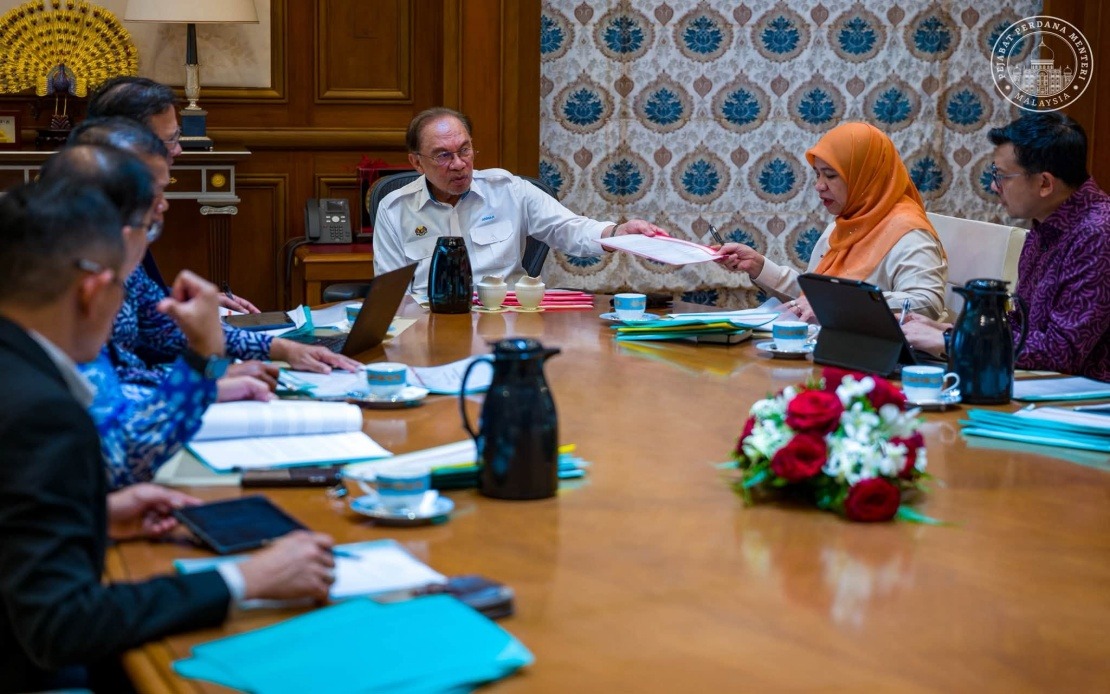
Prime Minister Datuk Seri Anwar Ibrahim has directed the Federal Land Development Authority to prioritise resolving longstanding grievances affecting FELDA settlers, with particular emphasis on second-generation housing and land ownership disputes that have accumulated over decades. Through a social media statement released in early July, the premier underscored the urgency of addressing these entrenched challenges, rejecting any further delays in providing tangible remedies for residents and their descendants.
The prime minister's intervention reflects mounting pressure from FELDA communities, where second-generation settlers—those inheriting schemes from their parents—have increasingly voiced frustration over unclear land rights, restrictive ownership structures, and inadequate housing provisions. These issues have festered for years within Malaysia's largest agricultural settlement scheme, affecting tens of thousands of families whose livelihoods and futures remain uncertain. By publicly directing FELDA leadership to act decisively, Anwar signalled that the government views settler welfare as a priority requiring immediate executive attention rather than routine bureaucratic processing.
Anwar emphasised that each complaint must receive thorough investigation coupled with concrete action plans, rather than remaining trapped in administrative limbo. This diagnostic approach suggests recognition that FELDA's institutional framework may require structural reforms alongside individual case resolutions. The premier's language—calling for problems to be "carefully examined" before solutions are deployed—indicates awareness that hasty interventions could create new complications, yet also communicates impatience with inaction. The balance struck here acknowledges complexity while rejecting complacency.
The MADANI Government's broader commitment to FELDA modernisation forms the backdrop for this directive. Anwar framed FELDA strengthening as integral to the administration's welfare agenda, positioning settler issues not as peripheral concerns but as central to national development strategy. This rhetorical positioning potentially opens pathways for budgetary allocation and policy innovation, signalling that FELDA may receive enhanced resources and political backing for comprehensive reform initiatives.
For second-generation settlers particularly, the stakes involve fundamental questions of economic security and intergenerational asset transfer. Many inherited plots under arrangements designed for their parents' era, yet discovered these inheritance mechanisms poorly equipped them to productively utilise or formally transfer land. Housing provisions similarly lag modern standards, leaving residents in structures designed decades ago for different demographic and economic circumstances. Uncertainty over land rights additionally constrains settlers' ability to access agricultural credit or make long-term investment decisions, perpetuating economic marginalisation within their own communities.
The intervention also reflects political considerations within Malaysia's broader rural constituency. FELDA settlers, historically a significant electoral bloc, have grown increasingly vocal in recent years regarding accumulated grievances. By publicly endorsing their concerns and directing bureaucratic action, Anwar positions the government as responsive to settler demands, potentially consolidating rural support ahead of electoral cycles. Simultaneously, demonstrating governmental capacity to resolve long-standing institutional problems enhances credibility across other constituencies facing infrastructure or service delivery deficits.
FELDA's institutional complexity presents obstacles to swift resolution. The authority manages schemes across peninsular Malaysia with varied conditions, settler demographics, and land classifications, meaning standardised solutions may prove inadequate. Second-generation housing presents particular complications because many settlers occupy plots technically owned by FELDA under trust arrangements, creating ambiguity regarding renovation rights, inheritance procedures, and eventual ownership transfer. Land ownership issues similarly reflect multiple legal frameworks governing agricultural land, settlement schemes, and native title considerations across different states, requiring coordination beyond FELDA's direct authority.
Regional context renders Malaysia's FELDA experience instructive for other Southeast Asian nations pursuing agricultural settlement and rural development. Indonesia, Thailand, and the Philippines have pursued comparable schemes with mixed outcomes, often encountering similar second-generation complications. Malaysia's approach to resolving these challenges could inform regional policy discussions regarding optimal structuring of agricultural settlement programmes, particularly regarding mechanisms enabling intergenerational wealth transfer and sustainable community development.
The premier's directive implicitly acknowledges that institutional reform cannot proceed through ministerial decree alone, requiring FELDA leadership to demonstrate ownership of solutions. By publicly setting expectations while respecting FELDA's operational autonomy, Anwar created accountability frameworks motivating institutional action. This approach differs markedly from centralised micromanagement, instead establishing clear objectives while allowing professional administrators discretion regarding implementation methodologies.
Moving forward, FELDA's response will substantially determine whether Anwar's directive translates into tangible settler benefits or constitutes symbolic gesturing. The authority faces pressure to present concrete action plans within defined timeframes, demonstrating progress through measurable outcomes rather than procedural activity. Settlers and their advocacy organisations will likely monitor implementation closely, mobilising to amplify grievances should governmental responsiveness prove superficial or excessively gradual.
The housing and land ownership challenges confronting FELDA settlers represent unfinished business from Malaysia's rural modernisation trajectory spanning several decades. Resolving these issues demands sustained political will, institutional innovation, and resource commitment extending beyond individual directive's immediate aftermath. Anwar's intervention initiates what necessarily constitutes a longer-term reform process, yet signals governmental seriousness regarding settler welfare as a legitimate policy concern meriting elevated attention within national governance priorities.

