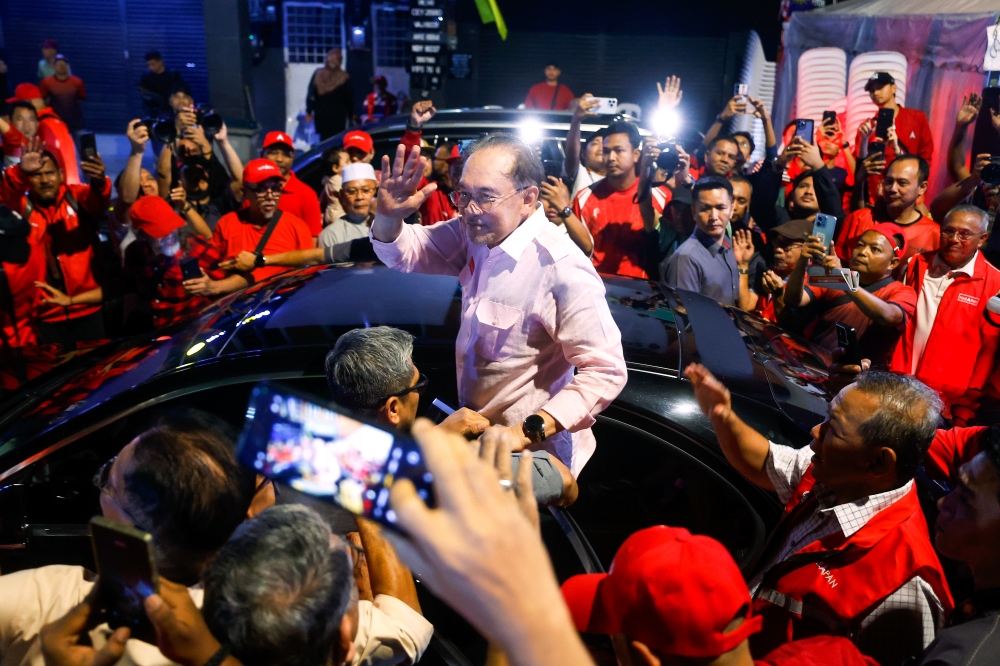
Prime Minister Datuk Seri Anwar Ibrahim sought to dispel concerns about the durability of Malaysia's governing coalition, declaring that the federal unity government has consolidated its footing and remains committed to delivering on shared economic objectives. Speaking in Seremban, the premier signalled confidence in the partnership that brought together multiple political parties after the 2022 general election, a combination that fundamentally reshaped the country's political landscape and governance structure.
The stability of the unity government has been scrutinised periodically by observers and opposition politicians alike, particularly as Malaysian coalitions have historically proven vulnerable to defections and internal tensions. Anwar's remarks suggest that despite occasional friction between constituent parties—which operate from sometimes divergent ideological positions—the administration has developed sufficient common ground to sustain its legislative agenda. The prime minister's emphasis on governmental longevity addresses not merely political positioning but also investor confidence and the continuity required for longer-term economic planning.
On the economic front, Anwar pointed to performance indicators that demonstrate Malaysia's resilience in navigating challenges that have tested neighbouring economies throughout the region. Gross domestic product growth, foreign direct investment inflows, and currency stability have all featured prominently in government messaging, with officials arguing that policy consistency and business-friendly measures have insulated the nation from sharper downturns experienced elsewhere. The premier's assertion that the economy sits on solid footing reflects official assessments that Malaysia's diversified economic base—spanning manufacturing, services, technology, and commodities—provides multiple engines for expansion.
The coalition's ability to maintain consensus on economic policy represents a significant achievement given the breadth of political representation within it. Different coalition partners bring distinct constituencies and policy preferences, yet their participation in government necessitates compromise and unified positioning on key fiscal and monetary matters. This coordination becomes particularly important when navigating external shocks, whether stemming from global supply chain disruptions, geopolitical tensions affecting trade flows, or fluctuations in international commodity prices affecting Malaysian exports.
Investor perception remains critical to Malaysia's economic trajectory, as foreign capital flows influence everything from manufacturing expansion to technology sector development. Political stability signals to external stakeholders that the government can implement consistent policies without sudden reversals caused by coalition collapse or leadership transitions. Anwar's public reinforcement of governmental durability thus serves a dual purpose: reassuring domestic audiences while simultaneously communicating to international business communities that Malaysia remains a dependable environment for capital deployment and long-term commercial planning.
The unity government model itself represents a departure from Malaysia's traditional two-coalition system, introducing complexity but also distributing political risk across a broader base. While this arrangement sometimes complicates decision-making or generates policy debates between coalition members, it has also prevented any single faction from wielding unchecked dominance. The resulting checks and balances, though occasionally frustrating to observers seeking rapid policy implementation, have arguably enhanced governance stability by requiring broader buy-in for significant initiatives.
Economic challenges specific to Southeast Asia present ongoing tests for Malaysian policymaking. Regional competition for foreign investment, particularly from Vietnam, Thailand, and Indonesia, requires continuous refinement of Malaysia's value proposition to multinational corporations and capital investors. The unity government's coordination becomes essential when responding to these competitive pressures through infrastructure investment, research and development incentives, or digital transformation initiatives that must command political consensus to proceed at adequate scale and pace.
Labour market dynamics and wage growth have emerged as important policy considerations within the coalition framework, with different member parties representing constituencies with varying employment situations and economic interests. Balancing the demand for higher wages and job security against business competitiveness concerns requires nuanced positioning that the unity government must negotiate among its diverse political components. Anwar's statements implicitly address such pressures by emphasising that governmental consensus can deliver prosperity broadly without sacrificing macroeconomic stability.
The regional context matters considerably for Malaysian economic performance and political stability. Developments in neighbouring countries, shifts in regional trade arrangements, and competition for regional economic leadership all influence how Malaysian policymakers calibrate their strategies. A stable federal government enhances Malaysia's capacity to engage effectively in regional forums and negotiate trade agreements that serve national interests, whether through ASEAN mechanisms, bilateral arrangements, or participation in broader Indo-Pacific economic frameworks.
Looking forward, the sustainability of Malaysia's unity government will likely depend on its success in delivering tangible economic improvements to ordinary Malaysians. While political elites may appreciate the governance stability that the coalition provides, public support ultimately derives from perceptions of improving living standards, employment opportunities, and service delivery. The prime minister's emphasis on economic fundamentals therefore reflects recognition that political durability and economic performance remain interconnected, with failures in one domain threatening the other.
The coalition's track record through its opening years suggests that Malaysian political leaders have recognised the mutual benefits of cooperation over antagonism in divided governance circumstances. Whether this collaborative impulse persists through inevitable disputes over resource allocation, policy priorities, and credit for achievements will substantially determine the government's longevity and its capacity to sustain the economic policies that Anwar credits for current performance.

