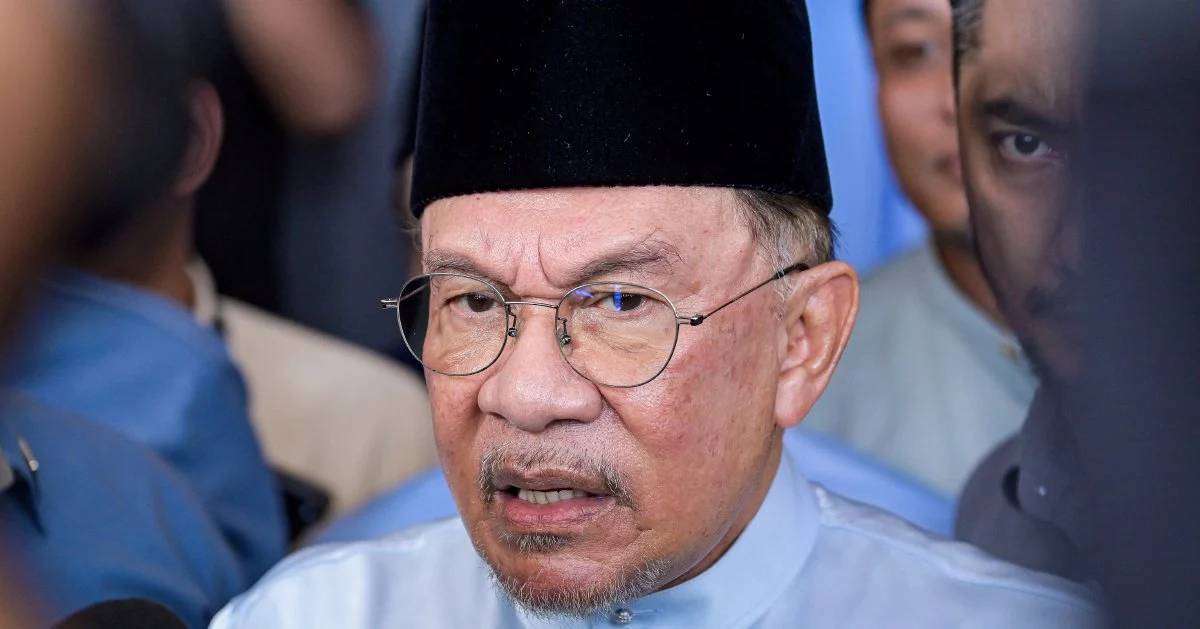
Prime Minister Datuk Seri Anwar Ibrahim has firmly rejected reports suggesting that caretaker Johor Menteri Besar Datuk Onn Hafiz Ghazi faced restrictions preventing his attendance at activities in Felda settlements, categorically denying any directive to exclude the state leadership.
The denial comes amid ongoing political tensions in Johor, where the state remains in campaign mode following the dissolution of the state assembly ahead of elections. The Felda settlements represent a politically significant constituency given their historical ties to the federal land development scheme and their voting patterns, making any gathering there a matter of broader political interest across Malaysia's political landscape.
Anwar's clarification addresses concerns that may have arisen from either operational misunderstandings or political commentary regarding access to community spaces during the campaign period. The Prime Minister's intervention suggests sensitivity around perceptions of fair play and equal access for all political actors, particularly those holding executive positions at the state level, regardless of their party affiliation or government status.
The incident highlights the delicate balance Malaysian political figures must maintain during transition periods when state assemblies are dissolved but caretaker administrations remain in place. During such phases, questions naturally arise about the appropriate roles and responsibilities of different levels of government, as well as protocols governing public space access for political activities and community engagement.
Onn Hafiz, as caretaker Menteri Besar, occupies a constitutionally defined position that carries both official duties and limitations during the campaign period. His involvement in Felda-related matters would fall within his administrative remit, making questions about his access to these settlements more than merely procedural—they touch on the functioning of state governance structures during electoral processes.
The Prime Minister's public response underscores the importance federal leadership places on maintaining transparent governance standards, particularly where there might be perception of interference with state-level operations. Malaysia's federal system requires careful coordination between different tiers of government, and any appearance of one level circumventing another generates scrutiny among political observers and the public.
Felda has long held strategic importance in Malaysian politics, with its settler communities representing a distinct demographic with particular economic concerns and voting preferences. The organisation oversees approximately 400,000 settlers across the country, making it a numerically significant group whose support various political parties actively pursue during elections.
The Johor situation demonstrates how electoral campaigns in individual states can ripple through national political discourse, particularly when they involve questions about governance propriety or interparty relations. The state has consistently represented a politically competitive arena where multiple coalitions maintain substantial support, intensifying scrutiny of procedural questions that might otherwise pass with minimal attention.
Anwar's intervention reflects the broader political context within which Johor's electoral competition unfolds. While the Prime Minister leads at the federal level, state politics operates within that broader ecosystem, with implications for coalition stability and parliamentary mathematics at the national level. Any perception of unfair treatment of state officials—regardless of party—could inflame tensions within the ruling coalition or complicate relationships with opposition-led administrations.
The clarification also serves to address potential international observers' concerns about Malaysia's democratic institutions and their impartiality during election cycles. As Southeast Asia's third-largest economy and a significant regional player, Malaysia's governance standards attract international attention, making questions about fair electoral processes relevant beyond domestic circles.
Moving forward, the incident underscores the importance of clear communication channels and transparent protocols governing political activities during campaign periods. Malaysian election authorities and political parties continue learning lessons from each cycle about balancing the need for orderly, rule-based electoral processes with ensuring equal access for all legitimate political actors.
The resolution of this particular question contributes to a larger pattern of how Malaysia's political system manages tensions between federal and state authorities, between campaign requirements and administrative continuity, and between different political parties sharing governing responsibility at various levels.

