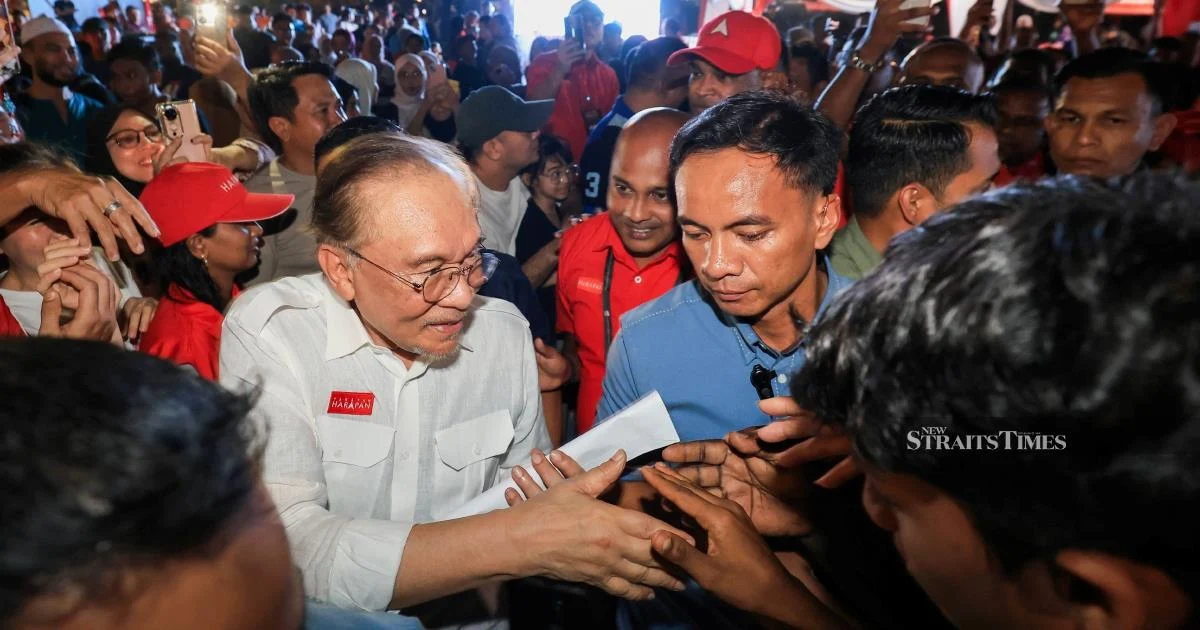
Prime Minister Datuk Seri Anwar Ibrahim has moved to quash mounting speculation about an early general election, declaring that his administration possesses a solid democratic mandate to continue governing Malaysia without returning to the polls. The statement reflects growing pressure from certain quarters pushing the government to seek a fresh popular endorsement, a prospect the premier has now firmly ruled out.
Anwar's dismissal of early election talk comes amid the complex political landscape in Malaysia, where coalition stability has been a perennial concern. The unity government, formed following the 2022 general election, brought together multiple political parties under a common banner to provide stability after years of shifting alliances. This arrangement, while representing genuine political consensus across ideological divides, has occasionally faced internal strains that fuel speculation about the government's longevity.
The Prime Minister's position underscores confidence in the administration's current parliamentary support. The unity coalition commands sufficient numbers in the Dewan Rakyat to pass legislation and maintain confidence votes, eliminating the immediate necessity for an electoral test. This numerical strength gives Anwar considerable latitude to maintain the status quo until the natural expiration of Parliament's five-year term or until he deems the political environment more advantageous for seeking a fresh mandate.
For Malaysian political observers, Anwar's stance reveals strategic calculation about timing. Early elections entail substantial costs—financial resources diverted to campaigning, disruption to governance initiatives, and uncertainty that could unsettle investors and markets. By emphasizing the government's existing mandate, the Prime Minister signals his preference to focus on delivering on policy commitments rather than engaging in premature electoral competition.
The unity government model itself deserves examination in this context. Unlike single-party administrations, coalitions require continuous negotiation and accommodation among constituent parties with distinct organizational interests. That Anwar feels confident enough to deflect early election calls suggests either robust internal cohesion or sufficient confidence in parliamentary arithmetic to weather current political pressures. This represents a notable contrast to previous Malaysian governments that fragmented rapidly under pressure.
Regional dynamics add another dimension to this domestic political calculation. Southeast Asia has experienced considerable democratic volatility in recent years, with elections sometimes producing destabilizing outcomes. By maintaining governmental continuity and focusing on policy delivery, Malaysia's leadership can project stability attractive to foreign investors and trading partners at a time when regional economic growth remains modest. Early elections risk introducing unnecessary uncertainty into the regional commercial environment.
The concept of electoral mandate itself warrants scrutiny. Anwar's invocation of a mandate reflects the legitimacy the 2022 election conferred upon the unity government at its formation. While individual coalition members' electoral fortunes may have shifted through by-elections or defections, the government's foundational claim to represent the popular will remains rooted in that election result. This provides legal and moral authority for the administration to serve its full constitutional term without seeking repeated endorsements.
Opposition voices calling for early elections typically employ different democratic logic—arguing that changing circumstances warrant fresh popular consultation. Yet such arguments carry less weight when the government maintains parliamentary majority and public opinion does not overwhelmingly demand immediate electoral change. Malaysian voters, having cast their ballots less than two years before Anwar's statement, may reasonably question the necessity for another national poll in the near term.
The political maturity demonstrated by Anwar's response reflects lessons learned from Malaysian history. Previous administrations sometimes collapsed through excessive intra-coalition friction or misjudged early elections that backfired badly. By stating clearly that the government will continue functioning within its mandate, the Premier reduces speculation that might encourage coalition partners to calculate electoral advantage through destabilization tactics.
For Southeast Asian governments more broadly, Malaysia's approach offers interesting lessons about coalition management and democratic stability. Rather than the confrontational politics that characterize some regional democracies, the unity government model emphasizes accommodation and pragmatic power-sharing. Anwar's confident dismissal of early election calls reflects comfort with this arrangement despite its inherent complexities.
Governance momentum also matters significantly. The unity administration has pursued substantial policy initiatives across economic stimulus, infrastructure development, and institutional reform. Early elections would interrupt these initiatives and reset implementation timelines, imposing costs on Malaysians awaiting tangible benefits from government programs. Anwar's implicit argument—allow us to complete what we've begun—carries weight with voters and investors alike.
Looking forward, Anwar's definitive statement likely settles the early election question for the immediate period. Political actors across the spectrum can now operate with greater certainty about the government's timeline, enabling longer-term strategic planning by both coalition members and opposition parties. This clarity itself contributes to political stability, reducing uncertainty that might otherwise inhibit investment and economic activity.
Ultimately, the Prime Minister's response demonstrates how Malaysian democracy continues evolving toward greater stability and predictability, even within the challenging context of coalition governance. By firmly rejecting premature electoral speculation while reaffirming the government's legitimacy and popular support, Anwar has effectively channeled political competition toward policy performance rather than institutional instability—a healthy development for Malaysia's democratic maturation.

