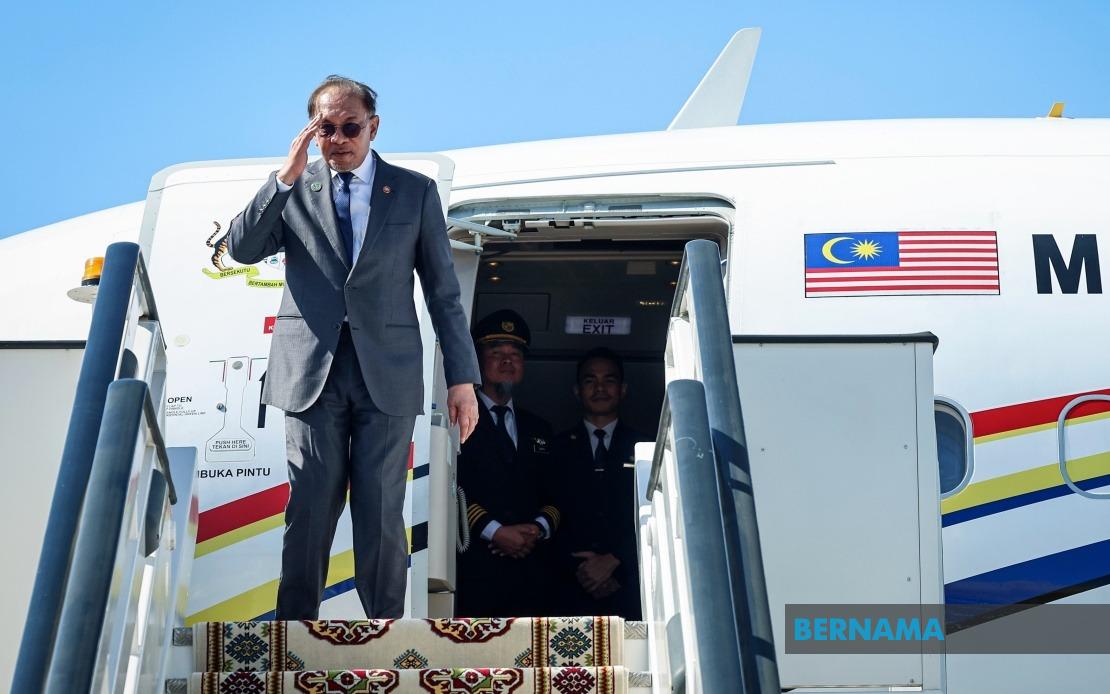
Prime Minister Datuk Seri Anwar Ibrahim transitioned directly from his first official visit to Turkmenistan into a packed schedule across Penang, arriving on June 20 to oversee multiple economic and cultural initiatives. The journey underscores the government's dual focus on advancing Malaysia's international diplomatic relationships while maintaining momentum on domestic development priorities, particularly in the northern economic corridor.
An aircraft carrying Anwar's delegation departed Ashgabat International Airport at 4:45 pm local time, allowing the Prime Minister to touch down in Penang with sufficient time to begin his official schedule. The Turkmenistan engagement, which commenced on June 18, represented Anwar's first state visit to the Central Asian nation since his appointment as Malaysia's 10th Prime Minister in November 2022. The trip occurred at the invitation of President Serdar Berdimuhamedov and followed Anwar's attendance at the 35th ASEAN-Russia Commemorative Summit in Kazan, Russia, where he was accompanied by Investment, Trade and Industry Minister Datuk Seri Johari Abdul Ghani and Economy Minister Akmal Nasrullah Mohd Nasir.
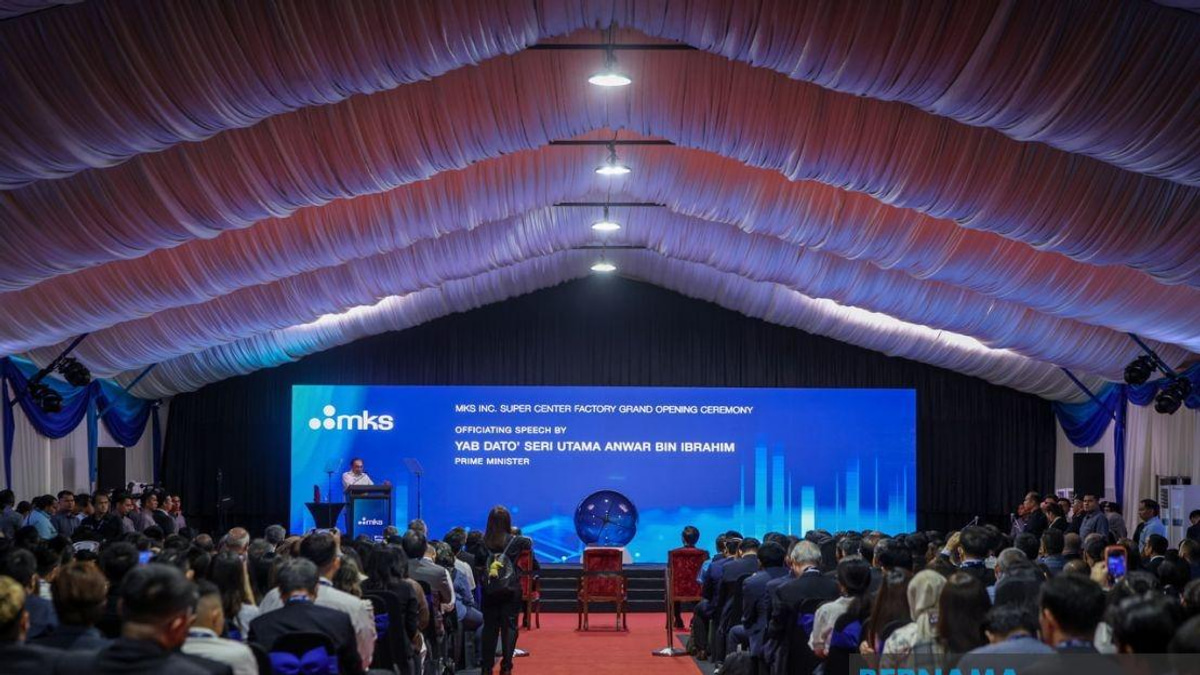
The Penang leg commenced with Anwar formally opening MKS Instruments Malaysia Sdn Bhd at Bandar Cassia Technology Park in Batu Kawan at 11 am, signalling the government's commitment to attracting high-technology manufacturing operations to the region. This facility represents yet another addition to Penang's evolving industrial ecosystem, which has traditionally competed with Selangor and Johor as Malaysia's primary manufacturing hub. The morning event underscored the administration's strategy to position Northern Corridor Economic Region assets as competitive alternatives for foreign direct investment.
By 1 pm, Anwar proceeded to the groundbreaking ceremony for Setia Fontaines Industrial Park at Bandar Setia Fontaines in Kepala Batas. This development project reflects a broader private-sector commitment to bolstering Penang's long-term economic trajectory through mixed-use industrial and commercial infrastructure. The event carries particular significance given the scale of capital investment required for such facilities and the employment generation potential across manufacturing, logistics, and support services. Concurrently, Setia unveiled two additional strategic partnerships within the broader Setia Fontaines township ecosystem, demonstrating the interconnected nature of modern industrial park development where anchor tenants attract complementary businesses.
The afternoon's centrepiece involved Anwar's attendance at the HAWANA 2026 Grand Finale, held at PICCA Convention Centre @ Butterworth Arena at 3 pm. This gathering brought together approximately 1,000 media practitioners representing both domestic and international news organisations, making it one of the year's largest assemblies of journalism professionals in Malaysia. The National Journalists' Day celebration, organised by the Communications Ministry with the Malaysian National News Agency (Bernama) as the implementing agency, serves as the primary national platform for honouring journalism's contributions to Malaysian public discourse and professional standards.
As the event's principal guest, Anwar distributed both the HAWANA Award and Special HAWANA Award to individuals whose careers have substantially advanced journalism practice and shaped public thought formation across Malaysia. These recognitions carry symbolic weight beyond ceremonial acknowledgment, functioning as national endorsements of editorial excellence and investigative rigour within a media landscape increasingly characterised by digital fragmentation and information abundance. By personally presenting such awards, the Prime Minister reinforced the government's positioning on press freedom and the journalism sector's institutional role within democratic governance.
Beyond individual awards, Anwar oversaw distributions from Tabung Kasih@HAWANA to media practitioners facing financial hardship. This welfare component reflects acknowledgment within government circles that despite journalism's essential societal function, economic pressures on newsrooms and freelance contributors have intensified substantially. The fund represents a practical intervention addressing precarity within the media profession, particularly relevant as traditional revenue models continue fragmenting under digital disruption.
The multi-sector nature of Anwar's Penang itinerary—spanning semiconductor manufacturing, industrial real estate development, and media recognition—reflects strategic coordination across economic portfolios. The Prime Minister's Finance Ministry role positioned him appropriately to champion both private capital deployment and government recognition of sectors contributing to national development. This integration of foreign direct investment attraction, domestic infrastructure development, and institutional recognition of professions demonstrates deliberate alignment of governmental messaging and resource allocation.
Following the Penang completion, Anwar was scheduled to travel to Negeri Sembilan for an evening engagement at the Himpunan Pertubuhan Lima Generasi (PLG) Malaysia dinner, extending the working day across two states. This relentless schedule typifies contemporary executive demands where regional economic competition necessitates constant high-level engagement with investment, labour, and institutional stakeholder communities. For Malaysian readers, particularly those in Penang and the Northern Corridor region, such direct attention from the Prime Minister's office signifies continued prioritisation of their economic interests within national development hierarchies, though questions persist regarding implementation pace and sustained investment realisation.
%22%2F%3E%3C%2Fpattern%3E%3C%2Fdefs%3E%3Crect%20width%3D%22100%25%22%20height%3D%22100%25%22%20fill%3D%22url(%23ph24rdpg)%22%2F%3E%3Crect%20width%3D%22100%25%22%20height%3D%22100%25%22%20fill%3D%22url(%23ph24rdpp)%22%2F%3E%3Ctext%20x%3D%2250%25%22%20y%3D%2250%25%22%20text-anchor%3D%22middle%22%20dominant-baseline%3D%22central%22%20fill%3D%22rgba(255%2C255%2C255%2C0.95)%22%20font-family%3D%22Georgia%2C%20'Times%20New%20Roman'%2C%20serif%22%20font-weight%3D%22700%22%20font-size%3D%22170%22%20letter-spacing%3D%22-0.02em%22%3EMalaysia%3C%2Ftext%3E%3C%2Fsvg%3E)
%22%2F%3E%3C%2Fpattern%3E%3C%2Fdefs%3E%3Crect%20width%3D%22100%25%22%20height%3D%22100%25%22%20fill%3D%22url(%23ph16szhg)%22%2F%3E%3Crect%20width%3D%22100%25%22%20height%3D%22100%25%22%20fill%3D%22url(%23ph16szhp)%22%2F%3E%3Ctext%20x%3D%2250%25%22%20y%3D%2250%25%22%20text-anchor%3D%22middle%22%20dominant-baseline%3D%22central%22%20fill%3D%22rgba(255%2C255%2C255%2C0.95)%22%20font-family%3D%22Georgia%2C%20'Times%20New%20Roman'%2C%20serif%22%20font-weight%3D%22700%22%20font-size%3D%22136%22%20letter-spacing%3D%22-0.02em%22%3ECourt-Ord%E2%80%A6%3C%2Ftext%3E%3C%2Fsvg%3E)