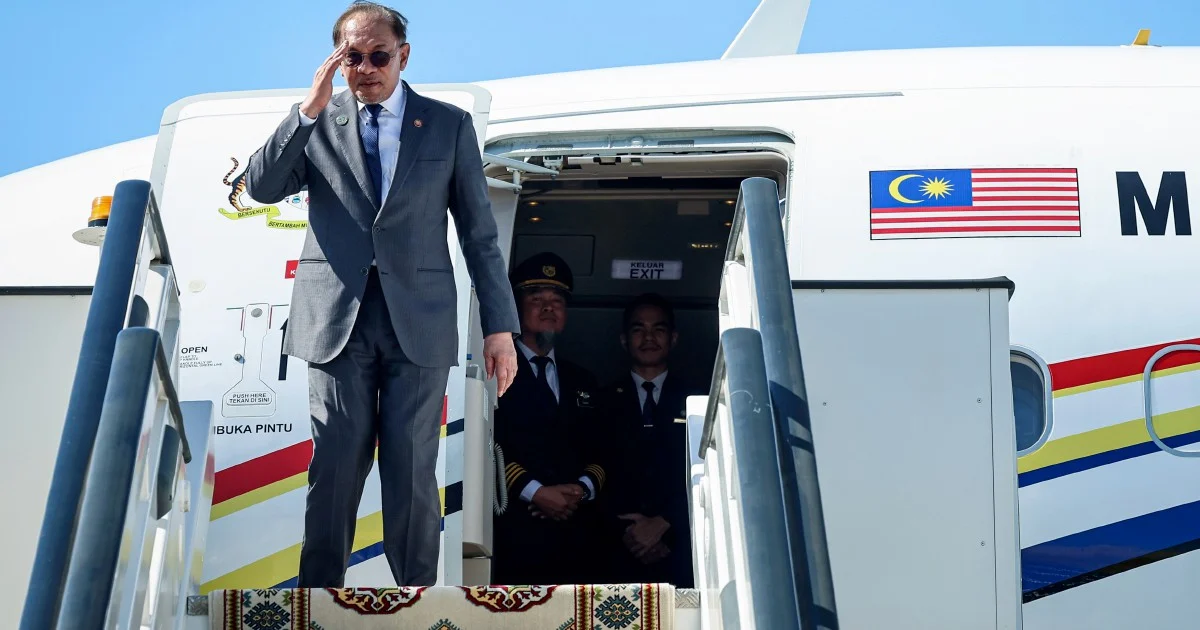
Prime Minister Datuk Seri Anwar Ibrahim touched down in Penang today, marking the conclusion of his diplomatic engagement in Turkmenistan and the start of a packed schedule in Malaysia's northern economic hub. The immediate transition between his Central Asian mission and domestic commitments underscores the government's emphasis on maintaining momentum across both international relations and domestic programming, particularly as the country approaches the final events of the year.
Anwar's arrival in Butterworth signals the beginning of a significant civic engagement period, with his participation in the National Journalists' Day (Hawana) 2026 grand finale representing a key moment for the administration to reaffirm its commitment to media freedom and press engagement. Hawana, an annual celebration organised to honour the contributions of journalists to nation-building, has become an increasingly important fixture on the government's calendar, serving as a platform for dialogue between the executive, media practitioners, and civil society. The Prime Minister's presence at this year's grand finale in Penang carries particular weight given ongoing discussions about media regulation, press independence, and the role of journalism in Malaysia's democratic institutions.
The timing of Anwar's journey from Turkmenistan reflects Malaysia's sustained diplomatic engagement in Central Asia, a region that has gradually gained prominence in the country's foreign policy calculus. His visit to Turkmenistan, though officially concluded, forms part of a broader pattern of expanding bilateral relationships and economic partnerships beyond Southeast Asia's traditional spheres. By rapidly transitioning to domestic engagements, Anwar demonstrates the administration's ability to juggle multiple policy priorities simultaneously, balancing international relations with the cultivation of domestic stakeholder confidence.
Penang's selection as the host location for these concurrent events is significant, given the state's positioning as Malaysia's investment hub and manufacturing powerhouse. The northern state has consistently attracted foreign direct investment and serves as a strategic platform for government announcements regarding economic initiatives and business development. Hosting the culmination of Hawana 2026 in Penang rather than Kuala Lumpur signals an intentional decentralisation of major national events, a theme the current administration has emphasised through its broader governance philosophy of regional development and stakeholder inclusion across Malaysian territory.
The investment forums scheduled alongside Hawana activities represent an opportunity for the government to showcase economic recovery metrics and promote Malaysia's credentials to both domestic and international investors. In the context of recent global economic uncertainties and regional competitive pressures, such platforms become crucial venues for articulating the nation's strategic positioning and investment attractiveness. Penang, with its established track record in semiconductor manufacturing, digital innovation, and industrial excellence, provides a credible backdrop for such discussions.
From a media perspective, Anwar's attendance at Hawana underscores the administration's engagement with press institutions at a time when journalism in Malaysia, like across Southeast Asia, faces evolving challenges from digitisation, misinformation, and changing economic models. The event offers journalists a direct channel to engage with senior political leadership while simultaneously allowing the government to communicate its vision for media development and regulatory frameworks that balance press freedom with social responsibility.
The sequence of events in Anwar's schedule—transitioning from international diplomacy to domestic civic engagement—illustrates a leadership approach that integrates foreign policy achievements with domestic legitimacy-building. His participation in events celebrating journalists, while simultaneously promoting investment, encapsulates a dual messaging strategy: affirming institutional health and press pluralism while projecting economic confidence and developmental momentum.
For Malaysian observers, Anwar's active engagement in both spheres demonstrates continuity in addressing the country's multiple challenges and opportunities simultaneously. The Penang visit, particularly given the state's significance in Malaysia's economic narrative, suggests that the administration views sustained engagement with key stakeholder groups—including media, investors, and civil society—as essential to its governance agenda.
As Malaysia navigates an increasingly complex geopolitical environment while managing domestic economic expectations, such high-profile visits and engagements serve to reinforce institutional confidence and demonstrate that the leadership remains actively engaged across diverse policy domains. The convergence of journalism celebrations and investment promotion in Penang reflects a broader strategic intent to position Malaysia as a nation where democratic institutions, press freedom, and economic dynamism coexist and reinforce one another.
%22%2F%3E%3C%2Fpattern%3E%3C%2Fdefs%3E%3Crect%20width%3D%22100%25%22%20height%3D%22100%25%22%20fill%3D%22url(%23ph24rdpg)%22%2F%3E%3Crect%20width%3D%22100%25%22%20height%3D%22100%25%22%20fill%3D%22url(%23ph24rdpp)%22%2F%3E%3Ctext%20x%3D%2250%25%22%20y%3D%2250%25%22%20text-anchor%3D%22middle%22%20dominant-baseline%3D%22central%22%20fill%3D%22rgba(255%2C255%2C255%2C0.95)%22%20font-family%3D%22Georgia%2C%20'Times%20New%20Roman'%2C%20serif%22%20font-weight%3D%22700%22%20font-size%3D%22170%22%20letter-spacing%3D%22-0.02em%22%3EMalaysia%3C%2Ftext%3E%3C%2Fsvg%3E)
%22%2F%3E%3C%2Fpattern%3E%3C%2Fdefs%3E%3Crect%20width%3D%22100%25%22%20height%3D%22100%25%22%20fill%3D%22url(%23ph16szhg)%22%2F%3E%3Crect%20width%3D%22100%25%22%20height%3D%22100%25%22%20fill%3D%22url(%23ph16szhp)%22%2F%3E%3Ctext%20x%3D%2250%25%22%20y%3D%2250%25%22%20text-anchor%3D%22middle%22%20dominant-baseline%3D%22central%22%20fill%3D%22rgba(255%2C255%2C255%2C0.95)%22%20font-family%3D%22Georgia%2C%20'Times%20New%20Roman'%2C%20serif%22%20font-weight%3D%22700%22%20font-size%3D%22136%22%20letter-spacing%3D%22-0.02em%22%3ECourt-Ord%E2%80%A6%3C%2Ftext%3E%3C%2Fsvg%3E)