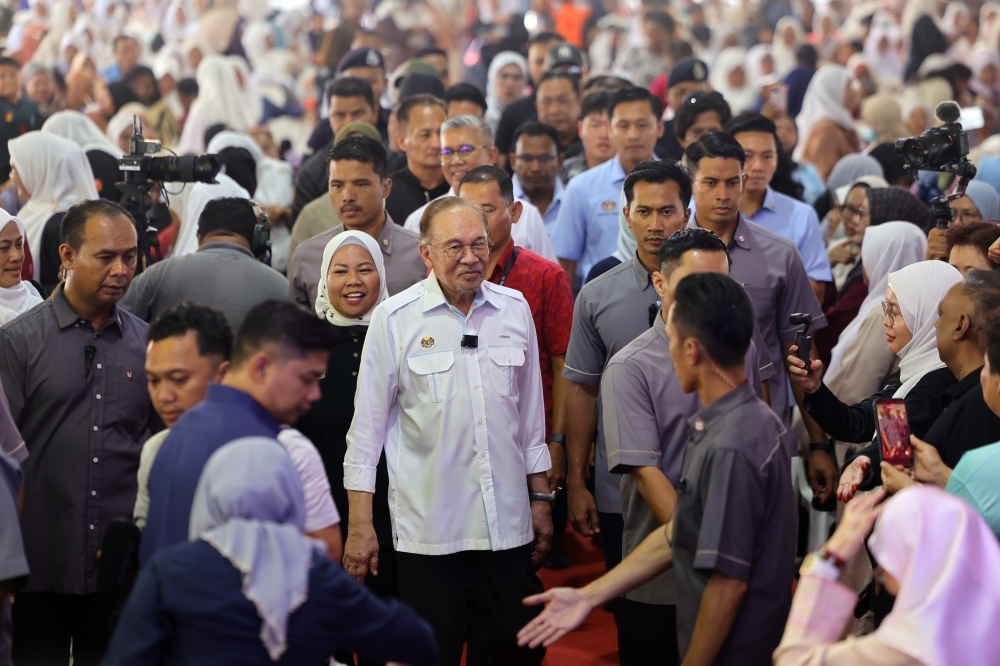
Prime Minister Datuk Seri Anwar Ibrahim has cast a critical eye over allegations that Tabung Haji distributed a 13-month bonus to staff, framing the transaction as potentially constituting a breach of trust and fiduciary duty. The comments emerged following the tabling of a Royal Commission of Inquiry report that examined governance failures and financial irregularities at the Islamic pilgrimage fund manager, an institution entrusted with managing savings from millions of Malaysian Muslims preparing for the Hajj journey.
Anwar's intervention signals heightened political attention to the RCI's findings, which appear to have uncovered concerning lapses in how Tabung Haji's leadership allocated resources and managed the organisation's obligations to depositors. The 13-month bonus arrangement, in particular, has drawn scrutiny from the highest levels of government, suggesting that such expenditure raised red flags among officials tasked with evaluating the fund's administrative conduct and financial stewardship. The Prime Minister's characterisation of the payout as a breach of trust underscores the gravity with which the government now views Tabung Haji's internal decision-making processes during the period under investigation.
Tabung Haji operates within a unique institutional context in Malaysia, functioning simultaneously as a financial intermediary, a religious trust, and a quasi-public service provider. The fund holds extraordinary significance within Muslim-majority Malaysia, as it represents the primary mechanism through which ordinary Malaysians accumulate capital specifically designated for one of Islam's five pillars. This dual identity—part savings institution, part faith-based custodian—means that governance standards and fiduciary obligations carry particular weight, as breaches affect not merely financial investors but also believers whose religious aspirations depend upon the fund's integrity and competent management.
The RCI report, which forms the evidentiary basis for Anwar's concerns, presumably documents patterns of expenditure and decision-making that conflicted with prudent management principles. A 13-month bonus payout would ordinarily require justification based on either contractual obligations or exceptional organisational performance metrics. The government's questioning of this allocation suggests that no such clear justification materialised during the inquiry's review, raising questions about whether such disbursements represented decisions undertaken by leadership in the institution's genuine interest or whether they reflected self-interested conduct at the expense of depositors' interests.
For ordinary Malaysians who have entrusted savings to Tabung Haji, Anwar's public questioning of such payouts carries reassuring dimensions, signalling governmental accountability mechanisms remain engaged and that irregularities will not escape scrutiny. However, it simultaneously raises uncomfortable realisations about the extent of mismanagement that may have persisted undetected prior to the RCI's establishment. Each revelation of questionable spending invites questions about what other practices may have compromised the fund's fiduciary standing or eroded depositors' accumulated savings.
The characterisation of the 13-month bonus as potentially violating fiduciary duty reflects established legal and ethical principles governing institutions entrusted with third-party assets. Fiduciaries occupy a position of special responsibility, obligated to prioritise beneficiaries' interests above all other considerations. Expenditures that appear disconnected from delivering value to those beneficiaries—in this case, Hajj pilgrims saving for their religious obligations—can constitute prima facie evidence of breached duties. The government's explicit articulation of this principle through the Prime Minister's intervention suggests that accountability mechanisms will be applied rigorously to Tabung Haji's leadership.
The RCI's mandate and subsequent report formation likely consumed considerable investigative resources and time, reflecting the complexity and seriousness with which authorities approached examining Tabung Haji's operations. The fact that findings concerning bonus payments have risen to Prime Minister level discussion indicates the report's conclusions carried sufficient weight to command executive branch attention. This escalation also suggests that recommendations flowing from the RCI may include structural reforms, governance enhancements, or personnel accountability measures designed to prevent recurrence of identified irregularities.
For Southeast Asian observers monitoring institutional governance standards across the region, Malaysia's approach to scrutinising Tabung Haji demonstrates how religious and cultural institutions can be subjected to rigorous accountability frameworks typically applied to secular organisations. This integration of religious trust with transparent governance represents a balancing act increasingly important as faith-based institutions across the region manage growing pools of capital and face mounting expectations regarding institutional probity.
The implications extend beyond Tabung Haji itself, potentially establishing precedents for how government agencies and statutory bodies examine spending decisions by institutional leadership. If bonus arrangements prove indefensible under scrutiny, successor administrations or boards may hesitate to authorise similar expenditures without explicit depositor consent or regulatory approval, creating precedent effects throughout Malaysia's broader institutional landscape. The Anwar government's willingness to publicly question such practices signals that governance standards will not remain negotiable even for culturally significant institutions.
Moving forward, attention will focus on whether the RCI report contains specific recommendations for remedying identified governance gaps and whether those recommendations translate into legislative amendments, regulatory changes, or enforcement actions. The government's public questioning of the 13-month bonus suggests that accountability will extend beyond mere acknowledgement of past irregularities toward concrete measures designed to restore public confidence and protect future Hajj fund deposits. The outcome of this process will substantially influence how Malaysians perceive both Tabung Haji's future and the government's commitment to institutional accountability regardless of an organisation's religious or cultural significance.

