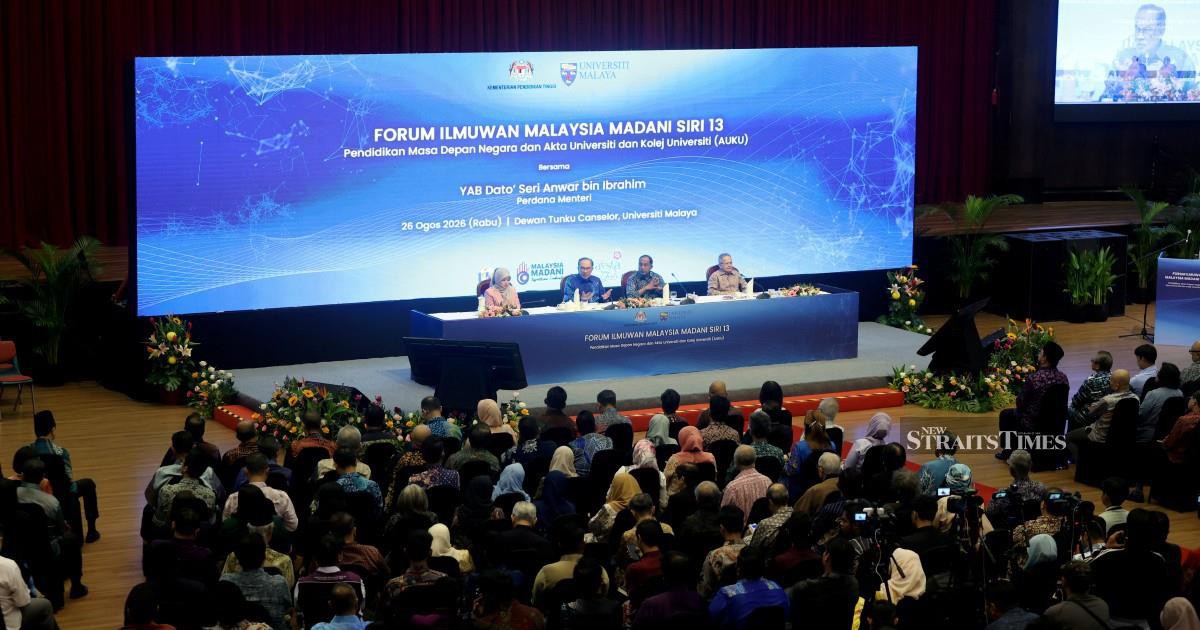
Prime Minister Datuk Seri Anwar Ibrahim has appealed for patience as the government navigates the politically complex process of reforming Malaysia's contentious university legislation, urging students and other stakeholders to have confidence in a broader transformation programme currently under development. The call represents the administration's attempt to balance demands for swift action against the practical challenges of dismantling long-standing regulations that have governed campus life for decades.
The AUKU, formally known as the Universities and University Colleges Act, has long been a focal point of student activism and civil liberties debates in Malaysia. The legislation, inherited from the colonial era and significantly amended post-independence, imposes strict restrictions on campus political activity, assembly, and student organisation—provisions that successive governments have resisted changing, citing concerns about institutional stability and political polarisation within universities. Student groups and opposition politicians have persistently called for its complete abolition, viewing the restrictions as incompatible with democratic principles and intellectual freedom essential to tertiary education.
Anwar's request for extended timeframes signals that the government recognises the need for substantive change while confronting institutional resistance and the complex procedural requirements involved in amending fundamental legislation. Repealing or comprehensively reforming the AUKU requires not merely parliamentary passage but extensive consultation with university administrations, student bodies, political stakeholders across the legislative spectrum, and security agencies whose institutional interests are intertwined with the current regulatory framework. This multi-layered negotiation process cannot be rushed without risking legislative collapse or implementation failures that could undermine the reforms themselves.
For Malaysian university students, this message comes as mixed news. On one hand, the Prime Minister's acknowledgment that reform is necessary validates years of activism and demonstrates that the issue has achieved sufficient political salience to warrant executive attention. Student movements have grown increasingly vocal since Anwar's government took office in late 2022, emboldened by a political leadership nominally more sympathetic to democratisation and civil liberties than its predecessors. On the other hand, the appeal for patience inevitably frustrates those who see AUKU restrictions as urgent civil rights violations that should not be subject to bureaucratic timelines.
The tension reflects a broader paradox within Malaysia's governance structure: while the Pakatan Harapan-led administration campaigned on reform platforms, implementing substantial change requires navigating entrenched institutional interests and constitutional constraints. University leaders, particularly those in the older research-intensive institutions, often worry that unfettered student political organising could disrupt campus operations or reflect broader political divisions that might make institutional management more difficult. Security and intelligence agencies maintain institutional investment in surveillance and restriction capabilities that current legislation provides. Such vested interests do not disappear merely because political leadership changes.
Southeast Asian context adds another dimension to Malaysia's AUKU debate. Several neighbouring democracies including Indonesia and Thailand maintain restrictive university regulations, though enforcement varies considerably. The Philippines has relatively permissive frameworks that permit robust student activism, which sometimes enriches campus intellectual life but has occasionally contributed to campus unrest. Taiwan's experience demonstrates that lifting restrictions on university political activity need not lead to institutional chaos when accompanied by transparent governance structures and inclusive decision-making processes. These regional examples provide potential models but also cautionary tales about implementation challenges.
The government's promised "comprehensive improvement measures" likely represent a middle-ground approach rather than outright repeal. This might include modifying restrictions on student organisations, easing prohibitions on campus political gatherings within certain parameters, clarifying disciplinary procedures, and introducing student representation in university governance structures. Such incremental reform could address core civil liberties concerns while preserving administrative mechanisms that university leaders view as essential. However, student activists sceptical of half-measures may view this approach as insufficient, potentially regenerating tensions if the eventual legislative product disappoints expectations.
Timing considerations significantly impact reform prospects. The government faces competing priorities including economic management, addressing cost-of-living pressures, and navigating factional tensions within its own coalition. Allocating political capital to AUKU reform competes against other initiatives. Additionally, opposition parties may strategically weaponise AUKU issues—supporting repeal in principle while criticising government implementation specifics—complicating the political environment for reformers. University leadership and establishment institutional voices may similarly deploy arguments about academic standards and campus stability to slow or limit changes.
For Malaysian stakeholders, Anwar's appeal fundamentally hinges on whether trust can be sustained through protracted legislative processes. Student groups have demonstrated sustained commitment to this issue across multiple electoral cycles and government changes, suggesting they will maintain pressure regardless of timeline assurances. The credibility of government reform intentions will be tested by visible progress—whether that involves public consultation mechanisms, preliminary legislative drafts, or signals about the scope of contemplated changes. Without tangible evidence of movement, appeals for patience risk appearing evasive rather than genuine.
The AUKU reform question ultimately reflects broader questions about Malaysia's democratic trajectory. Whether the current administration can successfully transform inherited authoritarian-era legislation while managing institutional resistance will signal the government's practical commitment to substantive liberalisation beyond rhetorical support. Student movements and civil society organisations monitoring this issue recognise that the government's handling will establish precedents for how future reform agendas are tackled. The coming months will be crucial in determining whether Anwar's appeal for time translates into meaningful legislative change or becomes a holding pattern that perpetuates restrictions.

