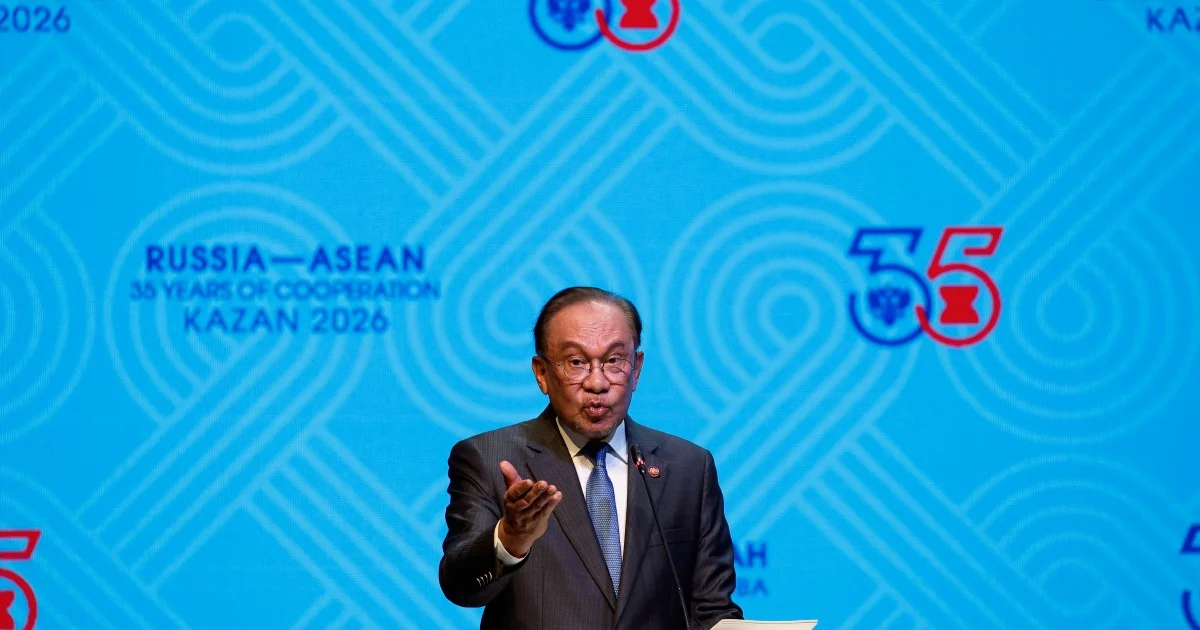
Prime Minister Datuk Seri Anwar Ibrahim has hailed the completion of the Asean-Russia Strategic Programme on Trade and Investment Cooperation 2026-2035 as a pivotal moment for the regional bloc's economic engagement with Moscow. Speaking in Kazan, Anwar characterised the finalised roadmap as essential momentum for the bloc to expand its commercial relationship with Russia, signalling renewed commitment to diversifying Asean's trade partnerships beyond its traditional Western-oriented frameworks. The initiative represents a structured approach to bilateral commerce over the next decade, establishing clear pathways for cooperation across multiple sectors.
The significance of this trade framework extends beyond mere diplomatic formality. For Malaysia and other Asean members, formalising ties with Russia offers an opportunity to tap into alternative markets and reduce dependency on traditional trading partners. The timing is particularly relevant given the evolving geopolitical landscape in Southeast Asia, where economic resilience increasingly depends on maintaining balanced relationships across multiple power centres. By establishing a strategic programme with Russia, Asean signals its commitment to non-alignment and pragmatic engagement with global powers, a principle that has underpinned the bloc's foreign policy approach for decades.
However, Anwar's emphasis on the importance of an enabling environment reveals the underlying complexities that could determine whether ambitious targets materialise. The phrase underscores recognition that ambitious trade and investment plans require more than signed agreements—they demand stable political relations, transparent business frameworks, and operational certainty. International sanctions imposed on Russia have created significant hurdles for legitimate commerce, complications that any serious trade initiative must navigate carefully. Malaysian companies and other Asean investors require assurance that commercial activities remain insulated from geopolitical volatility and that regulatory frameworks will remain predictable.
The 2026-2035 timeframe reflects a medium to long-term vision that transcends current tensions. Rather than viewing this as a short-term commercial transaction, both Asean and Russia are positioning themselves for sustained engagement across energy, agriculture, technology, and manufacturing sectors. For Malaysia specifically, expanded Russian trade could complement its existing diversification strategy, particularly in energy sectors where Russian expertise and resources remain significant. The roadmap likely includes provisions for energy cooperation, given Russia's dominance in oil and gas markets and Southeast Asia's continued reliance on energy imports.
Anwar's characterisation of the agreement as a "shot in the arm" acknowledges the relative stagnation in Asean-Russia economic relations in recent years. Despite geographical proximity and historical trade ties, bilateral commerce has underperformed relative to Asean's engagement with other major powers. This roadmap represents an attempt to reverse that trend, though success depends heavily on implementation capacity and the willingness of Asean member states to move beyond rhetoric. Each member has distinct economic priorities and political considerations that may affect participation levels, creating a coordination challenge for the bloc.
The enabling environment that Anwar references encompasses multiple dimensions. At the international level, the geopolitical environment—particularly regarding Western sanctions architecture and emerging technology restrictions—creates constraints that may limit certain forms of cooperation. Domestically, Asean members must ensure their regulatory frameworks facilitate legitimate trade while maintaining compliance with international standards. This balancing act becomes increasingly delicate as pressures mount from various quarters regarding economic decoupling and supply chain reconfiguration.
Investment cooperation represents a particularly sensitive component of the roadmap. For Russian investors, Asean offers access to growing consumer markets and manufacturing hubs, particularly in Vietnam, Thailand, and Malaysia. Conversely, Russian investment in Southeast Asia could support infrastructure development and technology transfer, provided investors can navigate political sensitivities around foreign ownership in sensitive sectors. Malaysian policymakers must weigh opportunities for capital inflow against security concerns and the desire to maintain domestic control over strategic industries.
The sectoral composition of envisioned cooperation remains crucial. Energy cooperation appears inevitable given Russia's role as a global supplier, but agricultural trade, timber, minerals, and processed goods likely feature prominently as well. For Malaysia's palm oil industry, Russian markets could provide valuable diversification, particularly as traditional European markets face increasing environmental and sustainability scrutiny. Similarly, Russian agricultural products could find receptive markets throughout Southeast Asia.
The announcement also carries symbolic weight within Asean's broader strategic positioning. As the bloc navigates great power competition between the United States and China, maintaining substantive engagement with Russia affirms Asean's commitment to the Asean Way—a principle of non-alignment and inclusive engagement rather than forced choosing of sides. This roadmap signals that Asean remains determined to leverage its centrality by engaging constructively with all major powers, though the practical implementation of this principle grows increasingly complicated in an era of strategic competition.
Moving forward, the success of this initiative will depend on whether Asean member states translate the roadmap into concrete projects and whether geopolitical circumstances remain conducive to implementation. Anwar's remarks suggest awareness that agreements alone prove insufficient; the political will, regulatory clarity, and stable international environment necessary for flourishing trade relationships must accompany formal frameworks. Malaysia and its regional partners must now focus on converting this strategic commitment into tangible commercial benefits while managing the inherent risks of engaging with a nation subject to international scrutiny.