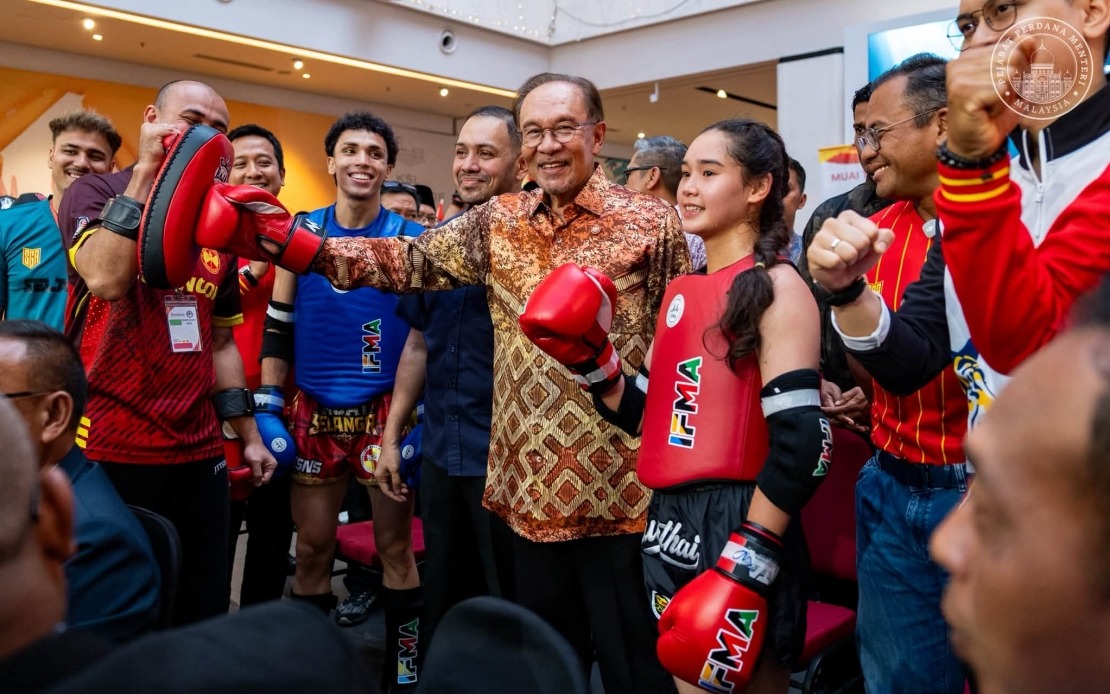
Prime Minister Datuk Seri Anwar Ibrahim has expressed confidence in the next generation of Malaysian sporting talent after witnessing competitors at the 2026 Selangor Malaysia Games (SUKMA), voicing hope that these young athletes will eventually carry the nation's flag at international competitions. The premier shared his observations in a Facebook post following his attendance at Muay Thai events during the games, where he had the chance to interact directly with participants and observe their commitment firsthand.
Anwar's remarks underscore the significance of SUKMA as a talent pipeline for Malaysian sport, particularly at a time when the nation seeks to strengthen its performance at regional and global sporting forums. His emphasis on the athletes' spirit, discipline, and courage reflects qualities that officials believe are essential for athletes aiming to compete at higher levels of competition. The premier's direct engagement with the young competitors also highlights the government's vested interest in grassroots sports development and the pathways that nurture elite athletes from the domestic level upwards.
The 2026 SUKMA represents a major moment for Selangor, marking the state's second time hosting the biennial Games after an interval of 28 years. This gap underscores the competitive nature of hosting such a significant national event, where states vie for the opportunity to showcase their sporting infrastructure and organizational capabilities. The fact that Selangor was selected again suggests confidence in the state's ability to manage an event of considerable scale and complexity.
With more than 5,000 young athletes converging from across Malaysia to compete until August 24, the 2026 Games encompasses an impressive spread of 37 sports, with 468 gold medals at stake. The scale of participation reflects the breadth of sporting interest across the country and demonstrates how SUKMA functions as a comprehensive talent-spotting exercise. The variety of disciplines on offer—ranging from traditional combat sports like Muay Thai to conventional Olympic events—ensures that athletes from diverse backgrounds and regions have opportunities to compete and be identified for future national teams.
The competitive environment at SUKMA carries particular significance for states with smaller populations or limited resources, as the Games provide a platform where talent can emerge regardless of geographical or socioeconomic constraints. Young athletes who perform well at SUKMA often attract the attention of national coaches and sports administrators, creating a structured pathway toward higher-level representation. This system has historically produced many athletes who have gone on to represent Malaysia at Commonwealth Games, Asian Games, and other international competitions.
Anwar's focus on international representation reflects broader national policy priorities around sports excellence. Malaysia has made considerable investments in sports development infrastructure in recent years, and the performance of young athletes at SUKMA serves as a barometer for the effectiveness of these investments. When young competitors demonstrate the qualities Anwar highlighted—spirit, discipline, and courage—they validate the training systems and support structures that have been put in place at state and federal levels.
The premier's comments also carry subtle messaging about national pride and identity. By explicitly connecting performance at a domestic competition to international representation, Anwar reinforces the narrative that Malaysian athletes can compete successfully on the world stage. This messaging is particularly important in maintaining public support for sports funding and encouraging young Malaysians to pursue athletic careers.
For Selangor specifically, hosting SUKMA again offers economic and promotional benefits beyond the immediate competition period. The Games generate tourism revenue, create employment opportunities, and provide a platform to showcase the state's sporting facilities and organizational capacity. Successfully hosting a national sporting event enhances a state's profile and demonstrates administrative competence, factors that can influence investor confidence and public perception.
The timing of the 2026 Games also aligns with Malaysia's preparation for various international competitions scheduled in the coming years. SUKMA serves as both a proving ground for identifying talent and an opportunity to test coaching methodologies and sports science approaches that can be refined before larger international commitments. Athletes who shine at these Games become candidates for national development programs that provide specialized training, nutritional support, and competition opportunities.
Anwar's engagement with the Muay Thai events specifically is noteworthy, as Southeast Asian martial arts have cultural significance across the region. Muay Thai in particular has a strong following throughout Southeast Asia, and success in this discipline at international level can enhance Malaysia's regional standing. The premier's visible support for the sport sends signals to both athletes and administrators about the government's commitment to developing excellence in disciplines where Malaysia can potentially achieve competitive advantages.
The broader context of SUKMA reflects how regional sports competitions function as developmental systems within nations. Unlike international competitions where countries send their best-prepared athletes, SUKMA allows for broader participation and experimentation with younger, less-experienced competitors. This creates valuable learning opportunities and enables coaches to identify talent at earlier stages than might otherwise be possible.
As the 2026 Games continue, Anwar's remarks will likely serve as motivation for competing athletes, particularly those from smaller or less-resourced states who may feel their chances of making it to national teams are limited. The premier's recognition that SUKMA participants can reach international level provides encouragement to pursue athletic careers and validates the sacrifices that young athletes and their families make in pursuit of sporting excellence.
Looking forward, the success of the 2026 Selangor SUKMA will be measured not only by the quality of competition and organization but by how many of its young athletes eventually translate their performances into national team selections and international competition appearances. Anwar's optimism about this prospect reflects confidence in both the talent available within Malaysia's youth population and the development systems designed to nurture that talent toward elite performance.

