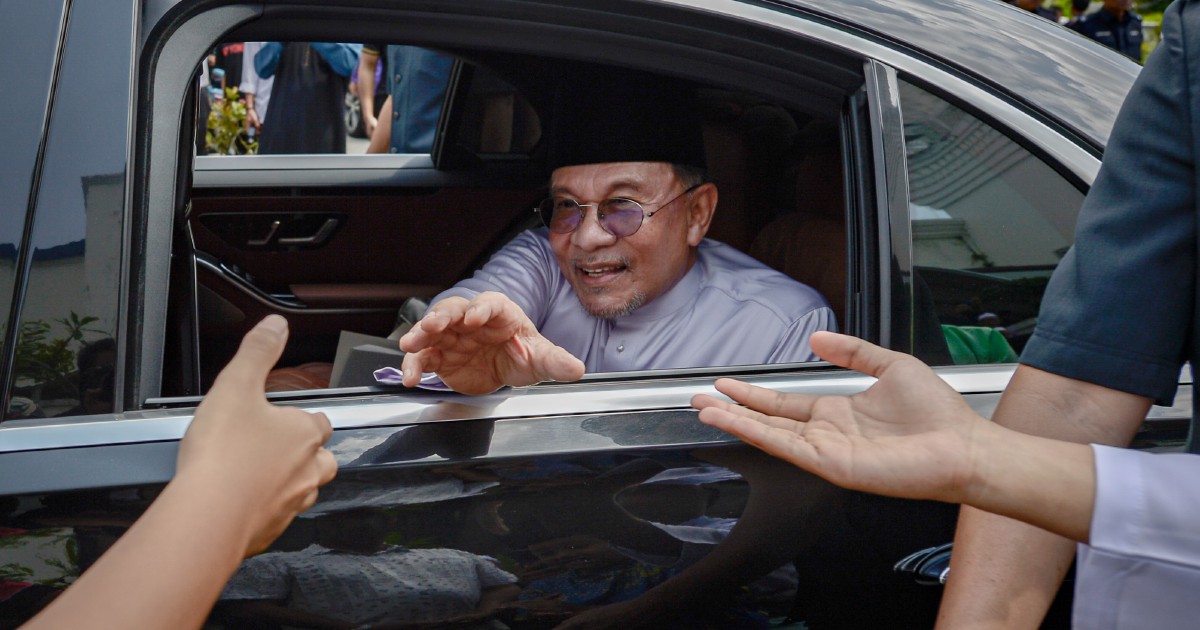
Prime Minister Datuk Seri Anwar Ibrahim is taking his campaigning directly to Negri Sembilan today as Pakatan Harapan seeks to maintain and build upon its electoral momentum during the ongoing state election cycle. The move signals the coalition's determination to capitalize on federal visibility and the prime minister's political standing to influence outcomes at the state level, a strategy that has become increasingly central to coalition politics in Malaysia.
Anwar's presence on the campaign trail reflects a deliberate effort to energize Pakatan Harapan's grassroots machinery across Negri Sembilan. The state represents significant political territory, and securing or consolidating support here carries implications not just for the immediate electoral outcome but also for the coalition's broader political trajectory in the region. By personally engaging with voters and party machinery, the prime minister underscores the national coalition's commitment to the state campaign.
Negri Sembilan has been a competitive political battleground in recent years, with multiple coalitions contesting for influence and representation. The stakes are particularly high for Pakatan Harapan, which must demonstrate that it can translate federal-level support into meaningful state-level gains. Anwar's direct involvement suggests the coalition views this campaign as sufficiently important to warrant the prime minister's time and political capital.
The campaign represents more than routine electoral engagement. In Malaysian politics, when the prime minister takes to the campaign trail at state level, it typically indicates areas of strategic concern or opportunity. The decision to visit Negri Sembilan specifically indicates that party strategists believe there is tangible potential to influence voter sentiment and party fortunes through targeted outreach during this critical period.
Pakatan Harapan's coalition structure and political positioning has evolved considerably since the 2018 elections. The coalition must manage diverse internal interests while maintaining a cohesive public message that appeals to Negri Sembilan voters across different demographic and geographic segments. Anwar's campaign appearance provides an opportunity to articulate the coalition's vision for the state and reinforce messaging about economic management, development priorities, and governance.
The timing of Anwar's campaign visit carries significance given the ongoing nature of the state election campaign. Political campaigns in Malaysia operate within defined timeframes, and the urgency of securing voter support intensifies as polling day approaches. By injecting prime ministerial visibility into the campaign, Pakatan Harapan attempts to focus voter attention on its national-level leadership credentials and policy record.
For Negri Sembilan residents, Anwar's presence offers a direct channel to engage with federal leadership on state-level concerns. Local voters often use state elections as opportunities to communicate their preferences and priorities, and prime ministerial involvement signals that their electoral decisions matter at the highest levels of government. This engagement can influence voter turnout and sentiment, particularly among supporters who value connection between state and federal governance.
The campaign strategy reflects broader trends in Malaysian electoral politics where federal actors increasingly involve themselves in state-level contests. This integration of federal and state campaigning has become normalized, though it raises questions about the distinct space for state-level political debate and whether state elections genuinely function as referendums on state-level governance or instead become extensions of federal political competitions.
Packatan Harapan faces the challenge of maintaining coalition cohesion while pursuing electoral gains. Different coalition partners may have varying priorities and candidate preferences in Negri Sembilan, and Anwar's campaign visit must navigate these internal dynamics while projecting unity to voters. The prime minister's ability to articulate a message that speaks to the coalition's diverse base will be central to the campaign's effectiveness.
Regionally, developments in Negri Sembilan carry resonance for wider Southeast Asian political watchers who track Malaysia's democratic processes. The state election reflects broader questions about coalition stability, voter preferences, and the trajectory of Malaysia's political landscape. International observers often view Malaysian elections as bellwethers for regional political trends, making even state-level campaigns subject to external scrutiny.
The economic context underpins much of the electoral messaging. Malaysian voters, including those in Negri Sembilan, remain deeply concerned about cost-of-living pressures, employment opportunities, and economic development. Pakatan Harapan must demonstrate through its campaign messaging that it has credible solutions to these persistent challenges. Anwar's involvement allows the coalition to connect federal economic policies and initiatives directly to state-level concerns.
Moving forward, the effectiveness of this campaign push will become apparent once voting concludes and results are tabulated. However, regardless of outcomes, the decision to deploy prime ministerial resources reflects strategic calculations about the state's political importance and the coalition's assessment of competitive dynamics within Negri Sembilan. The campaign represents a critical moment for Pakatan Harapan to consolidate support and project confidence in its political future at both state and federal levels.

