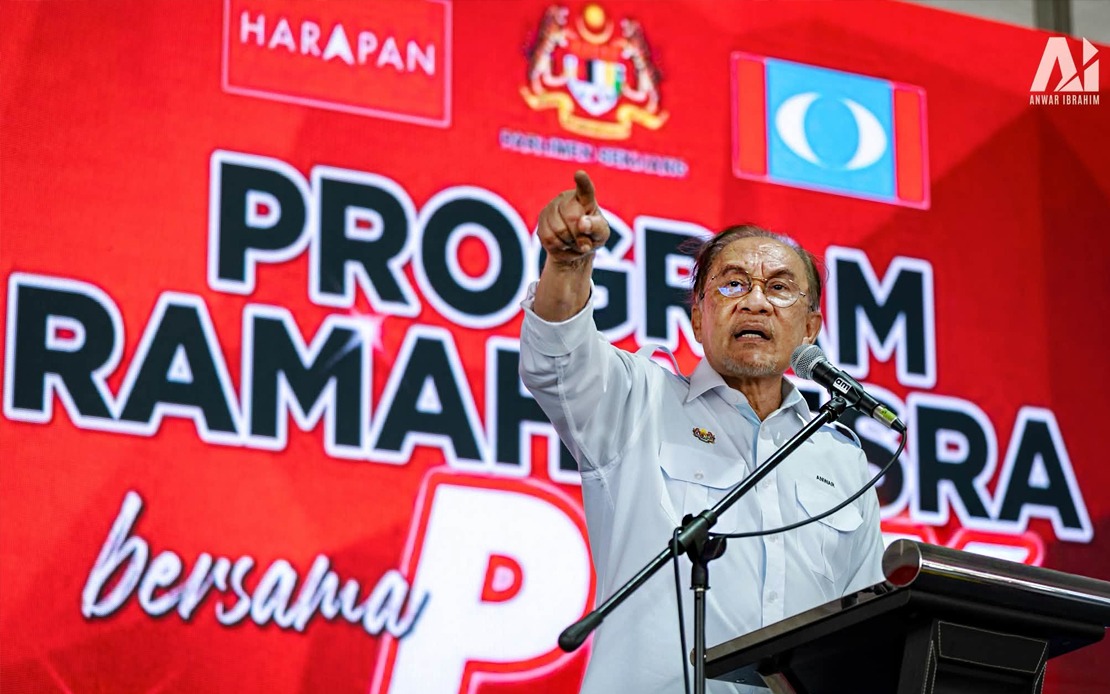
Prime Minister Datuk Seri Anwar Ibrahim has committed to tackling the durian sector's price crisis by leveraging bilateral relations with China, signalling that high-level diplomatic engagement will focus on agricultural trade during his upcoming visit to Beijing. Speaking at a meet-the-people session in the Gambir state constituency in Tangkak on July 5, Anwar acknowledged the severe financial hardship facing durian growers whose incomes have been squeezed by a sharp drop in prices. The simultaneous maturation of durian crops across Peninsular Malaysia has created a glut that has depressed valuations in local markets, prompting government intervention at the highest levels.
The Premier's strategy centres on opening doors in the Chinese market, where demand remains robust despite stringent quality requirements. By framing durian expansion as a bilateral trade opportunity rather than merely a subsidy issue, Anwar is positioning agricultural exports as a cornerstone of Malaysia-China economic cooperation. He characterised Premier Li Qiang as a trusted ally and indicated willingness to navigate China's exacting food safety and quality standards—factors that have historically limited Malaysian durian penetration in that market. This diplomatic approach reflects a broader recognition that structural solutions rooted in sustained export demand offer farmers greater long-term stability than price supports.
The durian market distress has emerged as an acute policy headache for the government, particularly in agricultural regions where growers represent significant political constituencies. When production cycles synchronise across major growing areas, the resulting oversupply overwhelms domestic consumption capacity and exporters' ability to absorb stocks at profitable prices. Malaysian durian commands premium positioning globally, yet accessing premium markets like China requires meeting rigorous phytosanitary and traceability requirements. The government's willingness to raise the issue at prime ministerial level underscores recognition that trade barriers—rather than production volume—currently constrain farmer revenue.
Anwar's initiative also reflects broader economic realities in the region. Southeast Asian agricultural producers increasingly depend on Chinese demand to sustain commodity prices, particularly as domestic markets reach saturation and regional competition intensifies. By negotiating enhanced market access, the Malaysian government seeks to align supply with demand dynamically rather than relying on static domestic pricing mechanisms. This approach carries implications for other Malaysian agricultural exporters facing similar synchronised production patterns, suggesting a model of export-led stabilisation that policymakers may apply across sectors.
Beyond the durian issue, Anwar used the public forum to reinforce the government's commitment to shielding citizens from global energy price volatility. He highlighted Malaysia's exceptional position in maintaining some of the world's lowest retail fuel prices despite sustained geopolitical tensions affecting oil markets. The Prime Minister attributed this to deliberate policy choices to absorb cost pressures rather than pass them to consumers, invoking both economic principle and social obligation. His reference to conflicts involving Iran and the United States disrupting supply chains reflected acknowledgement of Middle East instability as an ongoing structural challenge to energy security.
The government's fuel subsidy architecture, particularly the BUDI MADANI initiative, represents one of Southeast Asia's most generous consumer protections against energy inflation. Current subsidised rates—RM1.99 per litre for RON95 petrol and RM2.10 per litre for diesel—represent substantial discounts from unsubsidised retail prices of RM3.37 and RM3.97 respectively, effective from July 1 to 8. This gap underscores the fiscal commitment required to maintain price stability and reflects a policy philosophy that treats fuel access as essential infrastructure warranting protection from market volatility. Few nations in the region, and fewer globally, maintain such pronounced subsidy margins.
Anwar's dual focus—on agricultural market expansion and energy affordability—reveals a governing philosophy balancing supply-side structural reform with demand-side consumer protection. The durian initiative targets the problem's root cause by expanding viable markets, while fuel pricing interventions address immediate household purchasing power. This combination suggests the government views inflation as a policy domain requiring parallel strategies addressing both production constraints and consumption support. For Malaysian households and farming communities, the message emphasises that economic management prioritises their material security against external shocks.
The political dimensions deserve note as well. The Tangkak meet-and-greet session, attended by Pakatan Harapan figures including Johor election director Datuk Seri Amirudin Shari and the Gambir state constituency candidate, situated these policy commitments within a broader electoral narrative. Government engagement with farming communities and fuel-dependent consumers signals responsiveness to grassroots economic concerns. By announcing specific initiatives—the China trade negotiation, fuel price controls—Anwar positioned his administration as actively problem-solving rather than passively accepting market outcomes.
The durian crisis illustrates recurring vulnerabilities in Malaysia's agricultural export system. Commodity price instability remains a structural characteristic of primary product dependence, and coordinated production across regions amplifies rather than smooths supply shocks. While opening Chinese markets represents a valuable medium-term strategy, it does not address underlying production synchronisation patterns. Farmers might ultimately require guidance on staggered planting cycles or crop diversification—longer-term adaptations that create more resilient revenue streams than market access negotiations alone can achieve. Nonetheless, Anwar's commitment reflects appropriate recognition that public policy can meaningfully influence trade outcomes through sustained bilateral engagement.
For Southeast Asian agricultural producers more broadly, Malaysia's approach offers instructive lessons. Regional commodity exporters increasingly recognise that accessing high-value markets like China requires sustained diplomatic effort alongside quality compliance. The Malaysian government's elevation of durian to prime ministerial agenda status signals that agricultural trade deserves the same strategic attention historically reserved for manufacturing or technology sectors. This recalibration may encourage other regional governments to pursue similar high-level market access negotiations, potentially reshaping agricultural trade dynamics across Southeast Asia.

