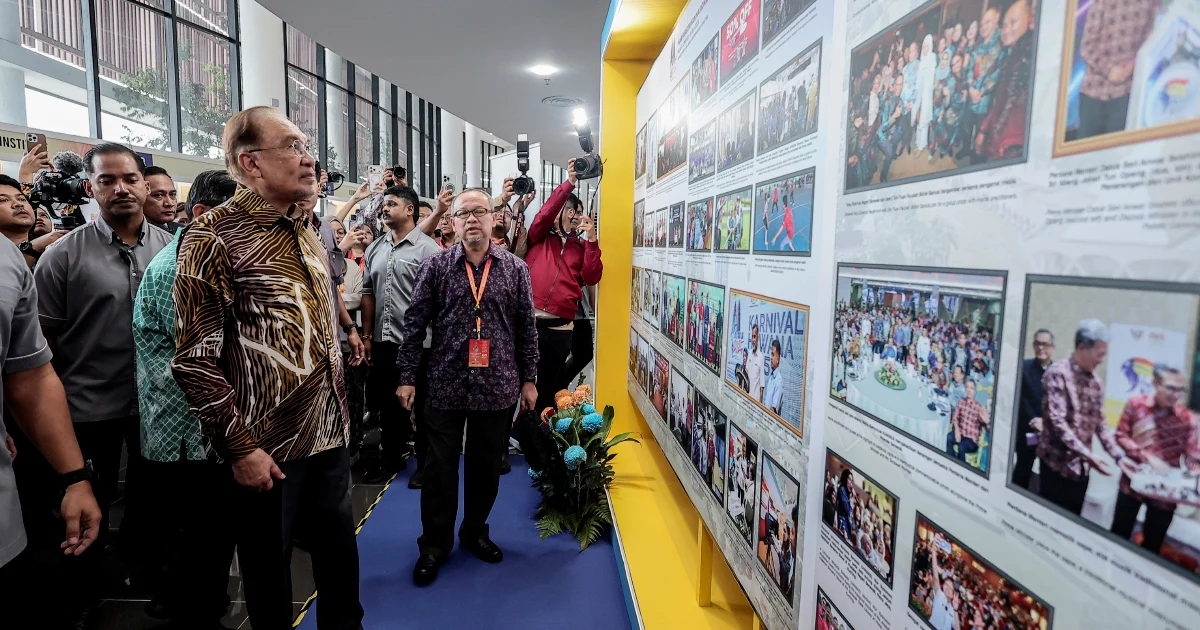
Prime Minister Datuk Seri Anwar Ibrahim has pledged RM1 million in government funding for Tabung Kasih@Hawana 2026, a welfare initiative designed to support journalists across the country. The announcement, made during the premier gathering in Permatang Pauh, reflects the administration's deepening investment in media sector welfare and signals a commitment to sustaining industry support mechanisms beyond the current fiscal year.
The Tabung Kasih initiative represents a targeted intervention in a sector facing chronic challenges around compensation, job security, and professional wellbeing. Malaysia's journalism workforce has experienced significant pressures in recent years, from newsroom consolidations to the migration of advertising revenue toward digital platforms. By earmarking dedicated welfare funding, the government acknowledges that media professionals require institutional safety nets comparable to those available in other skilled professions.
The timing of this announcement carries particular significance for Southeast Asia's media landscape. Regional economies are grappling with the transition from traditional news business models to digital-first operations, a shift that has left many journalists facing income uncertainty and reduced benefits. Malaysia's approach, through direct government welfare contribution, contrasts with models pursued elsewhere in the region and demonstrates an explicit policy choice to treat journalism as a sector worthy of public investment rather than market-driven restructuring alone.
Anwar's statement encompassed broader commitments to media industry transformation, suggesting the RM1 million allocation forms part of a comprehensive policy framework. This wider vision likely encompasses digital literacy initiatives, technology infrastructure support, and efforts to modernise journalistic practice across both traditional and emerging platforms. The government appears to recognise that welfare support alone cannot sustain a thriving media ecosystem without parallel investments in capability and infrastructure.
The welfare fund addresses a gap in Malaysia's social protection architecture. Unlike manufacturing or services sectors, which benefit from established employer-based schemes and union arrangements, journalism's fragmented employment structures—combining salaried reporters, freelancers, and digital contractors—create coverage gaps in conventional safety nets. A dedicated welfare mechanism can reach professionals who fall outside traditional employment classification systems.
For Malaysian newsrooms, the allocation provides a measurable resource for supporting journalists during career transitions, health emergencies, or prolonged unemployment. The fund's structure and administration remain to be detailed, but precedent suggests potential uses could include medical assistance, professional development grants, or income support during employment gaps. Such provisions become increasingly vital as news organisations continue restructuring their operations in response to digital market shifts.
The announcement also carries implications for press freedom discourse in Malaysia. By channelling government support directly to journalist welfare, authorities position themselves as stakeholders in media sustainability rather than merely regulators of content. This framing can strengthen the case for editorial independence by demonstrating government investment in the profession's material conditions, though it also creates potential tension points around institutional dependencies that observers will monitor.
Regional comparisons illuminate the distinctiveness of Malaysia's approach. While neighbouring countries have launched digital transformation initiatives or technology incubators for media enterprises, direct welfare funding specifically for journalists remains less common across Southeast Asia. Thailand, Indonesia, and the Philippines have experimented with media development funds, but these typically target institutional capacity rather than individual journalist welfare. Malaysia's choice reflects a more direct social protection orientation.
The implications extend beyond immediate recipient journalists to broader industry hiring and retention patterns. When government signals commitment to workforce welfare, it can influence employer expectations around compensation standards. News organisations may feel pressure to match or reference welfare provisions when setting salary scales, potentially creating upward movement in journalist compensation across the market. Conversely, some employers might argue that government welfare supplements justify holding salary levels static.
The Hawana forum itself represents significant infrastructure for media sector dialogue in Malaysia. By announcing the welfare initiative at this venue, the government demonstrates its use of industry gatherings as platforms for policy articulation. This suggests future media support measures may also emerge through similar conferences, creating predictability for sector planning while potentially limiting ad-hoc responses to emerging crises.
Looking forward, the sustainability and adequacy of RM1 million requires contextualisation. Malaysia's journalist population numbers in the tens of thousands across all media formats and employment arrangements. While the allocation demonstrates commitment, its actual impact depends on fund architecture, distribution mechanisms, and administrative efficiency. Annual allocation, one-time disbursement, or cyclical funding arrangements each carry different implications for programme effectiveness.
The announcement reflects broader global trends in media policy. Governments across developed democracies increasingly recognise journalism's public goods characteristics and are exploring direct support mechanisms, from subsidies to licensing fee reforms. Malaysia's welfare fund approach aligns with international recognition that market dynamics alone may not sustain essential media functions, particularly in regional and local journalism where commercial viability remains constrained.
For Malaysian businesses and advertisers, this policy trajectory signals official positioning of media as infrastructure worthy of continued investment. It may influence corporate decisions about media spending, editorial partnerships, and content sponsorship, as companies gauge the government's commitment to sector stability. The welfare initiative thus carries economic signalling value beyond its immediate social protection functions.
%22%2F%3E%3C%2Fpattern%3E%3C%2Fdefs%3E%3Crect%20width%3D%22100%25%22%20height%3D%22100%25%22%20fill%3D%22url(%23ph4da0ug)%22%2F%3E%3Crect%20width%3D%22100%25%22%20height%3D%22100%25%22%20fill%3D%22url(%23ph4da0up)%22%2F%3E%3Ctext%20x%3D%2250%25%22%20y%3D%2250%25%22%20text-anchor%3D%22middle%22%20dominant-baseline%3D%22central%22%20fill%3D%22rgba(255%2C255%2C255%2C0.95)%22%20font-family%3D%22Georgia%2C%20'Times%20New%20Roman'%2C%20serif%22%20font-weight%3D%22700%22%20font-size%3D%22320%22%20letter-spacing%3D%22-0.02em%22%3ERare%3C%2Ftext%3E%3C%2Fsvg%3E)
%22%2F%3E%3C%2Fpattern%3E%3C%2Fdefs%3E%3Crect%20width%3D%22100%25%22%20height%3D%22100%25%22%20fill%3D%22url(%23phm749g)%22%2F%3E%3Crect%20width%3D%22100%25%22%20height%3D%22100%25%22%20fill%3D%22url(%23phm749p)%22%2F%3E%3Ctext%20x%3D%2250%25%22%20y%3D%2250%25%22%20text-anchor%3D%22middle%22%20dominant-baseline%3D%22central%22%20fill%3D%22rgba(255%2C255%2C255%2C0.95)%22%20font-family%3D%22Georgia%2C%20'Times%20New%20Roman'%2C%20serif%22%20font-weight%3D%22700%22%20font-size%3D%22320%22%20letter-spacing%3D%22-0.02em%22%3EPM%3C%2Ftext%3E%3C%2Fsvg%3E)
%22%2F%3E%3C%2Fpattern%3E%3C%2Fdefs%3E%3Crect%20width%3D%22100%25%22%20height%3D%22100%25%22%20fill%3D%22url(%23phgab1g)%22%2F%3E%3Crect%20width%3D%22100%25%22%20height%3D%22100%25%22%20fill%3D%22url(%23phgab1p)%22%2F%3E%3Ctext%20x%3D%2250%25%22%20y%3D%2250%25%22%20text-anchor%3D%22middle%22%20dominant-baseline%3D%22central%22%20fill%3D%22rgba(255%2C255%2C255%2C0.95)%22%20font-family%3D%22Georgia%2C%20'Times%20New%20Roman'%2C%20serif%22%20font-weight%3D%22700%22%20font-size%3D%22170%22%20letter-spacing%3D%22-0.02em%22%3EMalaysia%3C%2Ftext%3E%3C%2Fsvg%3E)