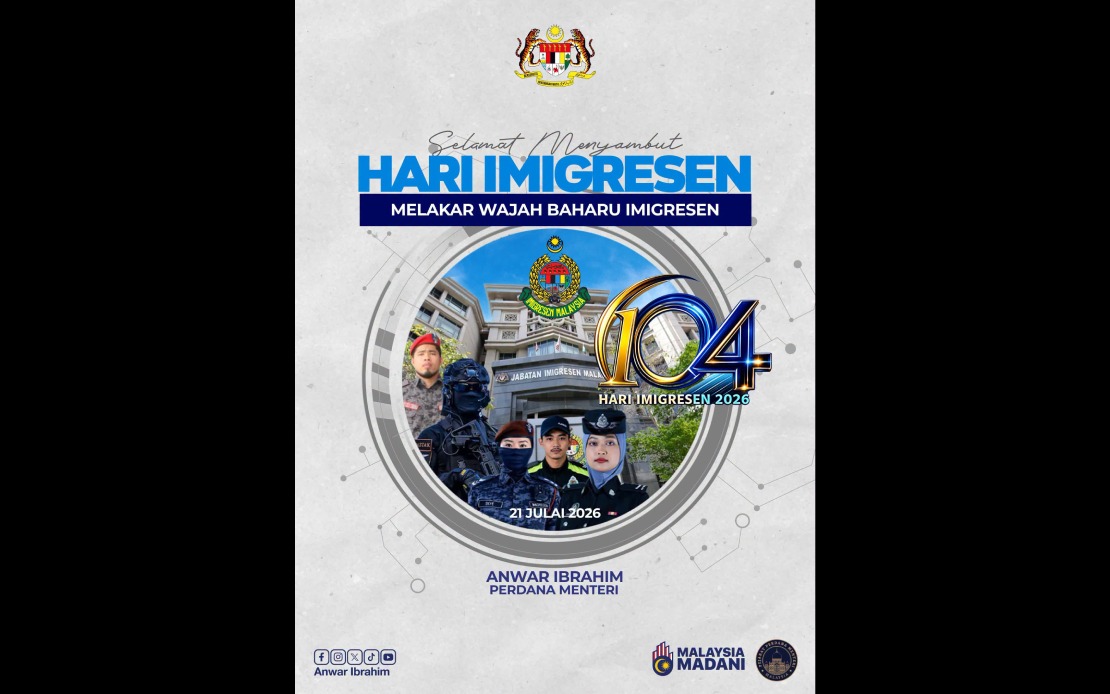
Prime Minister Datuk Seri Anwar Ibrahim has made a direct appeal to all Immigration Department (JIM) staff to demonstrate unwavering integrity in their roles while firmly rejecting corruption and misconduct. The call came during commemorations of Immigration Day on July 21, with Anwar leveraging the occasion to reinforce expectations around ethical conduct within the agency responsible for Malaysia's border security and citizen services.
Corruption within immigration agencies has long presented a governance challenge across Southeast Asia, with Malaysia's border control agencies occasionally facing scrutiny over irregular practices. By publicly addressing JIM personnel through a Facebook statement, Anwar signalled that integrity remains a priority for the federal government and that standards of conduct are under active review at the highest level. This public messaging serves both to reassure citizens of the government's commitment to clean administration and to establish clear performance benchmarks for departmental leadership.
Beyond the anti-corruption emphasis, Anwar articulated a broader vision for immigration services centred on what he termed compassion alongside efficiency. This framing acknowledges that JIM operates at the intersection of security imperatives and humanitarian concerns, processing asylum seekers, refugees, migrant workers, and returning citizens. The call to embed compassion in service delivery suggests recognition that procedural rigour need not preclude empathy, a particularly pertinent message given rising migration pressures across the region and Malaysia's substantial foreign worker population numbering in the millions.
The 2026 Immigration Day theme, "Charting a New Face for Immigration," appears designed to signal institutional renewal and modernisation. This thematic direction hints at potential reform initiatives or technological upgrades within JIM, possibly including digital systems to reduce opportunities for irregularities and streamline processing. For Malaysian businesses and individuals who regularly interface with immigration procedures—whether in visa applications, employment verification, or travel documentation—such modernisation efforts carry practical implications for service speed and reliability.
Anwar's statement emphasised professional service delivery and courtesy as core departmental values. These elements prove particularly significant for Malaysia's image as a regional financial hub and tourism destination. Immigration personnel represent Malaysia's first point of contact for international visitors and investors, making their professionalism a tangible factor in foreign perceptions of Malaysian governance and hospitality. Courteous, efficient processing at airports and borders directly influences how quickly legitimate travellers and business people can enter the country, affecting economic activity and tourism revenue.
The sovereignty dimension highlighted by Anwar reflects the security function that immigration control inherently performs. Effective border management protects national security while facilitating legitimate movement. For Malaysia, located on critical shipping lanes and hosting regional offices of multinational corporations, robust immigration oversight remains strategically important. However, this security mandate requires careful balance with openness to legitimate trade, investment, and people movement—an equilibrium that professional, corruption-free administration helps achieve.
The timing of Anwar's message also merits consideration within Malaysia's broader anti-corruption narrative. Since returning to high office, the Prime Minister has emphasised institutional integrity as foundational to restoring public confidence in government. Specific appeals to individual departmental workforces, as with this JIM address, reinforce that corruption-fighting commitments extend beyond rhetoric into actual agency operations. Such targeted messaging to public sector personnel may also serve to motivate those seeking to maintain ethical standards amid organisational pressures.
For Malaysian residents and foreign nationals navigating immigration procedures, Anwar's emphasis on professional and courteous service offers some assurance that the government recognises service quality expectations. Migrant workers from Indonesia, Bangladesh, Myanmar, and other countries constitute critical components of Malaysia's workforce, and their treatment by immigration authorities affects social cohesion and regional relations. Similarly, as Malaysia competes regionally for international talent and investment, immigration personnel conduct directly influences whether Malaysia appears welcoming or burdensome to prospective residents and professionals.
The broader context includes recent global focus on migration management, with numerous countries reassessing immigration policies and enforcement practices. Anwar's framing positions Malaysia as oriented toward both security and humanitarian considerations, potentially appealing to international observers and regional partners concerned with how migration is administered. This diplomatic dimension matters as Malaysia engages with ASEAN neighbours on migrant worker protections and coordinated border management.
The commitment to maintain excellence while safeguarding sovereignty and serving people reflects a three-part mandate that JIM must simultaneously discharge. Excellence suggests continuous improvement and professional standards; sovereignty protection implies security vigilance and border integrity; people-serving acknowledges the public service dimension and requirement for accessibility and fairness. Balancing these elements demands both strong leadership and adequate resourcing, questions that will determine whether Anwar's integrity call translates into sustained operational improvement across JIM's nationwide network of immigration offices and checkpoints.

