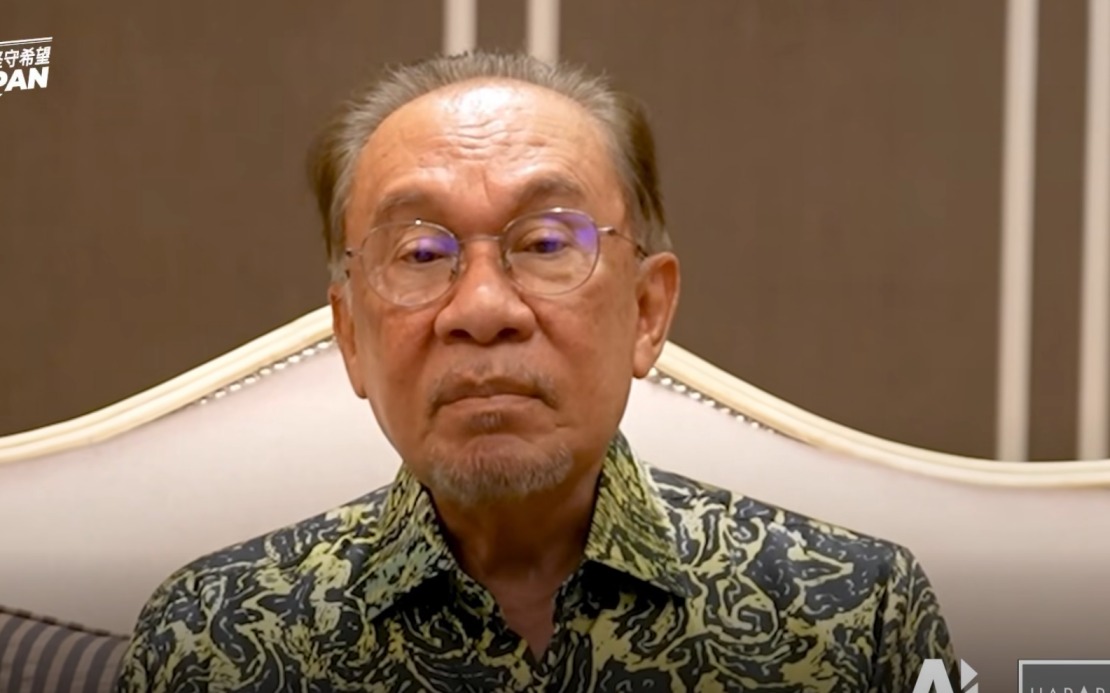
Prime Minister Datuk Seri Anwar Ibrahim has made a direct appeal to military and police personnel, along with their spouses, to cast their votes for the Pakatan Harapan candidate in the upcoming Negeri Sembilan state election. Speaking through a video message released on Facebook, Anwar sought to leverage the support of armed forces and law enforcement ahead of early voting scheduled for Tuesday, with the main polling day set for August 1.
The timing of the appeal reflects a strategic recognition of the electoral weight carried by security personnel and their families in Negeri Sembilan. A significant bloc of voters from these sectors will participate in early polling, with 16,884 military personnel and their spouses, along with 5,455 police officers, eligible to vote across 38 early voting centres throughout the state. This represents a considerable concentration of votes that could meaningfully influence outcomes in what is shaping as a closely contested state-level contest.
Anwar's pitch centred on a narrative of government stewardship and ongoing commitment to improving conditions for those in uniform. He emphasised that his administration, working alongside Cabinet Ministers, had prioritised safeguarding the welfare of both the Malaysian Armed Forces (ATM) and Royal Malaysia Police (PDRM). However, the Prime Minister acknowledged that gaps remain and framed a PH victory as essential to accelerating further improvements across multiple dimensions affecting security personnel's lives.
The specific welfare concerns highlighted by Anwar reflect longstanding grievances within military and police ranks. Salary structures, access to basic facilities, and housing availability have periodically surfaced as friction points in government-security services relations. Educational opportunities for the children of serving personnel and healthcare access for ageing parents represent broader family-centred welfare considerations that resonate within these communities. By naming these issues explicitly, Anwar positioned PH as attentive to concerns that extend beyond individual officers to their entire household ecosystems.
The Prime Minister's reference to cash assistance schemes—Sumbangan Tunai Rahmah (STR) and Sumbangan Asas Rahmah (SARA)—anchored his appeal in tangible, recent government interventions. These schemes, designed to provide financial relief to lower and middle-income households, carry particular significance for security personnel whose compensation, whilst stable, remains modest relative to private sector alternatives. The explicit mention suggested that continued PH governance would sustain such support mechanisms.
Anwar's framing of the election transcended a simple transactional appeal for votes. He characterised the ballot as a referendum on broader national governance, suggesting that security personnel's voting choice would signal either continuity or disruption in the nation's trajectory. The language of "trust placed in the government" implied that support for PH represented not merely preference for a particular party but endorsement of an entire administration's direction and capabilities.
The appeal also contained aspirational rhetoric designed to resonate with professional identity and national sentiment. By invoking concepts of "dignity," "service," and "sacrifice," Anwar sought to elevate the political choice beyond self-interest into the realm of collective national purpose. This rhetorical strategy is particularly potent when directed at military and police personnel, whose professional identities are deeply intertwined with notions of duty and patriotic service.
From a political economy perspective, Anwar's targeted appeal underscores the electoral mathematics facing Pakatan Harapan in Negeri Sembilan. The concentration of early voting opportunities for security personnel, rather than scattered across polling day proper, creates a defined moment when a specific demographic bloc makes its decision. By appealing directly to this group through video communication—a medium that carries personal gravitas—rather than through intermediaries, the Prime Minister signalled the importance PH places on this constituency.
The appeal also reflects broader patterns in Malaysian electoral competition, where different coalitions compete intensely for bloc votes within state elections. Negeri Sembilan, whilst not among Malaysia's most populous states, carries symbolic weight within the federation and represents testing ground for national political trends. A strong PH performance would bolster the coalition's position heading toward the 15th General Election horizon, whilst a weaker showing would invite internal questioning about the government's support among traditionally stable constituencies.
Critically, the absence of any mention of opposing candidates or coalitions in Anwar's message suggests confidence in PH's baseline positioning rather than desperation. The appeal focused on positive reinforcement of the government's record rather than negative campaigning against alternatives. This rhetorical choice may reflect internal polling data suggesting competitive strength, or alternatively, a strategic calculation that security personnel, as professional groups with established institutional loyalties, respond better to appeals emphasizing continuity and proven stewardship than to adversarial messaging.
The early voting window creates an unusual political dynamic distinct from general election day atmospheres. Security personnel voting several days before the broader public crosses paths with a curated political environment, potentially minimising exposure to competing campaign messages that might emerge during the final week before polling. This temporal advantage accrues to whichever coalition successfully mobilises security sector voters during the early voting phase.
For Malaysian observers and regional analysts tracking governance trends, Anwar's appeal reflects a government conscious of the need to maintain cohesion among professional state institutions whilst pursuing electoral victories. The careful calibration of his message—acknowledging past achievements whilst promising future improvements—suggests political maturity and recognition that security sector support, whilst valuable electorally, flows ultimately from belief in institutional competence and tangible material improvements in personnel conditions.
As Negeri Sembilan heads toward August 1 polling, the turnout and voting patterns among military and police personnel will provide early signals about whether the government's welfare-focused messaging resonates effectively with these traditionally aligned constituencies, or whether other factors—dissatisfaction with specific conditions, generational shifts in political preference, or institutional independence from political influence—might complicate the electoral calculus.

