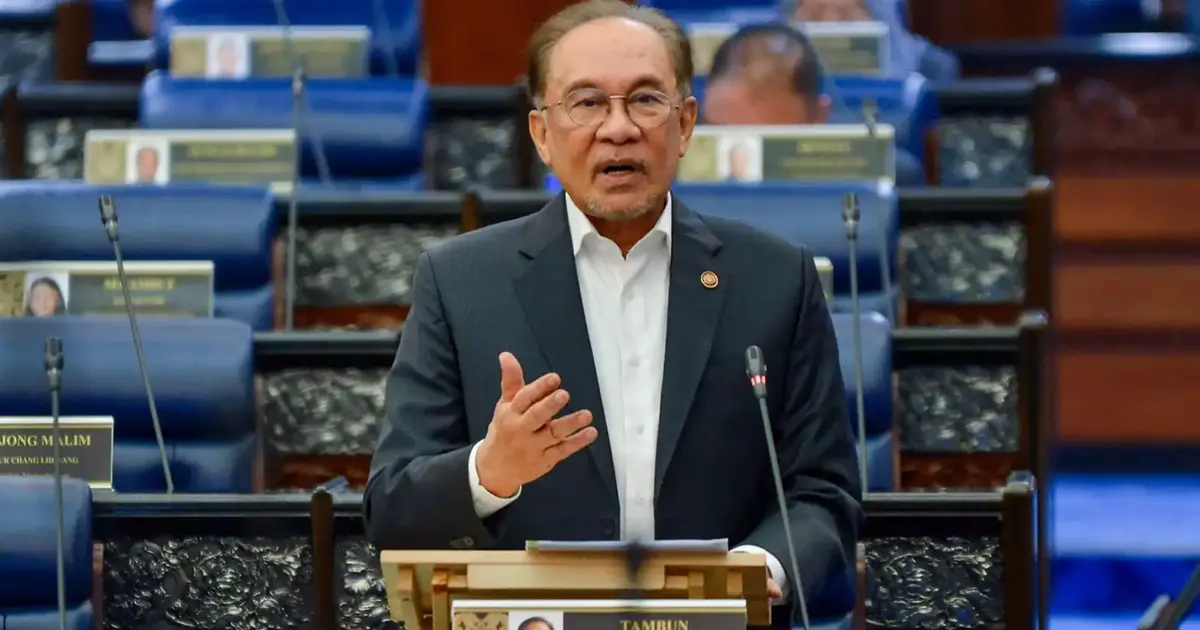
Prime Minister Anwar Ibrahim has once again deflected mounting pressure for an early general election, maintaining that his administration requires sufficient time to implement its policy agenda while reaffirming that voters fundamentally desire political stability and sustained economic progress rather than frequent electoral cycles.
The statement represents Anwar's continued defence of the government's timeline, even as various political factions periodically agitate for a return to the ballot box. The tension between delivering on policy commitments and managing coalition dynamics remains a persistent challenge for Malaysia's current political dispensation, particularly as economic headwinds and internal coalition pressures test the stability of the administration.
Anwar's position reflects a strategic calculation that the electorate has moved beyond the cycle of constant political upheaval that characterised much of Malaysia's recent political history. The prime minister appears to believe that voters recognise the economic costs associated with prolonged political uncertainty and the disruption caused by frequent election campaigns. This assessment aligns with public opinion research suggesting that many Malaysians express fatigue with perpetual electoral contests and their attendant disruptions to governance and business confidence.
The recurring nature of these appeals for early elections underscores underlying tensions within Malaysia's coalition government. Various political actors maintain divergent assessments of their electoral prospects, creating perpetual speculation about potential snap polls. However, Anwar's consistent rejection of such proposals demonstrates his confidence—or at least his public commitment—to completing the current term and allowing his administration to demonstrate tangible results to voters before the next scheduled election.
From an economic perspective, Anwar's emphasis on stability carries particular weight in Southeast Asia's current environment. Malaysia, as a significant regional economy vulnerable to external shocks and capital flows, requires policy continuity to attract investment and maintain investor confidence. The prolonged political uncertainty that would accompany an early campaign could undermine efforts to stabilise the ringgit, manage inflation, and attract foreign direct investment during a period of global economic volatility. This practical dimension likely underpins much of the government's messaging about the need for uninterrupted focus on economic management.
The government's mandate itself remains a critical consideration in this debate. Elections in Malaysia establish a specific mandate for a defined period, and the Anwar administration continues to operate within the parameters established by the most recent electoral cycle. The prime minister's argument that his government deserves time to fulfil its manifesto commitments carries constitutional and democratic weight, suggesting that abandoning this timeline would represent a departure from democratic norms without compelling justification.
Domestically, Anwar's repeated restatements of this position serve multiple audiences simultaneously. They reassure coalition partners of his commitment to completing the government's term while simultaneously signalling to the broader electorate that political stability remains a priority. For international observers and the business community, these statements reinforce Malaysia's institutional continuity and suggest that the country's political system remains capable of delivering predictable governance.
Yet the frequency with which Anwar must reiterate this position reveals the underlying fragility of Malaysia's political equilibrium. The fact that early election calls persist despite the prime minister's consistent rejections indicates that certain political actors remain unconvinced of the current government's viability or see electoral advantage in renewed competition. This dynamic creates a subtle pressure on Anwar's administration to deliver measurable achievements that might consolidate his political position before the next scheduled polls.
Regionally, Malaysia's political stability matters considerably for Southeast Asia's broader trajectory. As a major economy within ASEAN and a key player in various regional organisations, Malaysia's internal political consistency affects regional strategic calculations and economic cooperation frameworks. Extended political uncertainty could complicate Malaysia's ability to play a stabilising role in regional disputes and cooperation initiatives.
Looking forward, the government's ability to deliver on economic promises will likely determine whether Anwar's appeals for patience prove persuasive. As inflation pressures ease and economic growth stabilises, public sentiment regarding the government's performance will crystallise. Should the administration demonstrate tangible improvements in living standards and economic opportunity, the case against early elections becomes progressively stronger. Conversely, if economic conditions deteriorate or policy implementation stalls, pressure for early polls would almost certainly intensify.
The prime minister's consistent messaging on this issue represents a calculated bet that Malaysia's voters will ultimately reward patience and substantive governance over perpetual political campaigning. Whether this assessment proves correct will depend largely on whether the current administration can translate its mandate into concrete improvements in citizens' lives during the period remaining before the next scheduled general election.

