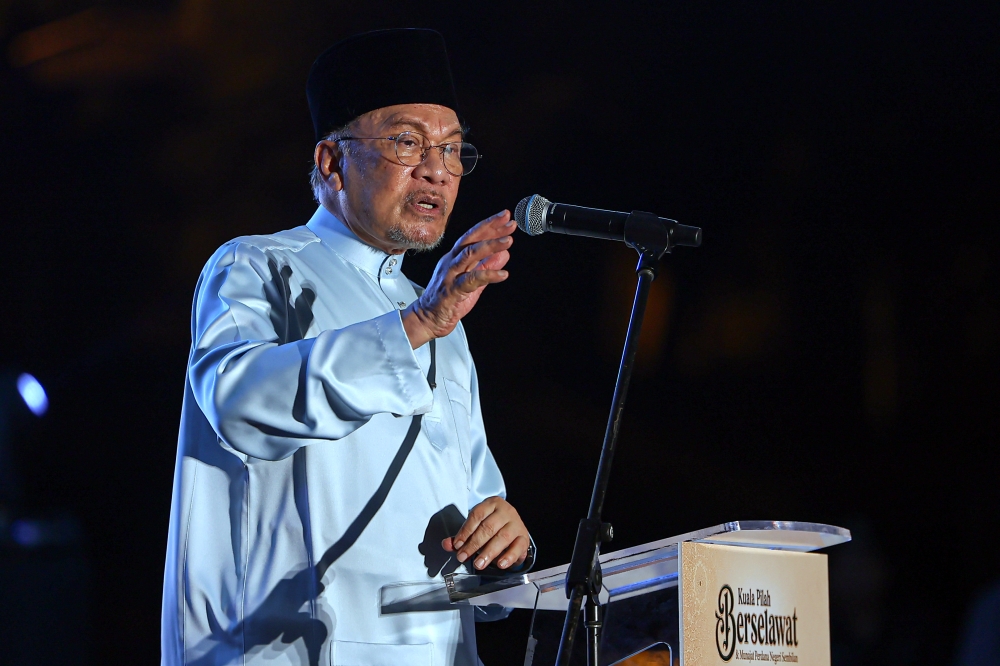
Parti Keadilan Rakyat's leadership has signalled a recalibration of the party's core mission, with President Anwar Ibrahim stressing that the organisation must retain its fundamental character as a grassroots movement driven by civil society principles. Speaking in Kuala Lumpur on August 15, Anwar articulated a vision in which PKR's participation in electoral politics serves its broader social agenda rather than overshadowing it, a distinction that carries significant implications for how Malaysia's reformist coalition approaches governance and activism going forward.
The statement reflects a tension that has characterised Malaysian politics since the historic 2018 election victory, when opposition coalitions pivoted from street-level organising toward ministerial responsibilities. For PKR specifically, which traces its origins to the Reformasi movement of the 1990s and emerged from student activism and civil rights advocacy, the transition has required careful navigation between institutional power and grassroots credentials. Anwar's recent remarks suggest awareness that this balance has shifted, with potential consequences for party cohesion and member engagement.
In emphasising integrity as a foundational pillar, Anwar appeared to address concerns about how political parties in government can inadvertently compromise their founding principles through the necessities of coalition politics and executive decision-making. The message resonates particularly in the Malaysian context, where voters have historically cycled between competing coalitions partly in response to perceptions of moral decline among ruling parties. By framing PKR's identity around principles rather than power retention, Anwar positioned the party as distinct from the establishment machinery it once opposed.
The timing of these remarks coincides with broader regional trends affecting progressive political movements across Southeast Asia. In Indonesia, the Philippines, and Thailand, centrist and reformist parties have faced membership attrition and credibility questions after entering government without clear mechanisms for maintaining activist connections. PKR's vulnerability to similar dynamics is acute given Malaysia's factious political environment and the complex coalition mathematics that govern contemporary parliament. Maintaining a dual identity as both government participant and movement actor requires deliberate institutional choices.
For PKR members and younger activists, Anwar's emphasis on mass movement characteristics offers reassurance that the party retains commitment to civic mobilisation beyond electoral cycles. Grassroots activists often experience demobilisation when parties transition from opposition to government, as resources shift toward administrative priorities and campaign apparatus. By explicitly valorising the mass movement dimension, PKR leadership acknowledges this risk and attempts to preserve volunteer engagement, community organising, and issue-based advocacy as legitimate party functions rather than peripheral activities.
The practical implications extend to how PKR allocates organisational resources and frames internal discussions. A party that prioritises mass movement credentials must invest in membership development, issue campaigns, and policy advocacy between election cycles—activities that generate limited immediate electoral returns but strengthen institutional legitimacy and volunteer retention. This represents a different calculus than optimising for polling performance or campaign efficiency, requiring patience with slower-building forms of political capital.
PKR's positioning within the larger Pakatan Harapan coalition also informs this message. As a smaller partner alongside DAP and Amanah, PKR must differentiate itself through distinctive appeal while maintaining coalition unity. Emphasising grassroots authenticity and social movement credentials offers differentiation without threatening the coalition's electoral viability. This strategy allows PKR to appeal to activists and reformist-minded voters who might otherwise view the coalition as insufficiently committed to transformative change.
The relationship between mass movements and electoral success remains contested in comparative politics, with examples supporting both models of party-movement symbiosis and arguments that electoral participation inevitably compromises movement authenticity. Malaysian observers will note that successful long-term governance requires both institutional capacity and popular legitimacy—achievements that demand simultaneous attention to electoral mathematics and grassroots connection. Anwar's framing suggests PKR intends to pursue both rather than sacrificing one for the other.
Critics might note that maintaining credible mass movement identity while holding executive power faces structural obstacles in any political system. Government ministers face pressure to prioritise administrative functionality over activism; coalition discipline constrains independent advocacy; and voters increasingly expect government parties to deliver tangible policy outcomes rather than movement energy. Whether PKR can genuinely preserve its mass movement character while governing depends partly on how systematically it institutionalises grassroots engagement and insulates movement activities from electoral calculation.
For Malaysian civil society organisations and younger political participants, PKR's stated commitment to mass movement identity carries weight partly because alternative institutional vessels for sustained activism remain limited. The party's intellectual and moral authority within reformist circles depends significantly on whether leadership can demonstrate sustained commitment to principles that animated its founding, even when such commitment complicates electoral strategy or coalition management.
Anwar's emphasis on integrity alongside movement credentials suggests an integrated vision where ethical governance and grassroots connection reinforce rather than contradict each other. This framing attempts to resolve the appearance of contradiction between participating in power structures and maintaining movement authenticity by arguing that principled, accountable governance itself constitutes a form of activist achievement. Whether PKR members and supporters accept this synthesis will significantly influence the party's trajectory and Malaysian politics more broadly.

