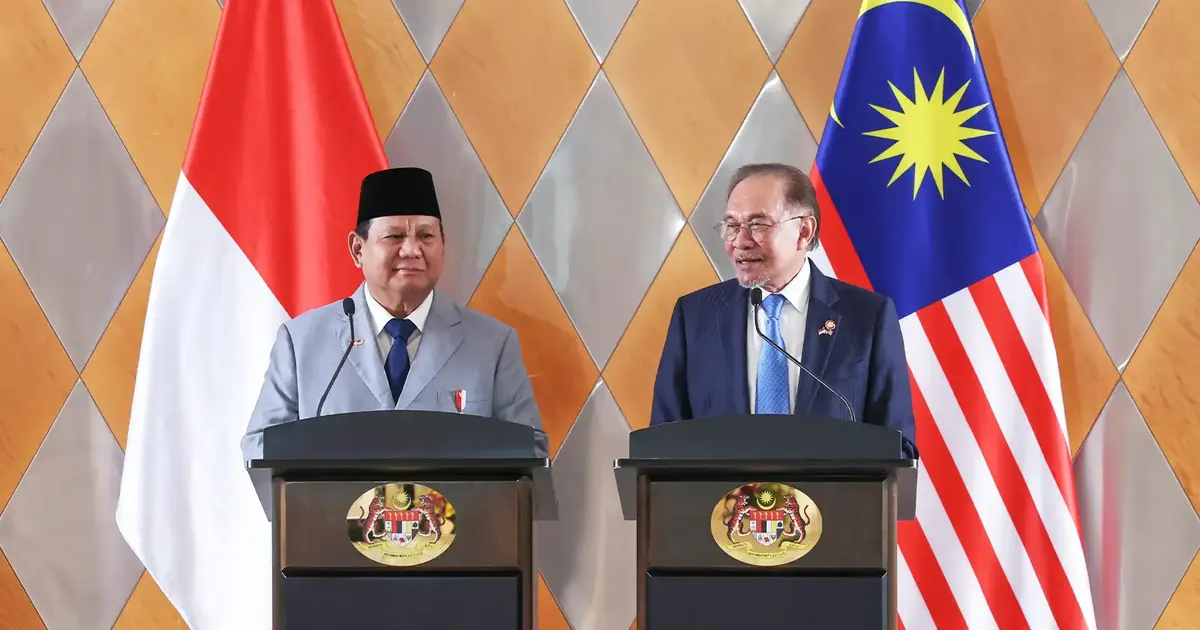
Prime Minister Anwar Ibrahim has escalated efforts to address a looming financial crisis affecting Felda, the Malaysian government's settlers fund, by directly appealing to Indonesian President Prabowo Subianto for intervention in the organization's RM2 billion investment in Eagle High. The move signals the gravity of the situation, with Anwar warning that Felda stands to lose more than RM2 billion if the matter is not resolved urgently and carefully.
Eagle High, an investment venture with significant cross-border implications, has become a source of deep concern within Malaysia's political and economic circles. The venture's troubled status threatens the financial security of thousands of Felda settlers whose livelihoods depend on the fund's stability. Anwar's decision to involve Indonesia's leadership underscores the complexity of the situation and the need for diplomatic coordination between the two neighboring nations to protect Malaysian interests.
According to projections outlined by the Prime Minister, the worst-case scenario involves Felda recovering merely RM200 million from its RM2 billion exposure—a recovery rate that would represent a staggering 90 percent loss on the investment. Such an outcome would constitute a major setback for the fund and could have profound implications for the thousands of smallholder farmers and their families who are Felda members. The disparity between the initial capital at risk and the potential recovery demonstrates the severe structural problems affecting the investment.
Felda, established to develop rural land and improve the welfare of smallholder farmers, has historically played a crucial role in Malaysia's agricultural sector and rural development strategy. The organization manages vast land holdings and operates as a major economic institution, making its financial health a matter of national importance. Any significant deterioration in Felda's asset base could undermine its capacity to deliver essential services and support to its beneficiaries across the country.
The Prime Minister's correspondence with Prabowo reflects Malaysia's diplomatic approach to resolving complex cross-border financial matters. By engaging the highest levels of Indonesian leadership, Anwar seeks to leverage bilateral relationships and ensure that both nations' interests are considered in addressing the Eagle High situation. This diplomatic channel suggests that the venture may involve Indonesian interests or parties, making multilateral cooperation essential for finding a viable solution.
The handling of this investment dispute carries implications beyond the immediate financial figures involved. For Felda settlers, many of whom depend on stable income streams and fund-managed benefits, resolution of the Eagle High matter directly impacts their economic security. The issue also reflects broader questions about investment governance, due diligence processes, and the mechanisms available to large Malaysian institutions for protecting shareholder and beneficiary interests in complex ventures.
Anwar's public articulation of the potential financial exposure demonstrates transparency regarding the scale of the crisis facing Felda. By clearly stating both the capital at risk and the minimum recovery scenario, the Prime Minister acknowledges the seriousness of the situation while signaling government commitment to resolving it. This approach contrasts with allowing the matter to fester quietly, a strategy that could erode confidence in institutional management of public sector entities.
For investors and stakeholders monitoring Felda's performance, the disclosure of the Eagle High situation raises important questions about investment oversight and risk management practices within large Malaysian funds. Understanding how such significant exposure accumulated and what safeguards exist to prevent future similar situations becomes crucial for assessing the health of other major institutional portfolios in the region. The episode serves as a case study in cross-border investment risks and the importance of robust governance frameworks.
The timeline for resolving the Eagle High matter remains uncertain, but Anwar's direct engagement with Prabowo suggests that intensive negotiations may already be underway. The outcome of these discussions will likely determine whether Felda can minimize its losses or faces the catastrophic scenario the Prime Minister outlined. For Malaysia's broader economic landscape, successful resolution would restore confidence in institutional investment practices, while failure could prompt wider reviews of how major funds deploy capital.
Regional observers have begun examining whether similar cross-border investment challenges exist elsewhere within Southeast Asia's institutional investment universe. The Felda-Eagle High situation highlights the complexity of managing large-scale investments that span multiple jurisdictions and involve foreign partners. For other Malaysian institutions and sovereign wealth vehicles, the episode underscores the importance of comprehensive due diligence, continuous monitoring, and maintaining strong diplomatic channels to address problems before they escalate.
Moving forward, Anwar's intervention signals that protecting Felda's interests and the welfare of its settlement communities remains a government priority. The diplomatic engagement with Indonesia's leadership, combined with efforts to minimize financial losses, represents a multifaceted approach to addressing what has become a critical challenge for one of Malaysia's most important rural development institutions. How effectively these efforts translate into concrete recovery and resolution will likely influence public confidence in institutional investment practices across the region.

