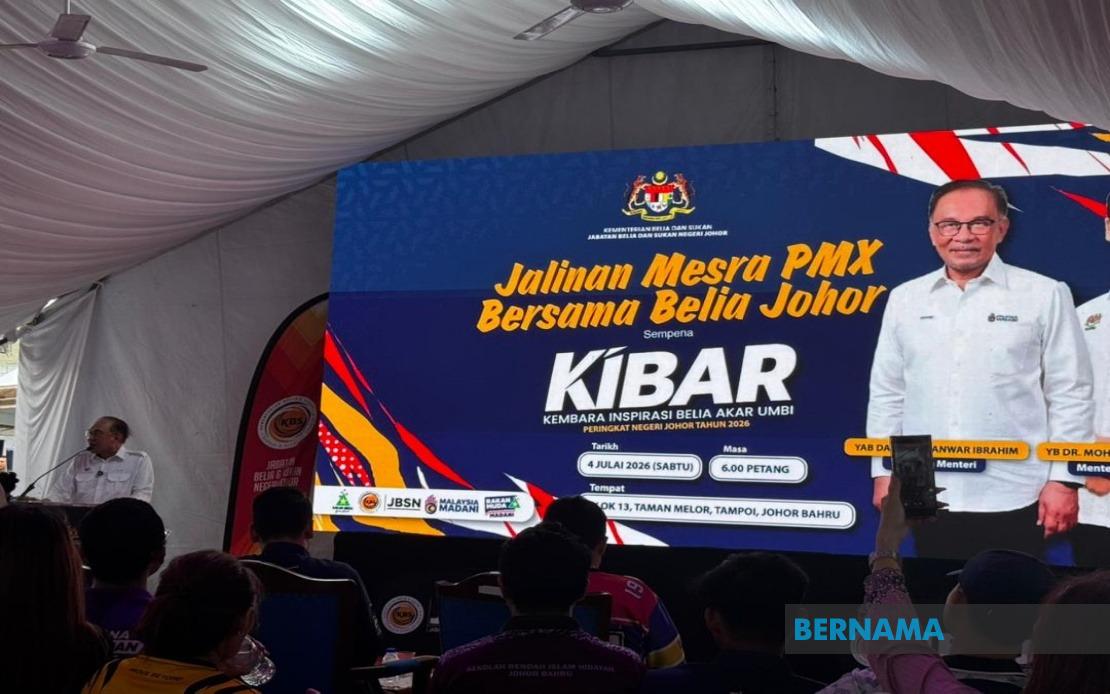
Prime Minister Datuk Seri Anwar Ibrahim has launched a pointed critique at political parties that invoke Malay rights and Bumiputera protections primarily during election campaigns, only to neglect these commitments once in power. Speaking at a youth engagement event in Johor Bahru on July 4, Anwar distinguished between empty political messaging and genuine policy implementation, arguing that authentic defence of Malay interests requires measurable government action rather than seasonal sloganeering.
Anwar's remarks target a recurring pattern in Malaysian politics where opposition figures and smaller coalition parties mobilise support by emphasising their commitment to protecting Bumiputera privileges and Malay economic advancement. Yet once these parties assume office, Anwar suggests, their enthusiasm for expanding Malay-reserved assets and land diminishes markedly. He posed a direct challenge to such actors, questioning when they last expanded Malay reserve land holdings and noting the substantial erosion of such reserves that has occurred under previous administrations of various political colours.
The Prime Minister's intervention at the KIBAR youth programme in Taman Melor signals the federal government's determination to reclaim the narrative around Malay-Muslim interests from opposition quarters, particularly as Malaysia approaches the 2026 general election cycle. Rather than ceding this ideological terrain, Anwar is repositioning his Pakatan Harapan coalition as the authentic custodian of Bumiputera policy, grounded in actionable outcomes rather than rhetorical flourishes timed to voting schedules. This represents a strategic attempt to neutralise opposition messaging that typically portrays federal government coalitions as insufficiently committed to communal advancement.
The erosion of Malay reserve land constitutes a significant long-term challenge within Malaysia's constitutional framework. These reserves, protected under Article 153 of the Federal Constitution, are intended to provide economic security for the Malay-Muslim majority. However, decades of conversions—through legitimate development projects, urbanisation pressures, and administrative decisions—have reduced the total quantum of such land substantially. Anwar's emphasis on this loss suggests the government recognises the political and economic consequences of further depletion, particularly as younger Malay voters become increasingly conscious of intergenerational wealth transfer and asset accumulation within their communities.
The criticism also reflects tensions within Malaysia's political ecosystem regarding how Bumiputera protections are administered and who benefits from them. Corporate contracts, development projects, and government procurement have historically channelled wealth to politically connected Malay-Muslim entrepreneurs, sometimes concentrating benefits narrowly rather than distributing them across the broader community. Anwar's call for transparency and demonstrated commitment suggests the government intends to scrutinise whether Bumiputera policy genuinely serves developmental goals or has become a vehicle for patronage networks. This discourse has particular resonance for working-class and middle-class Malay voters who may feel excluded from the spoils of Bumiputera arrangements.
The presence of Selangor Menteri Besar Datuk Seri Amirudin Shari and Youth and Sports Minister Dr Mohammed Taufiq Johari underscores the federal and state coordination around this messaging strategy heading into the 2026 electoral cycle. By anchoring Bumiputera defence to tangible government performance rather than electoral promises, Pakatan Harapan seeks to differentiate itself from opposition parties that Anwar characterises as all rhetoric and no substance. This framing also allows the government to defend Bumiputera protections against both external liberal criticisms and internal complaints about inequitable distribution.
For Malaysian businesses and investors, particularly those in property development and infrastructure sectors, Anwar's remarks carry implications regarding future government expectations for Bumiputera compliance and reserve land management. The government may intensify monitoring of Malay reserve land transactions and tighten criteria for conversions, potentially affecting project approvals and timelines. Developers will need to demonstrate genuine commitment to Bumiputera objectives rather than merely satisfying technical requirements. This could reshape investment strategies in sectors where Malay reserve land remains significant, particularly in peninsular states.
From a Southeast Asian perspective, Anwar's intervention illustrates how majority-community rights frameworks intersect with electoral politics across the region. While Malaysia's constitutional Bumiputera system is distinctive in its scope and legal entrenchment, similar patterns of rhetorical commitment versus implementation occur across neighbouring democracies. Anwar's insistence on measurable outcomes offers a potential model for how governments elsewhere might differentiate themselves from opportunistic opposition parties while maintaining substantive protections for designated communities.
The youth focus of the KIBAR programme reveals an additional strategic consideration. Younger Malay-Muslim Malaysians, particularly those in urban areas, demonstrate less automatic support for traditional communal sloganeering and increasingly evaluate leaders based on economic outcomes and practical governance competence. By framing Bumiputera defence as requiring professional administration and transparent policymaking rather than populist rhetoric, Anwar positions his government as modern and results-oriented rather than relying on tired communal narratives. This generational approach may prove decisive in securing youth votes in 2026.
The broader context includes Malaysia's ongoing efforts to balance inclusive growth with constitutional protections for specific communities, a challenge that will intensify as economic globalisation and regional integration proceed. Anwar's critique implicitly acknowledges that Bumiputera arrangements require constant recalibration to remain economically meaningful while continuing to provide genuine community benefit. Simply preserving existing privileges without expanding them or ensuring equitable distribution risks rendering them increasingly symbolic rather than substantive, potentially undermining their political justification.
Looking forward, Anwar's remarks establish a policy direction where government legitimacy on Bumiputera matters depends on demonstrable action: whether Malay reserve land is actively preserved or expanded, whether government contracts genuinely uplift broader Malay entrepreneurship beyond elite networks, and whether policy implementation reflects transparent criteria rather than patronage. This heightened accountability standard reflects growing voter sophistication and suggests that 2026 electoral competition will centre substantially on whose Bumiputera policies deliver tangible outcomes rather than whose rhetoric sounds most convincing during campaign season.

