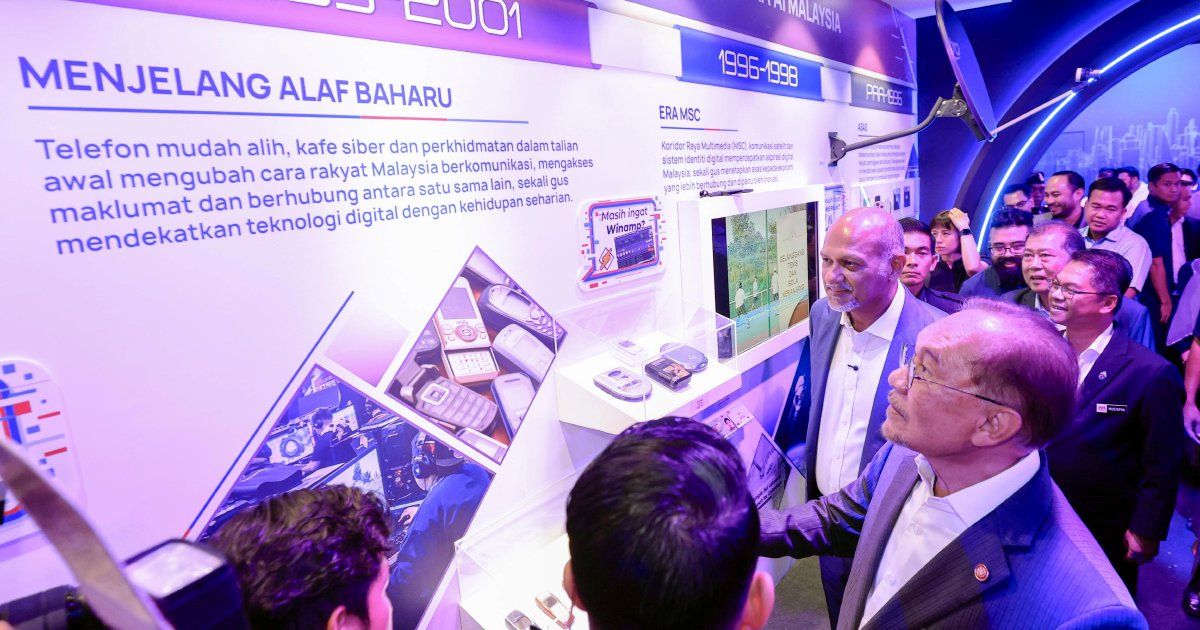
Prime Minister Datuk Seri Anwar Ibrahim has sounded a cautionary note about Malaysia's ambitions to establish itself as a regional artificial intelligence hub, emphasizing that the nation's technological advancement must not come at the cost of leaving segments of its population behind. Speaking in Cyberjaya, the epicentre of Malaysia's digital economy initiatives, Anwar underscored the critical importance of pursuing an inclusive development model as the country races to harness AI's transformative potential across government, commerce, and society.
The warning reflects growing global concerns about how rapid AI adoption could amplify existing socioeconomic disparities. While developed economies and wealthy corporations increasingly leverage artificial intelligence to enhance productivity and create new markets, populations with limited access to digital infrastructure, education, and capital risk falling further behind. For a middle-income nation like Malaysia, where income inequality remains a persistent challenge and digital divide disparities exist between urban and rural areas, the risk of an AI-driven widening of inequality is particularly acute.
Anwar's emphasis on equitable access signals recognition within Malaysia's highest political leadership that technological progress, though desirable, must be carefully managed to prevent creating a two-tiered society. The distinction he draws between those with technology access and those excluded from it captures a fundamental challenge facing developing and emerging economies navigating the digital transformation. Without deliberate interventions, Malaysia's push to become an AI nation could concentrate the benefits of technological innovation among tech-savvy urban professionals and multinational corporations, whilst marginalizing rural communities, older workers, and lower-skilled populations.
The Prime Minister's remarks carry particular resonance given Malaysia's existing regional position. The nation has positioned itself as a Southeast Asian technology leader, hosting major data centres and attracting significant foreign investment in digital industries. However, this growth has been geographically concentrated in areas like the Klang Valley and Cyberjaya, while peripheral regions lag in infrastructure development and digital literacy. An AI-driven economic model could entrench these disparities unless the government implements proactive policies to democratize technology access.
The implications extend beyond domestic economics into the labour market. As AI automates routine cognitive and administrative tasks, the workers most vulnerable are those in middle-skilled positions who lack retraining opportunities or digital proficiency. Malaysia's significant manufacturing and services sectors could experience substantial workforce disruption if workers are not equipped with updated skills to coexist with and leverage artificial intelligence tools. Anwar's warning implicitly calls for integrated strategies encompassing education reform, vocational retraining programmes, and digital literacy initiatives alongside AI commercialization efforts.
From a policy perspective, achieving inclusive AI growth requires coordinated action across multiple fronts. Government investment in broadband infrastructure to underserved areas would reduce connectivity barriers. Educational institutions must integrate AI literacy into curricula at all levels, not merely for computer science specialists but for the broader population. Microfinance and entrepreneurship support programmes targeting disadvantaged communities could enable participation in the AI economy through small business creation rather than merely as consumers or workers.
Regionally, Malaysia's approach to inclusive AI development carries implications for its Southeast Asian partners facing similar challenges. The region comprises countries with varying levels of digital maturity and infrastructure, yet all are grappling with AI's disruptive potential. Malaysia's response could influence how other regional economies prioritize inclusivity alongside technological advancement, potentially establishing a development model distinct from purely market-driven approaches adopted by some Western nations.
Anwar's caution also reflects understanding that public trust and social stability depend on equitable outcomes from technology investment. Societies perceiving that technological progress exclusively benefits elites whilst displacing workers and disadvantaging communities become vulnerable to political instability and social fragmentation. Conversely, demonstrating that AI-driven growth creates pathways for broader prosperity strengthens national cohesion and legitimizes the government's technology agenda.
The challenge ahead requires balancing competing imperatives: Malaysia cannot afford to fall behind in AI development as regional competition intensifies, yet cannot pursue growth at the expense of social equity. This necessitates more sophisticated policy frameworks than traditional industrial development models, encompassing not just technology infrastructure but human capital development, social safety nets, and mechanisms ensuring technology benefits reach beyond privileged segments.
Moving forward, success will depend on whether Malaysia translates Anwar's warning into concrete programmes and measurable commitments. This includes establishing targets for rural broadband access, funding digital skills training for workers displaced by automation, and creating pathways for entrepreneurs from disadvantaged backgrounds to participate in the AI economy. Without such concrete follow-through, the Prime Minister's caution risks becoming merely rhetorical, leaving the fundamental challenge of inclusive AI development unresolved.

