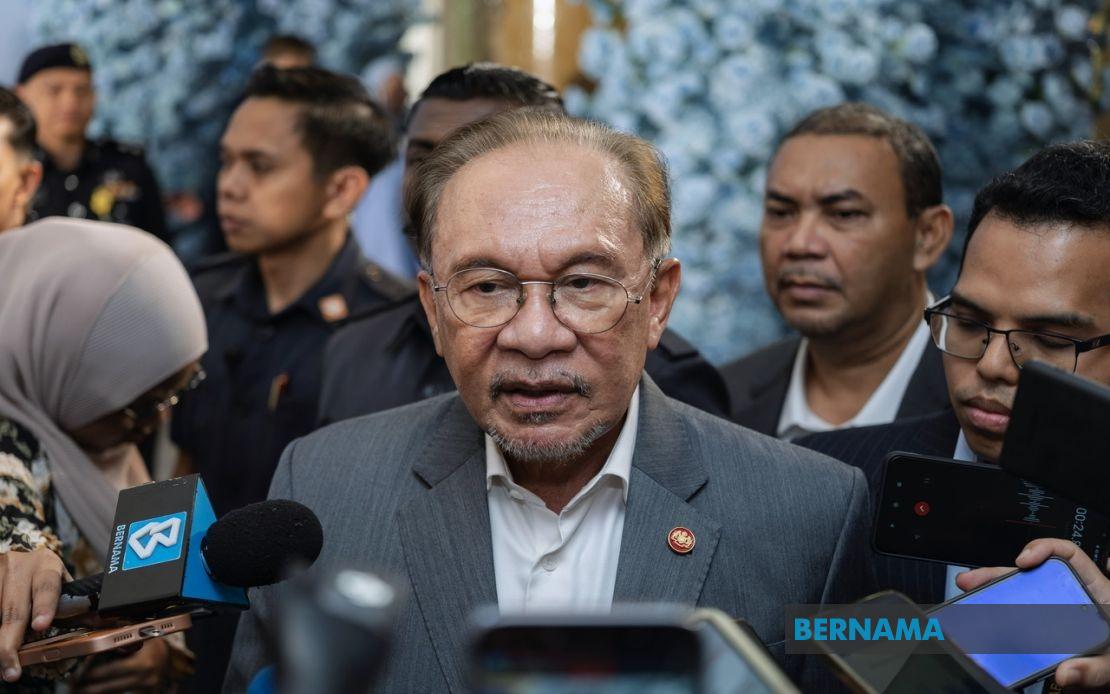
Prime Minister Datuk Seri Anwar Ibrahim has not yet received a formal briefing regarding the circumstances that prompted four Melaka DAP representatives to withdraw from the state government, according to remarks he made to journalists in Kuala Lumpur. As chairman of the Pakatan Harapan coalition, Anwar indicated that the alliance's senior leadership structure would handle a response to the situation in due course, though he provided no specific timeline for such action.
The departure of the four assemblymen followed a pivotal legislative decision made by the Melaka State Legislative Assembly, which passed constitutional amendments permitting the appointment of nominated representatives to the assembly. This procedural move appears to have triggered the sudden exodus, signalling internal tensions within the ruling coalition's Melaka chapter. The four who announced their immediate withdrawal are Allex Seah Shoo Chin from Kesidang, Low Chee Leong representing Kota Laksamana, Leng Chau Yen from Banda Hilir, and Kerk Chee Yee from Ayer Keroh.
The timing of these resignations represents a significant challenge for Pakatan Harapan's governance structure in the Melaka state administration. By withdrawing from the state government whilst retaining their state assembly seats, the four DAP members have created a precarious situation that could affect the coalition's legislative majority and operational capacity in the peninsula's southern states. This dynamic underscores ongoing friction between different coalition partners over governance mechanisms and decision-making authority at the state level.
Even as the four representatives were formalising their withdrawal, Anwar had publicly urged the Melaka DAP leadership to reconsider the move. His appeal centred on pragmatic governance considerations, emphasising that the coalition should prioritise developmental initiatives and public welfare rather than becoming embroiled in internal political disputes. This stance reflects the tension between addressing legitimate internal grievances and maintaining governmental stability, a balancing act increasingly familiar to Malaysian coalition politics.
The constitutional amendments that triggered this sequence of events represent a broader constitutional and political question about state assembly composition. The ability to appoint nominated representatives rather than relying solely on electoral results introduces flexibility to state legislatures but can also be perceived as circumventing democratic principles. In the Malaysian federal context, where state governments operate with considerable autonomy, such constitutional modifications require careful navigation among coalition partners with differing interests and ideologies.
For Pakatan Harapan more broadly, the Melaka situation exemplifies the challenges of maintaining cohesion across multiple parties with distinct organisational cultures and political priorities. The DAP, typically known for its emphasis on meritocratic governance and transparent administration, may perceive appointed representatives as inconsistent with its philosophical foundations. Conversely, other coalition components might view such measures as administratively necessary or politically expedient.
The absence of immediate briefings reaching the Prime Minister's office also suggests possible communication breakdowns within the coalition structure itself. That Anwar remained uninformed about such a significant development until after public announcements indicates either that the Melaka DAP acted unilaterally without consulting higher coalition structures, or that information flows between state and federal levels require improvement. Either scenario raises questions about coordination mechanisms within Pakatan Harapan's governance framework.
From a Malaysian perspective, the Melaka situation warrants attention as a microcosm of broader coalition management challenges. Since the 2022 general elections, Pakatan Harapan has navigated complex arrangements with multiple coalition partners and independent representatives, making unanimous decision-making increasingly difficult. State-level disputes can rapidly escalate to federal complications, particularly when they involve constitutional questions or affect legislative mathematics.
The promised follow-up action from Pakatan Harapan's leadership will likely involve mediation efforts to clarify the coalition's position on appointed representatives, dialogue with the DAP to address grievances, and potentially negotiation regarding the four assemblymen's future role. Whether such intervention can reverse the withdrawal or at least stabilise the situation will test the coalition's capacity for internal conflict resolution during an already challenging political period.
The wider regional implications merit consideration as well. Southeast Asian observers watching Malaysian coalition politics will note how federal authorities respond to state-level fractures within ruling alliances. The outcome could influence how smaller parties and regional players assess the reliability and stability of coalition partnerships, factors critical in the calculus of Malaysian electoral politics and post-election negotiations that have become increasingly complex since 2018.
Looking ahead, the Melaka DAP's decision may establish precedents for how other state-level DAP organisations respond to similar constitutional arrangements or governance decisions. If other states implement comparable amendments, the Melaka precedent could either embolden similar protests or serve as a cautionary tale encouraging greater consultation with coalition partners before implementing contentious procedural changes. Anwar's leadership will be judged partly on whether he can extract broader lessons from this episode to strengthen coalition governance mechanisms.
The forthcoming briefing and subsequent Pakatan Harapan deliberations will reveal much about the coalition's priorities and internal balance of power. Whether emphasis falls on accommodating DAP concerns, implementing constitutional flexibility, or simply managing the immediate political fallout will signal important messages to coalition partners about how grievances are weighted and resolved at the highest leadership levels.

