Prime Minister Datuk Seri Anwar Ibrahim's recent diplomatic missions to Kazan and Ashgabat have delivered tangible strategic outcomes that position Malaysia to benefit from enhanced energy security and substantial revenue streams, according to government officials. The working visits represent a calculated effort to diversify Malaysia's energy sourcing and deepen PETRONAS's operational footprint in Central Asia, with implications extending far beyond the immediate energy sector into broader macroeconomic management and inflation control.
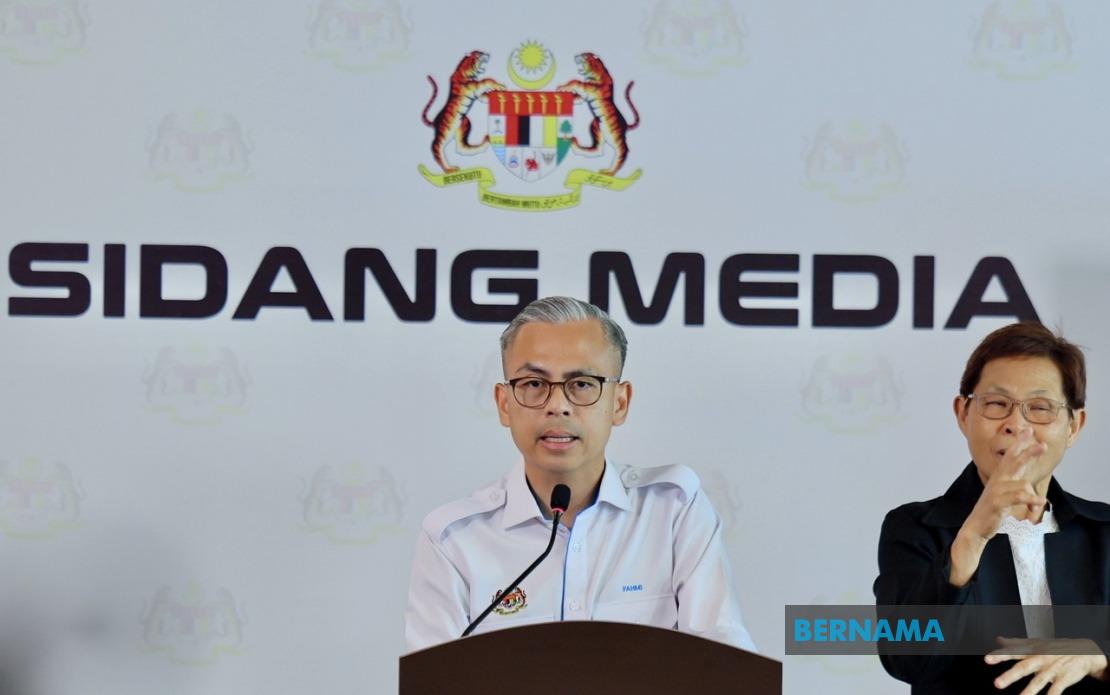
During his attendance at the 35th ASEAN-Russia Commemorative Summit in Kazan, accompanied by Investment, Trade and Industry Minister Datuk Seri Johari Abdul Ghani and Economy Minister Akmal Nasrullah Mohd Nasir, the Prime Minister negotiated Russia's commitment to supply crude oil, gas and diesel to Malaysia under an extended contractual arrangement. This arrangement addresses a persistent vulnerability in Malaysia's supply chain, particularly the reliance on spot market purchases that expose domestic fuel pricing to volatile international commodity fluctuations. Government spokesperson Datuk Fahmi Fadzil, who also serves as Communications Minister, characterised the energy security dimension as pivotal to the MADANI Government's development programme, signalling that diversified sourcing reduces dependency on any single supplier or market condition.
The parallel achievement in Ashgabat proved equally consequential for Malaysia's corporate interests and state revenues. PETRONAS, operating through its wholly owned subsidiary Petronas Carigali (Turkmenistan) Sdn Bhd, secured development rights to two major gas blocks in Turkmenistan, enhancing the national oil company's position within global energy markets. This expansion builds upon more than three decades of PETRONAS operational presence in the country, reflecting accumulated expertise and established relationships that facilitate new concession awards. The gas development represents a long-term revenue generator, with dividends and returns expected to flow back to the Malaysian Treasury and fund national priorities across infrastructure, healthcare and education sectors.
Crucially, the government framed these energy achievements as directly enabling the fuel price reduction announced on June 21, when diesel costs fell following improved supply visibility and negotiated commodity terms. Fahmi articulated the causal linkage between diplomatic breakthroughs and immediate cost-of-living relief, acknowledging that Malaysia's ability to manage domestic inflation depends partly on securing stable, reasonably priced energy inputs. For Malaysian consumers already absorbing elevated costs across food, transport and utilities, the diesel adjustment represents tangible evidence that high-level diplomacy translates into household economics.
The formalisation of a Framework Agreement on Long-Term Cooperation for Hydrocarbon Resource Development between Malaysia and Turkmenistan establishes an institutional scaffold for sustained collaboration extending beyond the immediate gas block awards. The agreement explicitly contemplates development of the Galkynysh field and opportunities across downstream operations including oil refining, gas processing and chemical production. Such downstream integration multiplies the economic multiplier effect, potentially attracting further foreign and domestic investment in processing facilities, creating employment across technical and manufacturing sectors. For Malaysia's industrial policy, downstream integration reduces commodity export dependence and moves the economy toward higher-value processing and specialisation.
The simultaneous advancement of bilateral ties across energy, trade, investment, tourism and technology demonstrates deliberate portfolio diversification in Malaysia's Russia engagement. Energy collaboration does not preclude cooperation in other domains, reducing political and economic risk concentration. Tourism flows, technology transfer and investment partnerships create multiple touchpoints for sustained diplomatic relationships and people-to-people connectivity, strengthening the resilience of bilateral ties against potential disruption in any single domain. This multifaceted approach reflects sophisticated statecraft recognising that enduring partnerships rest on diversified mutual benefit rather than singular transactional arrangements.
For Southeast Asian observers, Malaysia's Central Asian energy diplomacy illustrates regional differentiation in foreign policy implementation. While ASEAN maintains consensus positions on major geopolitical questions, individual member states pursue distinct bilateral energy strategies tailored to domestic circumstances and strategic positioning. Malaysia's willingness to deepen Russia engagement despite Western sanctions demonstrates independent agency in foreign relations and refusal to align entirely with Western alignment preferences. This independence carries both opportunities and risks, requiring careful calibration to maintain relationships across competing blocs without incurring punitive consequences from any party.
The PETRONAS gas concessions in Turkmenistan position the Malaysian company within Central Asian energy architecture at a moment when global supply chains face unprecedented reconfiguration. Emerging energy suppliers in Central Asia and the Caucasus increasingly attract investment from Asian buyers seeking to diversify away from Middle Eastern concentration. PETRONAS's expanded operational footprint enhances its profile as a truly international energy corporation capable of competing in geopolitically complex environments, potentially opening additional commercial opportunities across the region and strengthening Malaysia's soft power influence through state-owned enterprise performance.
Government officials explicitly connected the diplomatic achievements to public welfare improvements, anticipating positive economic impacts flowing from reduced diesel costs and enhanced energy stability. This messaging strategy reflects awareness that government legitimacy depends partly on tangible improvements in material living standards. By highlighting the causal relationship between high-level diplomatic engagement and measurable household benefits, the government reinforces the value proposition of strategic foreign policy and demonstrates that international relations investments generate domestic returns. For a government facing persistent public expectations regarding cost-of-living management, such demonstrations of efficacy through concrete policy outcomes strengthen political credibility.
Looking forward, these energy arrangements require sustained attention to implementation, pricing mechanisms, delivery schedules and force majeure provisions. Long-term contracts entail complexity and potential disputes across decades of operation, demanding robust institutional capacity for contract management and dispute resolution. PETRONAS must execute development projects professionally and efficiently to maximise returns, while government agencies coordinate fiscal policy, environmental regulation and workforce development to optimise national benefit from gas production. The success of these diplomatic achievements ultimately depends on institutional competence in implementation, not merely on negotiation of initial agreements.

