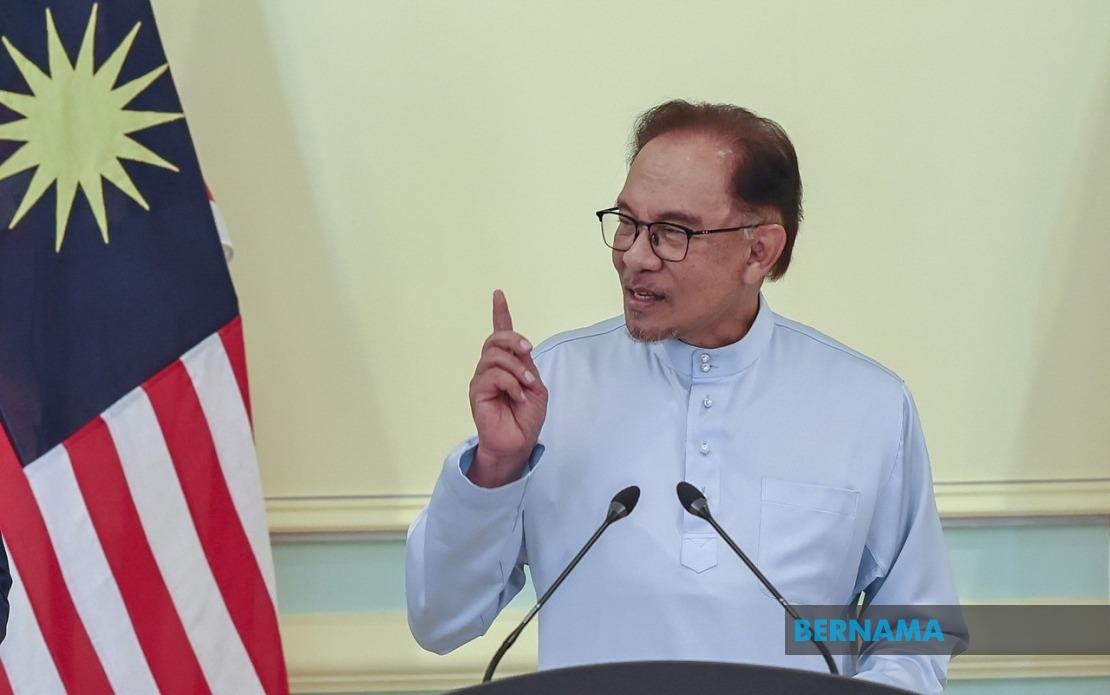
Prime Minister Datuk Seri Anwar Ibrahim's handling of the Gaza situation merits recognition for weaving together legal principle, moral authority, diplomatic pressure and concrete humanitarian support, according to Universiti Pertahanan Nasional Malaysia (UPNM) Honorary Professor Dr Mizan Aslam. The scholar's assessment reflects growing acknowledgement that Malaysia's leadership on this global flashpoint extends beyond rhetorical posturing to engage substantive mechanisms for accountability and civilian protection.
The Gaza conflict has transcended its original character as a localised Israeli-Palestinian dispute, according to Mizan's analysis. Instead, it now functions as a stark indicator of how international legal frameworks have fractured, how multilateral institutions have proven inadequate, and how powerful nations have failed in their fundamental obligation to shield non-combatants from harm. This framing positions Malaysia's diplomatic activism within a broader critique of global governance failures rather than merely as regional advocacy.
The humanitarian toll has become staggering by any measure. After 1,000 days of hostilities, Gaza has registered 73,066 deaths, with 173,514 additional persons injured and 5,400 suffering permanent disabilities or amputations. The generational impact emerges in particularly grim figures: 21,730 children have been killed, 45,113 wounded, and 59,054 orphaned. These numbers represent not abstract statistics but the systematic destruction of Gaza's future demographic foundation.
Physical infrastructure has been obliterated at a scale rarely documented in modern conflicts. More than 90 percent of the territory's built environment lies destroyed, with 81 percent of structures either damaged beyond repair or demolished entirely. Nearly all residential housing stock has been affected. The destruction extends to basic survival systems, with 90 percent of water and sanitation networks compromised and 91 percent of households now lacking adequate water access. This infrastructural collapse has created cascading public health crises impossible to reverse quickly even after hostilities cease.
Malaysia's approach has acquired substantive legal dimensions beyond public statements. The nation's support for South Africa's case at the International Court of Justice, alleging violations of the 1948 Genocide Convention, demonstrates commitment to international accountability mechanisms. This positioning distinguishes Malaysia from states offering only verbal condemnation, instead channelling concerns through established legal frameworks designed to investigate and prosecute alleged crimes against humanity.
Anwar has elevated the Gaza question across multiple diplomatic platforms, particularly through the Arab-Islamic Extraordinary Summit, where he has advocated for intensified international action, strengthened support for the United Nations Relief and Works Agency for Palestine Refugees in the Near East (UNRWA), and coordinated pressure targeting states supplying weaponry. Mizan argues that middle-power nations like Malaysia can amplify limited individual influence through mobilising collective international voices, creating diplomatic momentum that individual great powers cannot dismiss.
The Prime Minister's approach remains grounded in practical realism alongside principle. He has consistently emphasised the necessity of sustained diplomatic negotiations, the liberation of humanitarian workers, and unobstructed access for aid delivery. Malaysia's initial RM100 million humanitarian allocation addresses immediate survival crises: 1.97 million Gazans endure acute food insecurity, with 641,000 experiencing famine conditions or catastrophic hunger levels. As of mid-2025, Gaza documented 466 deaths attributed to malnutrition, with 17,800 child cases and 68,996 severe malnutrition cases among under-fives recorded by May 2026.
Gaza's medical system has sustained particular devastation that compounds civilian suffering. Forty hospitals and 158 primary health facilities have been directly targeted, with 825 documented attacks on healthcare infrastructure overall. These strikes have killed 1,723 medical personnel while detaining another 362, effectively dismantling the capacity to treat injuries, manage disease outbreaks, or deliver basic care. The healthcare system's collapse transforms what would otherwise be survivable injuries into death sentences.
Malaysia's position transcends conventional ceasefire demands to articulate a comprehensive political vision. The government argues that genuine stability requires establishing a sovereign, viable Palestinian state with genuine self-determination capacity. This comprehensive framing distinguishes Malaysia's stance from humanitarian interventionism alone, instead positioning Gaza within historical justice and decolonisation frameworks that resonate across the Global South.
Mizan characterises this approach as embodying 'active non-alignment,' a foreign policy doctrine permitting Malaysia to adopt positions according to principle, values and demonstrable national interests. This framework enables the nation to prioritise civilian protection, ensure humanitarian access, advance legal accountability, and defend Palestinian self-determination rights without requiring alignment with any specific great power or ideological bloc.
The practical limits of Malaysian agency deserve acknowledgement. No single nation can unilaterally resolve the Gaza crisis through diplomatic action alone. However, Mizan suggests that Malaysia's value lies in ensuring the issue remains perpetually present before international courts, in global forums, through diplomatic channels, and within international conscience. This persistence itself constitutes meaningful contribution when addressed systematically and grounded in enforceable principles.
Anwar's diplomatic method ultimately translates rhetorical solidarity into actionable commitments buttressed by institutional and legal accountability structures. The Prime Minister has avoided the trap of symbolic politics divorced from consequence, instead constructing a multifaceted approach that combines humanitarian assistance, legal prosecution pathways, multilateral pressure, and political vision for sustainable resolution. This synthesis reflects sophisticated understanding that addressing contemporary humanitarian crises demands integration of moral clarity, legal rigour, and diplomatic persistence.

