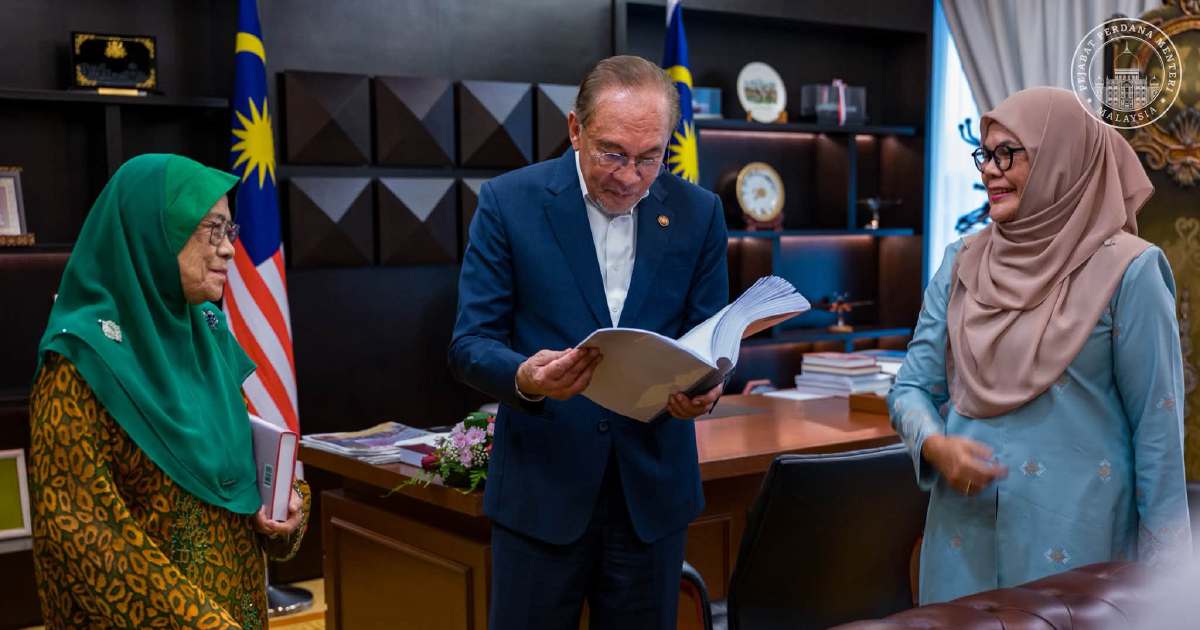
Prime Minister Datuk Seri Anwar Ibrahim has released a new book documenting his political philosophy and life journey, envisioning it as a lasting resource for Malaysians yet to come. Titled Gagasan Anwar Ibrahim Dalam Peradaban Budaya Bangsa, the publication gathers together the prime minister's intellectual contributions, personal reflections, and perspectives on governance, with the stated aim of providing foundational guidance for nation-building efforts and the cultivation of national character.
The initiative reflects a broader trend among Southeast Asian political leaders to codify their governing philosophies and leave a documented legacy. By compiling his ideas into a single authoritative source, Anwar Ibrahim is attempting to establish an intellectual framework that transcends his tenure in office, creating what he views as a reference point for policymakers, scholars, and citizens interested in understanding contemporary Malaysian political thought.
The book's emphasis on both nation-building and character development signals Anwar's conviction that sustainable governance requires more than institutional reform; it demands a cultural shift rooted in ethical leadership and civic virtue. This dual focus reflects Malaysian political discourse that has increasingly grappled with questions of integrity in public life, institutional strengthening, and social cohesion in a diverse, multi-ethnic society facing ongoing development challenges.
For Malaysian readers and analysts, the publication offers insight into how the current administration conceptualises its mandate and long-term vision. The compilation approach allows Anwar to present his ideas systematically rather than through scattered speeches or policy announcements, potentially cementing his intellectual legacy regardless of electoral outcomes or political transitions. This is particularly significant in Malaysian politics, where institutional memory and documented policy frameworks often prove crucial for continuity across administrations.
The book's anticipated audience extends beyond immediate policy circles. By targeting future generations, Anwar is positioning his work as educational material suitable for university curricula, think-tank discussions, and public intellectual engagement. This strategy mirrors approaches taken by other regional leaders who recognise that ideas gain enduring influence through academic integration and multi-generational transmission.
Regionally, such publications serve multiple purposes within Southeast Asia's political ecosystem. They contribute to the intellectual canon of governance models across the region, offering perspectives that contrast with other prominent voices while establishing Malaysia's particular approach to reconciling rapid economic development with cultural preservation and democratic pluralism. The compilation format also enables easier translation and adaptation for regional and international audiences seeking to understand Malaysian perspectives on nation-building.
The timing of the book's release carries political weight. As Malaysia navigates complex economic transitions, demographic shifts, and regional geopolitical realignments, Anwar's documented framework may serve as a stabilising reference during periods of policy debate or uncertainty. By establishing his ideas in permanent written form, the prime minister ensures that subsequent discussions about Malaysian governance will contend with his articulated vision, even if they ultimately diverge from it.
For scholars and researchers, the publication promises a primary source for analysing contemporary Malaysian political thought. Rather than reconstructing Anwar's philosophy from scattered interviews, speeches, and policy statements, academics now have a consolidated text reflecting the prime minister's own synthesis of his ideas. This accessibility may catalyse comparative studies examining how Malaysian approaches to governance and character development align with or diverge from regional and global models.
The book also responds to Malaysia's ongoing national conversation about identity and cohesion. In a country where questions of what binds the nation together remain contested, a prime ministerial compilation of ideas on national character carries substantial symbolic weight. Whether received as authoritative guidance or as one important voice among many, such publications shape how societies conceptualise themselves and their possibilities.
Practically speaking, the documentation of Anwar's ideas creates an institutional resource for government agencies, parliamentary debates, and policy development. Officials and legislators seeking clarity on the administration's philosophical underpinnings can reference the book rather than piecing together fragmentary statements. This standardisation can improve policy coherence and reduce the ambiguity that sometimes characterises governance transitions.
The aspirational dimension of the project—that the book will serve future generations—acknowledges an implicit uncertainty about politics. By putting ideas into documented form, political leaders hedge against the possibility that their tenure may be shorter than they anticipate or that subsequent administrations might not prioritise continuity. The book becomes a vessel for ideas that transcends the vessel of political office.
Ultimately, Anwar's book launch represents both a personal investment in legacy and a contribution to Malaysia's evolving intellectual discourse on governance. Whether it achieves its intended purpose of serving as a reference for future nation-building efforts will depend on its reception among scholars, policymakers, and the broader public—a determination that extends beyond the prime minister's immediate control and into the hands of those who decide which ideas warrant sustained attention.

