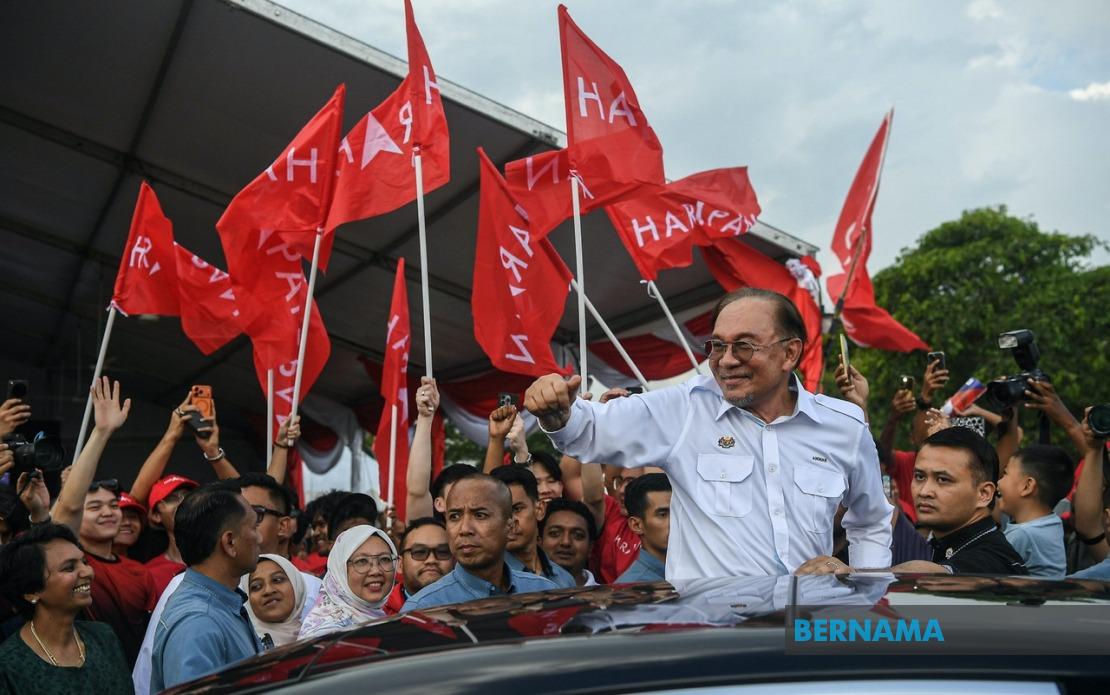
Prime Minister Datuk Seri Anwar Ibrahim's visible presence on the campaign trail throughout Johor has delivered a significant morale boost to the Pakatan Harapan coalition as it mobilises support across the state ahead of polling day on Saturday. The intensive efforts have generated palpable enthusiasm among voters, signalling growing acceptance of the coalition's campaign message and policy platform during the 16th Johor State Election. Communications Minister Datuk Fahmi Fadzil, who accompanied the Premier during recent rallies, attributed the surge in grassroots engagement to the symbolic weight of the national leadership's direct intervention in the state contest.
Fahmi witnessed firsthand the extraordinary reception Anwar received while travelling through the Batu Pahat district, observing spontaneous demonstrations of support that extended beyond typical political theatre. In one memorable instance, an elderly resident brought his wife in a trishaw specifically to greet the Prime Minister, exemplifying the personal connection voters sought to establish with the national leader. Such encounters, Fahmi emphasised, reflect genuine community interest rather than orchestrated political machinery, offering the coalition tangible evidence that their broader narrative has resonated with ordinary Johorians across diverse backgrounds and demographics.
The Communications Minister, who also serves as Pakatan Harapan's communications director, framed these grassroots interactions as indicators of deeper voter sentiment beyond mere curiosity about the Prime Minister's appearance. The community's spontaneous gatherings and efforts to meet Anwar suggest meaningful engagement with the coalition's vision for the state, potentially translating into concrete electoral support. Fahmi noted that even those who do not ultimately vote for Pakatan Harapan are demonstrating renewed interest in the democratic process and the choices before them, which he characterised as psychologically beneficial for the coalition's campaign momentum.
Anwar's campaign schedule from July 4 to 5 represented an exhaustive commitment to the Johor election effort, encompassing 15 separate programmes distributed across the state's diverse constituencies. This relentless itinerary underscored the coalition's determination to energise candidate morale, reinforce party organisation at the grassroots, and maximise the symbolism of prime ministerial endorsement in a contest where local-level politics often determine outcomes. The geographic spread of these appearances ensured that communities from Johor Bahru to the Batu Pahat region received direct exposure to the national leadership's backing for their preferred candidates.
Packatan Harapan's comprehensive candidacy strategy involves fielding representatives in all 56 State Legislative Assembly seats, representing a maximal electoral commitment that signals confidence in the coalition's competitive positioning throughout the state. This saturation approach contrasts with selective targeting and demonstrates the coalition's ambition to contest every geographic area, including traditional strongholds of opposition parties. Such universal candidate deployment requires substantial organisational capacity, funding, and voter mobilisation infrastructure, all of which Anwar's campaign tour was designed to galvanise.
The broader electoral context reveals intense competition, with 172 total candidates competing for the 56 seats, indicating a fragmented political landscape where every vote carries disproportionate significance. This multi-cornered contest prevents any single party from achieving sweeping victories through plurality margins alone, elevating the importance of voter mobilisation, turnout operations, and the psychological impact of perceived momentum. Anwar's visible campaigning contributes substantially to the perception of Pakatan Harapan as an ascendant political force rather than a coalition fighting defensive battles against entrenched incumbency.
Fahmi's observations merit contextualisation within Malaysia's current political economy and the evolving relationship between federal and state elections. Historically, state elections have often produced results divergent from national electoral patterns, with local grievances, incumbent performance, and community-specific development issues outweighing national leadership dynamics. However, Anwar's relatively recent assumption of the Prime Minister's office means his personal approval ratings and popularity remain subjects of evolving public assessment, making his appearance on state campaign trails potentially more significant as a variable influencing voter decisions than comparable interventions by long-established premiers would be.
The scheduling of early voting on the campaign day itself—concurrent with Anwar's grassroots activities—created opportunities for advanced voters to participate immediately following exposure to the Prime Minister's messaging, potentially accelerating the conversion of campaign enthusiasm into electoral participation. This tactical synchronisation of campaign activities and voting windows demonstrates sophisticated understanding of voter psychology and democratic mechanics, suggesting the coalition had invested considerable thought into maximising the turnout-driving effects of Anwar's personalised campaigning.
For Malaysian political observers and Southeast Asian analysts tracking contemporary democracy dynamics, this Johor contest illuminates several broader trends. The continued salience of personal leadership appeal, despite sophisticated modern polling and targeted digital messaging, indicates that face-to-face political engagement retains demonstrable electoral value. Furthermore, the coalition's investment in comprehensive state coverage and Prime Minister-level visibility suggests that Pakatan Harapan views Johor not merely as a single state election but as a critical component of establishing durable federal-level support by accumulating state-level victories and demonstrating sustainable governance capacity across Malaysia's regions.
The results on Saturday will ultimately determine whether the enthusiasm Fahmi documented translates into actual seat gains for Pakatan Harapan or whether opposition parties successfully converted similar grassroots engagement into votes. Nonetheless, the coalition's strategic deployment of national leadership resources, combined with apparent voter receptiveness to direct Prime Minister engagement, has established conditions favourable to a competitive outcome in a state where Malaysian politics continues to evolve unpredictably.

