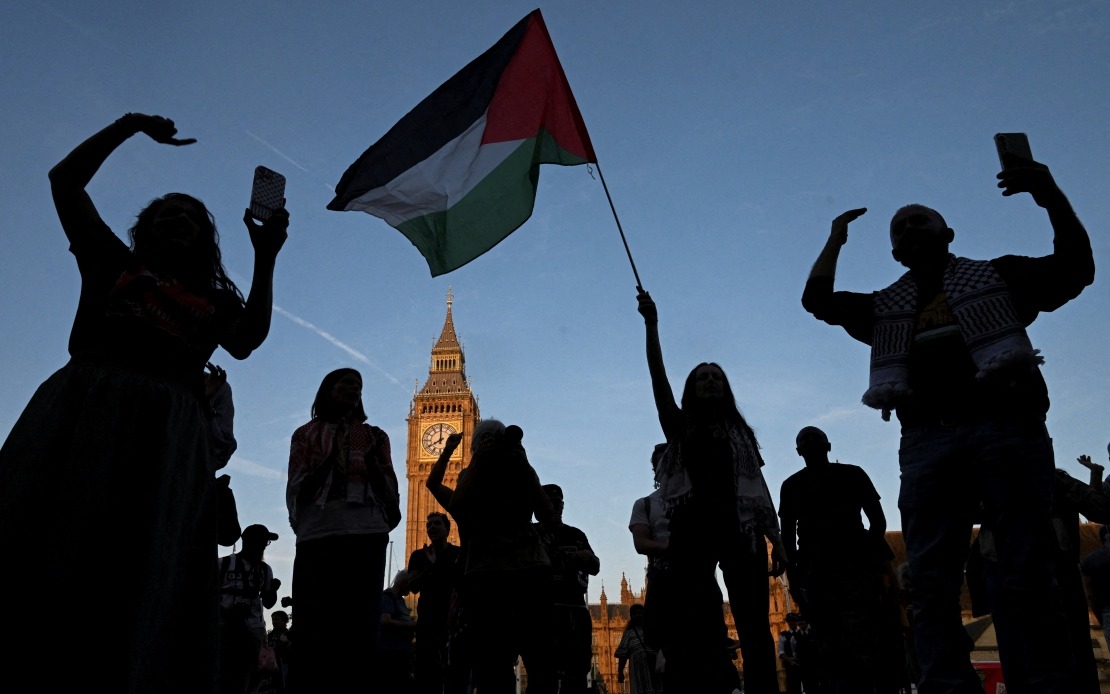
Arab League Secretary-General Nabil Fahmy has placed the Palestinian question squarely at the centre of his organization's mandate, signalling his commitment to the cause during his inaugural press conference at the League's Cairo headquarters. The statement marks a reassertion of organizational priorities as regional tensions continue to simmer across multiple fronts, with Fahmy framing Palestinian rights not as a peripheral concern but as intrinsic to the Arab League's foundational purpose.
Fahmy's remarks underscore a determination to pursue what he describes as the legitimate entitlements of the Palestinian people whilst simultaneously working to terminate the occupation that has defined the conflict for decades. This framing reflects broader Arab League positioning that views the Palestinian struggle as inseparable from regional stability and Arab collective identity. The emphasis on legitimacy and rights rather than political compromise signals a rhetorical stance that prioritizes principle over negotiated settlement, a distinction that carries implications for how the organization might approach future diplomatic engagement.
The Secretary-General reserved particular emphasis for Jerusalem, portraying the city as a flashpoint requiring vigilant Arab stewardship against what he characterised as efforts to alter its status and diminish its Arab character. This focus on Jerusalem's symbolic and political significance reflects historical Arab League doctrine, where control over the holy city represents a touchstone for broader Palestinian aspirations. Fahmy's statement suggests the organization intends to position itself as guardian of Jerusalem's Arab identity, a posture with deep resonance across the Arab world but limited practical enforcement mechanisms.
Fahmy's accusation that Israel perpetrates genocide in Gaza and the West Bank represents an escalation in Arab League rhetoric, framing the conflict not merely as occupation but as systematic extermination. By invoking the term genocide, the Secretary-General aligns the Arab League with international advocacy groups and some national governments that have adopted this characterization. This language carries significant diplomatic weight, implying that ordinary conflict resolution frameworks may be insufficient and that accountability mechanisms at the international level must be activated.
The commitment to pursue legal prosecution of perpetrators carries implications for the Arab League's relationship with international institutions. Fahmy's assertion that genocide knows no statute of limitations suggests the organization views accountability as a long-term objective, potentially spanning decades. This positions the Arab League as a custodian of historical grievance, tasked with ensuring that those responsible face justice regardless of temporal distance. For Malaysian and Southeast Asian observers, this reflects how regional organizations can position themselves as guarantors of justice and accountability in asymmetrical conflicts.
Fahmy extended the scope of Arab League concerns beyond the Palestinian territories specifically, identifying Israeli military activity in Lebanon as a separate violation warranting attention. By connecting actions in Lebanon to the broader Palestinian question, Fahmy constructs a narrative of regional destabilization emanating from a single source. This approach frames Israel's military posture not as isolated incidents but as systematic pressure across multiple Arab frontiers, potentially mobilizing broader Arab support for Lebanese concerns alongside Palestinian priorities.
The Secretary-General's reference to the Syrian Golan Heights introduces another long-standing territorial dispute into the conversation, positioning the Arab League as custodian of multiple unresolved territorial claims. The invocation of international legitimacy resolutions suggests that the organization views these disputes as settled in principle through United Nations action, with ongoing occupation representing defiance of established international law rather than contested territorial claims. This legal framing appeals to international norms whilst asserting Arab League authority as interpreter of regional concerns.
Fahmy's diagnosis that the Arab region faces a critical juncture requiring coordinated response frames the Palestinian cause within a broader context of Arab strategic necessity. Rather than presenting Palestinian support as humanitarian obligation, he positions it as integral to Arab regional interests and collective capacity. This formulation potentially strengthens the Palestinian cause by linking it to broader Arab security concerns, though it also subordinates Palestinian autonomy to Arab League calculations about regional balance.
The Secretary-General's emphasis on purely Arab solutions, independent of external influence, reflects aspirations for Arab strategic autonomy in addressing regional challenges. His assertion that sustainability requires Arab consensus suggests scepticism toward imposed settlements or arrangements negotiated through external mediation. For Southeast Asian readers accustomed to regional organizations attempting to manage complex disputes, Fahmy's emphasis on internally-generated solutions resonates with ASEAN principles of non-interference, though the Arab League's more activist posture on its core issues distinguishes it from Southeast Asian diplomatic practice.
The statement establishes baseline expectations for the Arab League's approach during Fahmy's tenure, with clear prioritization of Palestinian concerns and broader Arab interests. His inaugural press conference signals that the organization intends to maintain its historical commitment to the Palestinian cause whilst broadening the frame to encompass related regional security challenges. For Malaysia and other Organisation of Islamic Conference members, these positions reflect how a major Arab institution continues to center the Palestinian question within Arab diplomatic and strategic discourse, maintaining it as a test of Arab solidarity and commitment to justice.

