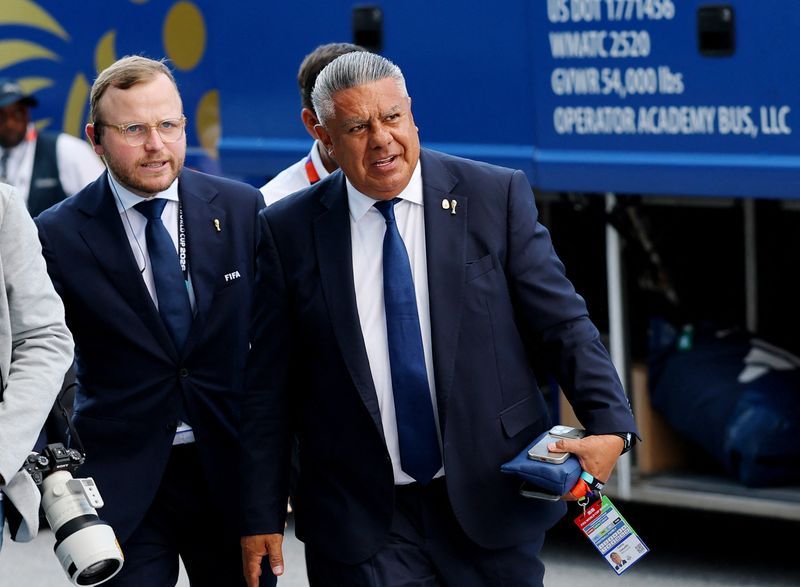
Argentina's football association moved swiftly on Wednesday to quash reports that its president Claudio Tapia and treasurer Pablo Toviggino had been ordered to appear before United States courts, issuing a forceful denial that categorised such claims as wholly inaccurate. The AFA's statement represented an attempt to contain a story that had already spread through Argentine and international media outlets following dramatic scenes at New York's JFK Airport on Monday, where federal agents were reported to have detained both officials as the national team prepared to depart following the World Cup final.
The clarification proved partial and carefully worded, however. While the association vehemently denied that either Tapia or Toviggino had received judicial summons or faced any direct action from American authorities, it acknowledged that a third party—whose identity it declined to disclose—had been summoned to give testimony before a U.S. grand jury. That unnamed individual, according to the AFA's account, may be asked to provide information about several people, including officials within the football body. The distinction between those directly summoned and third-party witnesses formed the crux of the organisation's defence against mounting international scrutiny.
The episode at JFK Airport had earlier generated significant controversy when local Argentine media, including the outlet Infobae, reported that federal agents had questioned both officials for approximately thirty minutes aboard a bus positioned on the airport tarmac. Witnesses at the scene indicated that agents had sought access to Tapia's electronic devices during this encounter. The timing proved particularly sensitive given that the interaction occurred as Argentina's squad was boarding a charter flight to return home following their participation in the World Cup tournament.
Behind the immediate airport incident lay a broader investigation into Argentina's football finances. According to reporting by Infobae, U.S. authorities are examining more than $300 million in commercial contracts that the AFA had entered into, examining potential irregularities or misconduct. This wider probe forms part of an extended period of scrutiny into Argentine football's financial practices, intensified following December raids conducted by local authorities investigating suspected money-laundering activities within the sport.
The AFA's statement sought to establish a clear legal distinction between investigative interest and formal charges or obligations. The association emphasised that the document in question—presumably a summons or subpoena—neither imposed requirements on Tapia or Toviggino personally, nor mandated their appearance before any court, nor imposed any procedural obligations upon them individually. Furthermore, the statement categorically denied that any electronic devices belonging to the officials had been confiscated or seized by American authorities.
The denial carries particular weight in Argentina, where the football association operates under intense public scrutiny and where any suggestion of official wrongdoing can rapidly escalate into broader political controversy. Tapia has led the AFA since 2017 and has become a prominent figure within South American football governance. Questions about financial management within the confederation could potentially affect Argentina's standing within FIFA and CONMEBOL, the South American confederation, with implications for the national team's operations and international standing.
The incident also reflects the increasingly sophisticated international cooperation among sports authorities and law enforcement agencies in investigating financial crimes within professional football. Investigations into corruption, money laundering, and financial mismanagement have become routine across major football confederations and clubs worldwide, with American authorities increasingly active in pursuing cases that cross international borders or involve American financial institutions.
For Southeast Asian readers and football administrators, the episode underscores the intensifying regulatory environment surrounding international football governance and financial management. Confederations and national associations across Asia have themselves faced enhanced scrutiny from both regional and international authorities regarding financial transparency and governance standards. The coordination between Argentine authorities and U.S. investigators demonstrates how investigations into football finances have become genuinely global in scope.
The AFA's careful language in its denial suggests that while the organisation may have successfully deflected the most serious allegations, the underlying investigation remains active and ongoing. The existence of a third-party summons indicates that American authorities are pursuing lines of inquiry into AFA operations, even if current focus has not directly targeted Tapia or Toviggino with formal legal measures. The association's decision to name the officials publicly in its denial, rather than allowing speculation to continue, represents a calculated attempt to reclaim narrative control during a sensitive period for Argentine football.
Looking forward, the matter will likely influence how Argentine football conducts its financial affairs and manages relationships with international regulatory bodies. The heightened attention to the confederation's commercial arrangements may prompt internal reviews and governance reforms designed to demonstrate compliance with international standards. For CONMEBOL and other regional confederations watching developments in Buenos Aires, the episode provides another case study in the complexities of managing professional football's increasingly internationalised regulatory environment.

