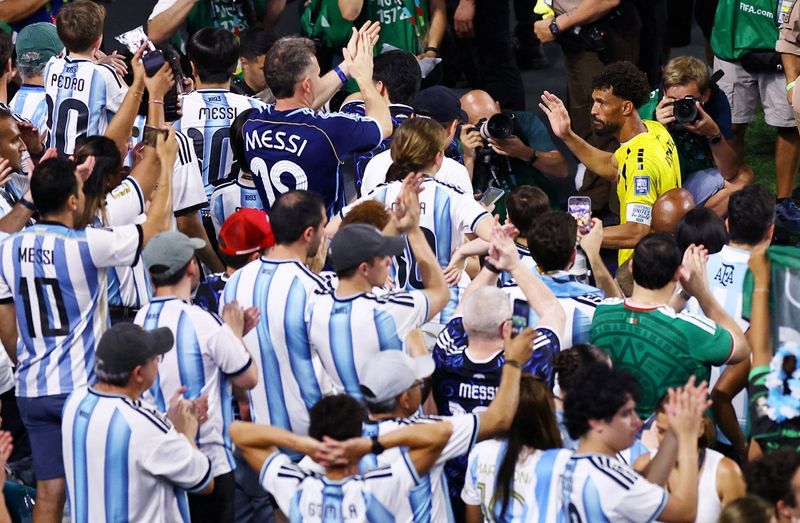
Argentina's progression to the World Cup knockout round came at a steeper price than expected when they finally overcame Cape Verde 3-2 in Kansas City, Missouri on July 4, with defender Cristian Romero's header—deflected in by opposition player Diney Borges—settling an unexpectedly competitive contest deep into extra time. The South American champions had entered the match as overwhelming favourites against tournament debutants, yet found themselves repeatedly undone by a well-organised visiting side that refused to capitulate despite falling behind twice during the encounter.
Cape Verde's refusal to wilt represents a significant warning for Argentina as they prepare to face Egypt in Atlanta on Tuesday in their round-of-16 fixture. The African nation's capacity to claw back into the match on two occasions revealed defensive and midfield vulnerabilities that stricter opponents will seek to exploit systematically. Prior to the tournament, coach Lionel Scaloni had publicly acknowledged the threat posed by Cape Verde after observing their credentials in group-stage draws against both Spain and Uruguay, yet the intensity of their challenge caught many observers off guard.
The underlying concern stems from Argentina's earlier passage through the group stage, during which they dismissed Algeria 3-0, Austria 2-0, and Jordan 3-1 with apparent ease. This sequence of commanding performances, while impressive on paper, created a false sense of security regarding the quality of opponents tested against. Questions about the level of resistance faced by the Argentine defensive line had persisted throughout their tournament preparation, with suggestions that European exposure through June friendlies had been limited to Iceland—their only continental opponent since their 2022 World Cup triumph. The absence of meaningful defensive examination meant that structural frailties went undetected until Cape Verde's persistent pressure forced them to the surface.
Marcelo Gallardo, a former River Plate manager who competed in the 1998 and 2002 World Cups, viewed the uncomfortable victory as potentially beneficial rather than damaging. He told ESPN Argentina that the experience could catalyse necessary adjustments, stating that Argentina would demonstrate a reaction in subsequent matches. Gallardo's analysis suggests that while the performance raised eyebrows, the psychological shock of nearly capitulating to tournament newcomers might function as corrective medicine before encounters against more organised and technically proficient opponents.
Capitain Lionel Messi, who extended his personal World Cup goal record to 20 in the first half, acknowledged the physical and tactical dimensions of the contest frankly after the final whistle. The 39-year-old explained that his team struggled to regain possession in advanced areas, forcing them into an exhausting defensive posture for extended periods. His observation that the visiting team's possession-based approach prevented Argentina from pressing effectively, combined with his assessment that defensive lines were positioned too far apart, pinpoints specific technical deficiencies that require addressing. Messi's candour reflected a player and leader aware that structural problems require remedy rather than minimisation.
Scaloni's post-match commentary focused on Argentina's capacity to elevate performance during adversity rather than defending the technical quality of their display. The manager emphasised that while debate about their tactical execution remained legitimate, the team's refusal to panic or retreat when facing pressure demonstrated the mental resilience characteristic of successful tournament competitors. This perspective acknowledges imperfection while highlighting the intangible qualities—composure, determination, and collective resolve—that often determine outcomes in knockout football where margins narrow considerably.
Two defenders embodied Argentina's capacity to overcome obstacles, their contributions assuming symbolic weight given their respective injury histories. Lisandro Martinez, who had suffered an anterior cruciate ligament injury in early 2025, scored the team's second goal and represented a triumphant return from serious setback. Similarly, Cristian Romero's involvement in creating the decisive moment followed his return from earlier knee problems that had limited his availability during the tournament's opening phase. Martinez spoke passionately about the emotional satisfaction of overcoming adversity, describing his feelings as transcendent while expressing gratitude towards the medical and coaching staff who facilitated his participation.
The narrowness of Argentina's escape carries particular significance given their trajectory towards defending their global title. Unlike previous tournament campaigns where the path to knockout stages involved more decisive margins, this encounter demonstrated that even elite teams face moments of genuine vulnerability when encountering well-prepared opponents regardless of relative ranking. Cape Verde's willingness to play expansive football despite obvious quality gaps creates a template that more accomplished nations might exploit if Argentina's defensive organisation and pressing coordination remain unresolved.
Argentina's preparation for Egypt will occur in Miami following their weekend training resumption, providing limited time to implement comprehensive tactical revisions. The challenge for Scaloni involves restoring the defensive solidity that characterised their group-stage dominance while addressing the pressing and positional issues that Cape Verde exploited effectively. For Southeast Asian observers monitoring the tournament, Argentina's struggle illustrates that World Cup football at its highest level permits no assumptions, regardless of pedigree or recent form—a lesson potentially relevant for regional powers evaluating their own continental and qualification ambitions.

