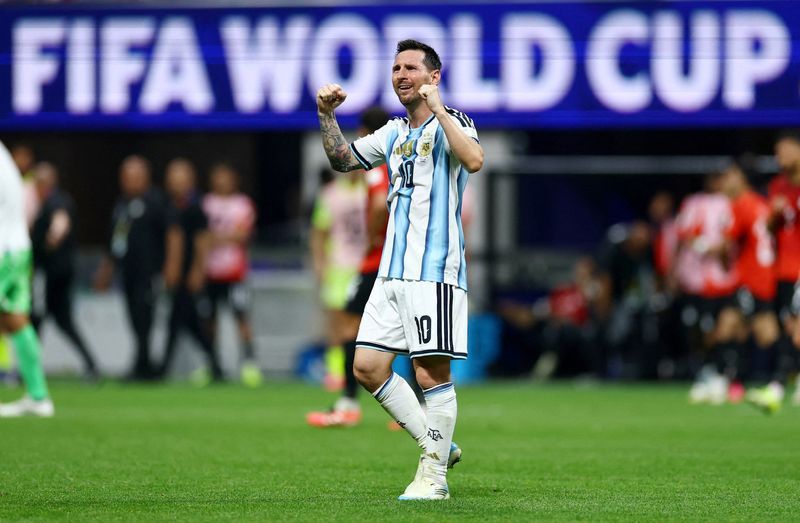
Argentina's passage through the knockout rounds of the World Cup has proven far more treacherous than their authoritative group-stage performance suggested, yet coach Lionel Scaloni's squad continues to find ways to progress. After securing passage past Cape Verde through extra time and then overcoming Egypt with a dramatic late rally in Atlanta on Tuesday, the holders now prepare for a quarter-final showdown against Switzerland in Kansas City on Saturday, their composure under pressure emerging as perhaps their most valuable asset in this tournament.
The 3-2 victory over Egypt represents the sort of defining triumph that championship teams often produce when faced with elimination. Trailing 2-0 with just 11 minutes on the clock, few observers would have wagered on an Argentina comeback, yet Lionel Messi orchestrated a remarkable turnaround that saw his team score three unanswered goals to snatch victory from the jaws of defeat. The manner of this recovery—refusing to surrender even when circumstances appeared hopeless—encapsulates a fighting spirit that Scaloni has cultivated throughout the tournament, providing genuine hope that Argentina possess the mental fortitude necessary to navigate the treacherous path to ultimate glory.
Analysts and former players alike have recognised this intangible quality as the foundation of Argentina's continued advancement. Carlos Tevez, who lined up for Argentina in previous tournaments, highlighted on ESPN Argentina that the team's defining characteristic lay not in technical brilliance during the Egypt match but in their unwavering determination and emotional resilience. This shift in focus—away from the fluid, dominant football displayed during the group stage and towards grit and character—suggests that Scaloni recognises his team's limitations in this particular tournament and has adapted his expectations accordingly.
The contrast between Argentina's group-stage dominance and their subsequent struggles illuminates the tournament's inherent unpredictability. Having swept aside Algeria, Austria, and Jordan with relative ease, the defending champions conceded only a single goal across their opening fixtures—a marker that was only allowed because Scaloni rested key personnel ahead of the knockout phases. Yet in two knockout encounters, Argentina have already surrendered four goals, exposing defensive frailties that could prove costly against more potent attacking forces.
Messi himself recognised the team's refusal to capitulate as the critical factor in their survival. Speaking to media representatives after the Egypt match, the captain noted that every World Cup contest carries inherent difficulty and unpredictability, yet this particular Argentina squad has developed an institutional commitment to fighting until the final whistle sounds. His observation that the team "never gives up and keeps trying until the end" resonates beyond mere platitude; it reflects a coaching philosophy that has permeated the entire squad's mentality throughout the tournament.
Leandro Paredes reinforced this perspective from the midfield, emphasising that despite conceding two goals in swift succession, the players never experienced a sense of psychological defeat or surrender. Such testimony from multiple senior players suggests that Scaloni has successfully instilled a psychological framework whereby players approach deficit situations as recoverable circumstances rather than terminal positions. This mental conditioning could prove invaluable as Argentina face increasingly difficult opponents en route to the final.
Scaloni himself offered a nuanced assessment of the Egypt performance, suggesting that while the result ultimately favoured Argentina, the team's overall display represented a considerable improvement over the Cape Verde encounter. He noted that his side created multiple opportunities throughout the opening 45 minutes, with Messi squandering a penalty that, had it been converted, might have altered the match's trajectory considerably. This analysis indicates that Scaloni recognises the performance gaps within his squad and views the knockout victories not as confirmations of superiority but as fortunate outcomes arising from marginal circumstances.
The defensive vulnerabilities exposed during the knockout rounds present a genuine concern as Argentina face Switzerland, a nation that boasts extensive World Cup history and a roster of experienced, technically proficient players. Scaloni has already acknowledged Switzerland's credentials, describing them as possessing an "incredible World Cup tradition" and highlighting the calibre of individual talents within their squad. For Argentina to progress further, they must find a means to tighten their defensive shape while maintaining the attacking threat that characterised their group-stage performances.
As Argentina prepare to resume training in Kansas City on Wednesday evening, the squad enters a critical phase of the tournament where mental and physical recovery becomes as important as tactical preparation. The psychological momentum generated by the Egypt comeback could prove decisive in subsequent matches, yet it cannot substitute for tactical adjustments designed to address the defensive vulnerabilities that have emerged. Scaloni faces the delicate balancing act of maintaining the confidence and self-belief that powered the comeback while implementing structural changes to prevent similar defensive collapses against more clinical opponents.
The quarter-final against Switzerland represents both a danger and an opportunity for Argentina. Switzerland's experience and technical quality could expose further defensive weaknesses, yet Argentina's demonstrated capacity to overcome adversity and their proven ability to generate attacking threat from Messi and their midfield could prove sufficient to overcome their opponents. Should Argentina advance to the semi-finals, the tournament's mounting pressure and the quality of remaining opponents will provide definitive evidence of whether their resilience in adversity represents genuine championship character or merely fortunate outcomes that cannot be sustained against elite opposition.

