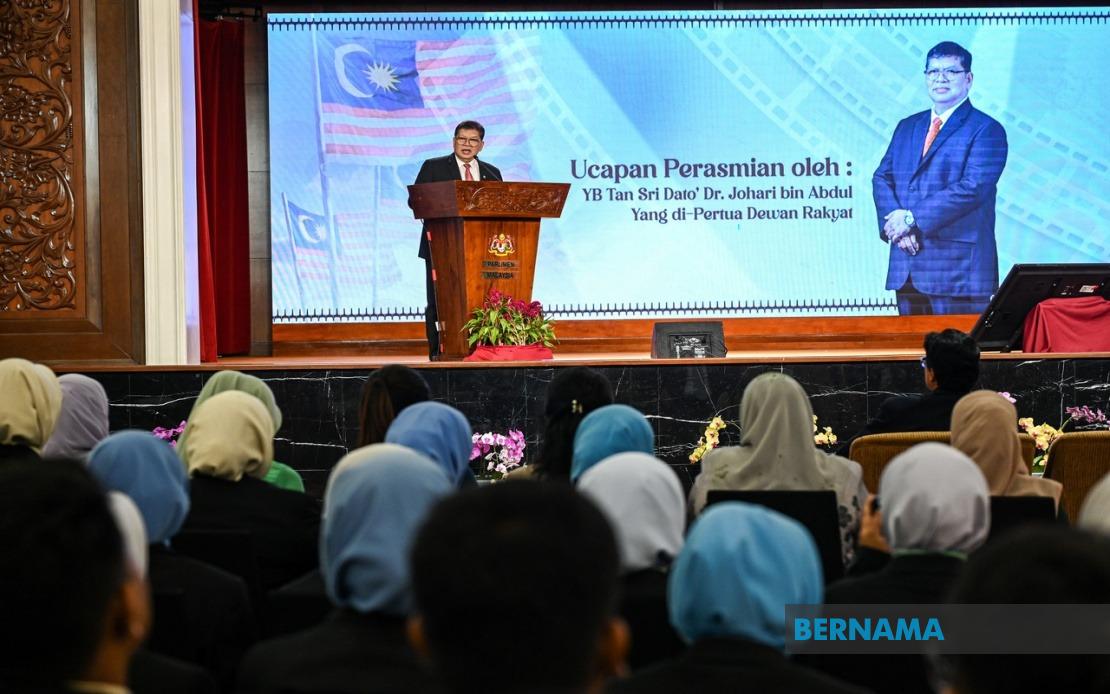
Parliament has launched a short film titled "Arkitek Bangsa" intended to cultivate leadership aspirations and foster a deeper sense of patriotism among Malaysia's younger generation. The production, screened at Parliament House in Kuala Lumpur on July 16, represents a concerted effort by legislative officials to shape how young people perceive their role in the nation's future, moving beyond passive citizenship towards active participation in governance and institution-building.
The core message underpinning the video centres on a fundamental belief that every young Malaysian should view themselves as an architect responsible for constructing and sustaining the nation's institutions and values. Rather than accepting a bystander's role in society, the film encourages youth to embrace leadership as an achievable goal worthy of personal investment and effort. This reframing of national responsibility as an individual undertaking reflects a broader parliamentary strategy to combat disengagement among younger voters and citizens who may feel disconnected from formal political processes.
Parliament officials emphasize that leadership, contrary to popular misconception, is not an innate characteristic reserved for a select few. Instead, they argue it emerges through deliberate cultivation, mentorship, and sustained practical exposure to complex decision-making environments. This philosophy underpins the film's educational value and justifies its distribution across government-sponsored youth programmes. The message resonates particularly in Malaysia's context, where demographic trends show younger citizens increasingly questioning traditional power structures and seeking greater transparency in how national institutions operate.
The "Arkitek Bangsa" initiative arrives alongside several complementary parliamentary programmes designed to deepen youth engagement with democratic institutions. The Parliament School Programme has successfully attracted 1,057 schools to visit Parliament, exposing students directly to the mechanics of legislation and parliamentary debate. By bringing classroom learning into physical contact with the workings of government, these visits aim to demystify governance and demonstrate that democratic participation remains accessible to ordinary citizens.
Beyond school visits, Parliament has strengthened the Youth Parliament scheme by substantially expanding its membership base from 100 to 222 participants. This expansion signals recognition that demand for youth political engagement exceeds available opportunities. More significantly, the introduction of a proportional representation electoral system for Youth Parliament selection represents a structural reform intended to reflect Malaysia's demographic diversity more accurately, ensuring that young voices from different regions and backgrounds gain meaningful representation within the youth-focused institution.
Parliament's involvement in the National Service Training Programme (PLKN) through a specialized select committee demonstrates commitment to integrating civic education into formal national service frameworks. This approach ensures that leadership development messaging reaches young Malaysians across socioeconomic backgrounds, not merely those with educational privilege or geographic proximity to educational hubs. The interdepartmental coordination required for such programmes signals that youth leadership cultivation is now treated as a whole-of-government priority rather than an isolated parliamentary initiative.
Official rhetoric accompanying the video's launch emphasizes an urgent need to strengthen young people's understanding of national history and historical sacrifice. By contextualizing contemporary Malaysia within the struggles and achievements of previous generations, policymakers hope to cultivate what they term a "stronger sense of responsibility and conviction." This historical grounding serves multiple purposes: it legitimizes existing institutional arrangements by demonstrating their hard-won establishment, while simultaneously placing responsibility on younger citizens to preserve what their predecessors struggled to build.
The metaphor of nation-building as architectural construction carries particular weight in parliamentary messaging. Officials note that while constructing enduring institutions requires sustained effort across years or decades, destruction can occur swiftly through negligence or deliberate sabotage. This cautionary framework implicitly warns against complacency regarding democratic values and institutional safeguards, suggesting that the gains of earlier generations cannot be assumed permanent. Such framing attempts to create psychological investment in institutional preservation among youth who may not have personally experienced pre-independence Malaysia or the nation's formative decades.
The video's intended circulation through multiple government ministries and agencies reflects confidence that its messaging possesses broad applicability across diverse sectors. Rather than limiting distribution to education ministry channels, Parliament envisions the film functioning as a cultural and ideological tool within health, economic development, public works, and security agencies. This expansive approach suggests that parliamentary strategists view leadership development and patriotic cultivation as essential to organizational effectiveness across the entire government apparatus, not merely within legislative institutions.
Film development resources and expertise from the National Film Development Corporation Malaysia (FINAS) underscore the production's professional calibre and reflects institutional investment in the project's creative quality. Engaging Malaysia's national film agency signals that the government views "Arkitek Bangsa" as culturally significant content worthy of production standards comparable to commercial entertainment, potentially increasing appeal and engagement among target audiences accustomed to professionally produced digital media. This production approach reflects understanding that messaging targeting digital-native youth requires aesthetic sophistication and narrative craft comparable to competing entertainment options.
For Malaysian youth navigating questions about national identity and personal purpose, the film presents an explicit invitation to view themselves as essential to the nation's trajectory rather than peripheral to it. By repositioning leadership as a cultivable skill rather than an inherited privilege, and by providing concrete institutional pathways through Parliament School, Youth Parliament, and PLKN integration, government officials have constructed a comprehensive framework intended to guide ambition toward institutional participation. Whether such messaging resonates with younger Malaysians skeptical of political institutions or facing economic pressures that prioritize immediate livelihood over civic participation remains an open question that implementation and uptake will ultimately answer.

