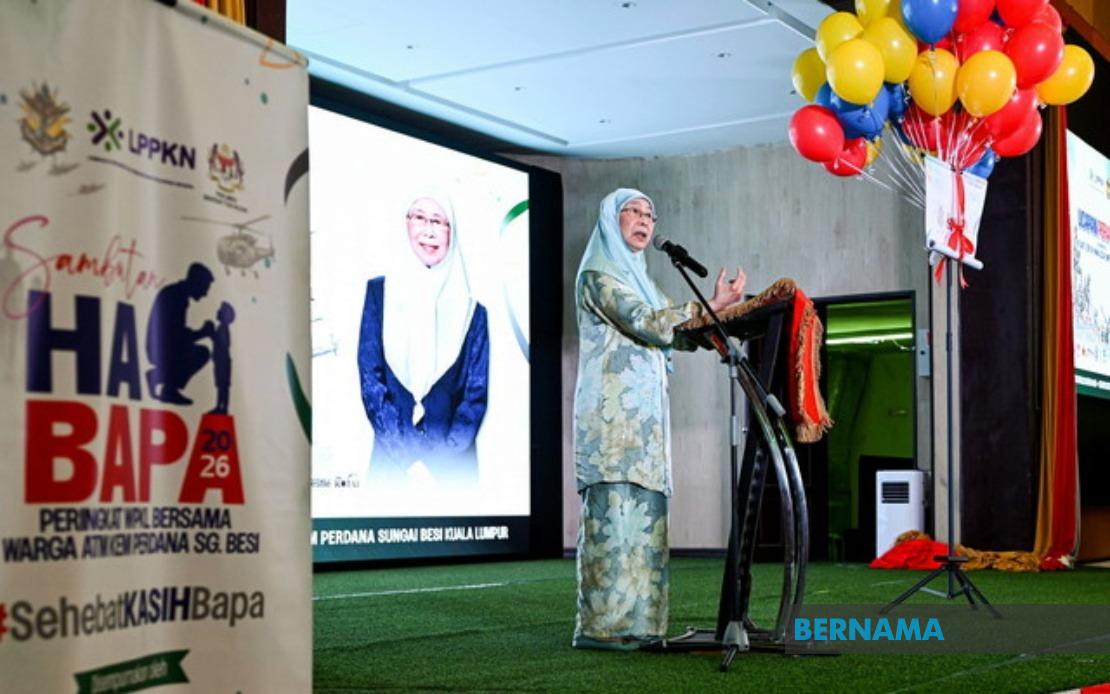
Prime Minister's wife Datuk Seri Dr Wan Azizah Wan Ismail has emphasized the need for sustained empowerment of fathers serving in the Malaysian Armed Forces, recognizing both their duty to defend the nation and their equally important role within their families. Speaking at a Father's Day celebration in Kuala Lumpur, she highlighted how the challenges unique to military service—particularly extended deployments away from loved ones—require complementary support systems to enable servicemen to fulfil their parental obligations effectively.
The Bandar Tun Razak Member of Parliament stressed that comprehensive family-focused policies must accompany broader efforts to recognize military fathers' contributions. She specifically referenced the National Family Compassion Policy (DKKN) as an example of the kind of institutional support needed, noting that such initiatives create the foundation for servicemen to maintain meaningful connections with their children and spouses despite the demands of their profession. This approach acknowledges a growing understanding that military effectiveness and family stability are interconnected rather than competing priorities.
Dr Wan Azizah's remarks reflect a broader strategic emphasis on strengthening family institutions as a cornerstone of national resilience. By elevating the discourse around fatherhood within the armed forces, the government is signalling recognition that military personnel should not face a false choice between professional duty and family presence. Instead, policies and programmes should be designed to enable them to excel in both spheres, which ultimately benefits both the families and the defence establishment itself.
The celebration, themed 'Sehebat KASIH Bapa' (As Great as Paternal Love), brought together approximately 500 participants, including military fathers, their spouses, children, and representatives from various government agencies. The event was jointly organized by the National Population and Family Development Board (LPPKN) of the Federal Territory of Kuala Lumpur and the Malaysian Armed Forces, underscoring institutional commitment to this agenda. The scale and official nature of the gathering demonstrates that support for military fathers is no longer treated as a peripheral welfare concern but as a matter of strategic institutional importance.
The specific focus on armed forces personnel reflects the particular circumstances these families navigate. Unlike civilian fathers, those in uniform frequently experience extended periods separated from their children due to operational requirements, training exercises, and postings. These separations can span months or even years, creating unique pressures that conventional parenting resources may not adequately address. The military community therefore requires tailored interventions that account for their distinct circumstances while still drawing on universal principles of positive fatherhood.
Among the concrete initiatives being promoted through LPPKN is a specialized Fatherhood Module designed to equip military fathers with practical parenting skills relevant to their circumstances. This programme goes beyond generic parenting advice to address scenarios specific to military life, such as maintaining parental engagement during deployments or managing the reintegration process when returning home. By providing evidence-based guidance, such modules help fathers navigate the emotional and logistical complexities of maintaining family bonds across distance and time.
Complementing the Fatherhood Module is the Men Empowerment Network (MEN), which creates peer support structures among military fathers. This initiative recognizes that shared experience and mutual support among servicemen facing similar challenges can be as valuable as formal programming. By establishing networks where military fathers can exchange strategies, discuss their experiences, and provide emotional support to one another, the programme harnesses the brotherhood inherent in military culture to strengthen family outcomes.
The emphasis on father empowerment within the armed forces carries broader implications for how Malaysia approaches both military personnel welfare and national family policy. It signals that support for military families is not merely a retention or morale issue, though it certainly has those dimensions. Rather, it reflects understanding that strong families contribute to social stability, children's development, and ultimately, a more cohesive society capable of supporting its defence establishment.
Dr Wan Azizah's call for continued empowerment also touches on changing notions of masculinity and fatherhood in Malaysian society. By publicly recognizing military fathers as role models worthy of support and celebration, the initiative challenges traditional narratives that position military duty and family engagement as inherently conflicting. This reframing has potential ripple effects across civilian sectors, encouraging a cultural shift toward understanding involved fatherhood as compatible with, and even essential to, masculine identity and professional achievement.
The timing of this initiative reflects growing regional and global recognition of fatherhood's importance to child development and family wellbeing. Research increasingly demonstrates that children with engaged fathers show better developmental outcomes across academic, emotional, and behavioural domains. For the armed forces, this means that supporting paternal involvement is not merely a quality-of-life improvement but a factor in developing healthier, more resilient future generations of citizens.
Moving forward, the challenge lies in ensuring these initiatives extend beyond symbolic gestures into sustained, adequately resourced programming. Military families in Malaysia would benefit from comprehensive support ecosystems including mental health services, family counselling, flexible deployment policies where operationally feasible, and workplace arrangements that facilitate parental involvement. The success of programmes like the Fatherhood Module and Men Empowerment Network will be measured not just by participation rates but by tangible improvements in family outcomes and military personnel satisfaction.
The initiative also sets a precedent for other sectors and institutions in Malaysia to examine how they support working fathers and families. Public and private employers increasingly recognize that family-friendly policies improve retention, productivity, and overall institutional effectiveness. The military's focus on father empowerment could catalyse similar efforts across government agencies and the private sector, contributing to a broader cultural shift toward recognizing fatherhood as integral to personal and professional identity.

