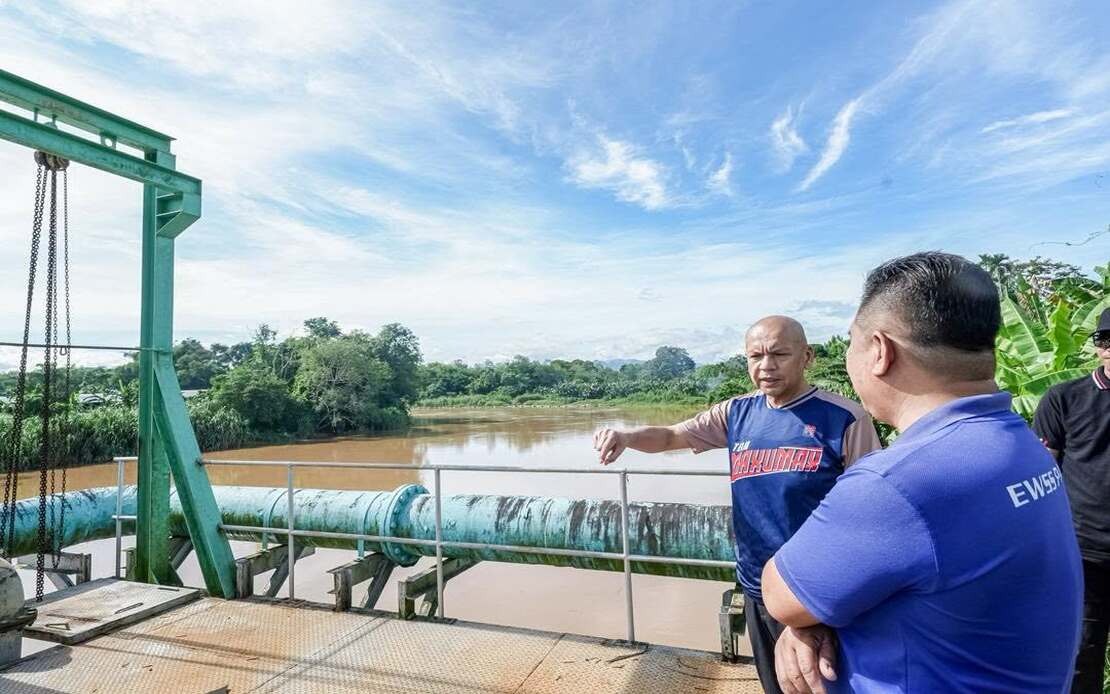
Datuk Armizan Mohd Ali, the Domestic Trade and Cost of Living Minister and Member of Parliament for Papar, has undertaken a field inspection of the district's water supply infrastructure to assess progress on critical expansion projects. The visit follows a June 15 coordination meeting to evaluate the implementation timeline and effectiveness of several initiatives designed to resolve longstanding water availability challenges in the region. The inspection underscores growing recognition among federal authorities that Papar's water systems require substantial upgrading to accommodate rising residential and commercial demand.
Two major infrastructure projects are currently under way to enhance Papar's water delivery capacity. The Kogopon Water Treatment Plant is undergoing a significant expansion that will double its processing capability from 40 million litres per day to 80 mld, representing a critical investment in the district's water security. Complementing this effort is an upgrade to the Kampung Kabang intake facility, which serves as a crucial source point for the broader supply network. Together, these initiatives constitute part of a broader strategic effort to modernize Papar's water infrastructure, which has struggled to keep pace with population growth and economic development.
The timing of Armizan's inspection is particularly significant given recent operational challenges at two key treatment facilities. Both the EWSS Plant and the JETAMA Limbahau Plant experienced temporary shutdowns during the preceding week due to elevated turbidity levels in raw water supplies. Turbidity, measured in nephelometric turbidity units or NTU, is a critical water quality parameter that indicates the presence of suspended particles and organic matter. When NTU values exceed treatable thresholds at the inlet of treatment facilities, operators must temporarily cease operations until incoming water quality improves to acceptable standards, creating supply disruptions for downstream consumers.
The turbidity problems encountered by both facilities illustrate a persistent challenge in Papar's water management system: vulnerability to raw water quality fluctuations during certain seasonal conditions or weather events. Such disruptions not only inconvenience residents but also highlight the limitations of existing infrastructure in handling variable source water quality. The temporary closures necessitated by high turbidity levels demonstrate the urgent need for enhanced treatment capacity and possibly improved source water protection measures throughout the supply chain.
Armizan's field visit represents a methodical approach to infrastructure oversight, reflecting the federal government's commitment to addressing water security as a priority service delivery issue. Direct inspection of treatment plants and intake facilities provides decision-makers with firsthand understanding of operational constraints, technical limitations, and maintenance requirements that may not be fully apparent through administrative reporting channels. This ground-level engagement enables more informed policy decisions regarding resource allocation and project prioritization.
The Papar water situation carries broader implications for Sabah's development trajectory. As the state continues economic expansion and rural-to-urban migration accelerates, water supply becomes an increasingly critical infrastructure bottleneck. Districts like Papar, which serve as both residential centers and growing commercial hubs, require water systems capable of scaling efficiently. The current expansion projects, if executed on schedule and within budget, could serve as a template for other Sabahan districts facing similar capacity constraints.
The upgrade projects also reflect lessons learned from Malaysia's recent water crisis experiences in other states, which have highlighted the dangers of allowing supply infrastructure to lag behind demand growth. By proactively expanding treatment capacity and addressing source water quality issues, authorities in Papar are attempting to prevent the acute shortages and supply rationing that have periodically affected other Malaysian regions. This preventive approach, when paired with consistent investment, can avoid the costlier emergency interventions required when systems reach crisis point.
Operational coordination among treatment facilities will be crucial for the success of these initiatives. The EWSS Plant and JETAMA Limbahau Plant, despite recent turbidity-related closures, form part of an interconnected system that must function reliably to serve Papar's population. Infrastructure upgrades must therefore address not only individual facility capacity but also the integration and redundancy necessary to maintain supply continuity during maintenance periods or quality issues affecting particular sources.
The completion timelines for the Kogopon Water Treatment Plant upgrade and Kampung Kabang intake improvements will be closely watched by Papar residents and stakeholders. Given that these projects are explicitly framed as responses to documented supply challenges, delays or cost overruns could undermine confidence in infrastructure development efforts. Conversely, successful on-time delivery would demonstrate effective project management and validate the government's commitment to addressing water security through sustained capital investment.
Looking forward, the success of Papar's water stabilization program depends on sustained funding, technical expertise, and maintenance discipline. Infrastructure expansion alone cannot guarantee reliable supply if operational standards deteriorate or equipment falls into disrepair. Armizan's ongoing monitoring engagement signals that federal oversight will continue, though ultimate responsibility for day-to-day management and maintenance rests with state and local water authorities. This intergovernmental coordination structure must remain robust for these investments to deliver their intended benefits over the coming years.