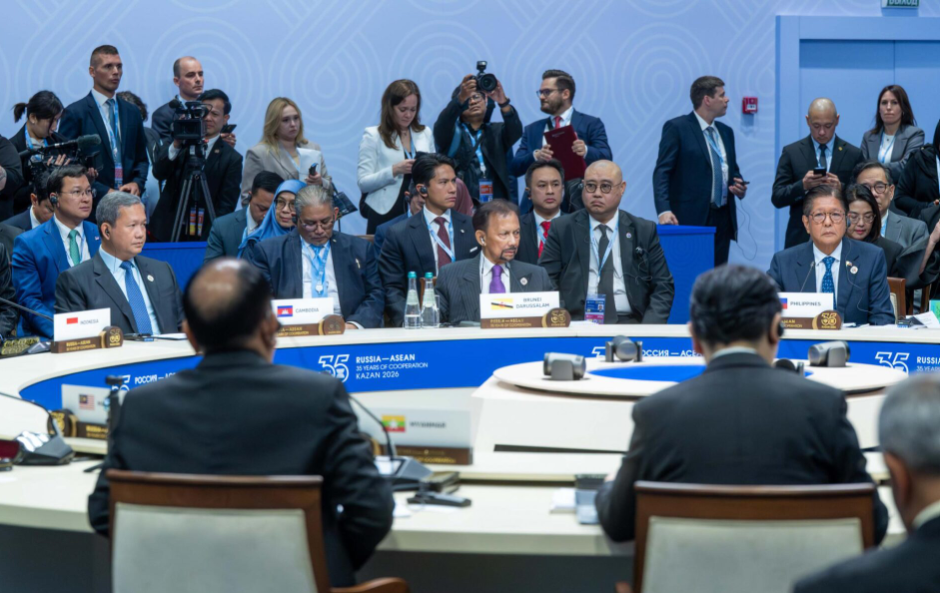
Sultan Hassanal Bolkiah made a robust case for reinvigorated cooperation between Asean and Russia this week, addressing leaders at a commemorative summit in Kazan that underscored the strategic importance both regions place on their decades-long relationship. Speaking at the Kazan Expo International Exhibition Centre on June 18, the Brunei monarch thanked Russian President Vladimir Putin for his hospitality and acknowledged the warmth extended by the government of the Republic of Tatarstan and the city of Kazan to the assembled Asean delegations. The Sultan, accompanied by Minister of Foreign Affairs Prince 'Abdul Mateen, also extended formal condolences to Thai Prime Minister Anutin Charnvirakul following the death of Princess Bajrakitiyabha of Thailand, a gesture reflecting Asean's close-knit diplomatic protocols.
The 35-year dialogue partnership between Asean and Russia represents a relationship that has weathered significant geopolitical shifts and economic transformations. In reflecting on this trajectory, Sultan Hassanal Bolkiah characterized the partnership as one marked by demonstrated resilience, noting that its importance has only grown more pronounced as global conditions become increasingly turbulent. The nature and scope of cooperation between the two sides has expanded substantially over this period, now encompassing activities that span the three pillars of the Asean Community: political and security cooperation, economic integration, and socio-cultural exchange. This comprehensive approach suggests that the relationship extends far beyond diplomatic pleasantries or strategic posturing, touching genuine areas of mutual benefit and shared interest.
What makes the Asean-Russia partnership particularly noteworthy for regional observers is the tangible impact it has generated. Rather than remaining confined to ceremonial declarations or symbolic gestures, collaboration between the two sides has produced concrete benefits for member states and contributed to strengthening the human connections that underpin any enduring international relationship. The Sultan emphasized that people-to-people ties have grown noticeably, creating networks and understanding that transcend official channels. Simultaneously, the partnership has worked toward shared objectives encompassing peace, security and prosperity—goals that carry particular salience for Southeast Asian nations navigating a complex regional environment marked by competing interests and shifting power dynamics.
As Asean pursues its ambitious Vision 2045 agenda, which charts the region's development trajectory over the coming two decades, the organization faces formidable obstacles that demand collaborative solutions. Sultan Hassanal Bolkiah identified several pressing challenges that underscore why continued engagement with Russia remains strategically essential. Political tensions across various regions threaten stability and divert resources from development. Economic fragmentation—the tendency for trade blocs and regional arrangements to splinter global commerce into competing spheres—poses risks to Asean's prosperity. Climate change presents an existential threat to vulnerable nations in the region, many of which face rising sea levels and intensifying weather patterns. Technological developments are advancing at a pace that challenges policymakers' capacity to formulate effective regulatory frameworks.
The Sultan's emphasis on energy and food security reflects practical concerns gripping Southeast Asia. As the region's economies expand and populations grow, demand for reliable energy supplies continues climbing, making partnerships with major energy producers increasingly vital. Food security remains a delicate issue in Southeast Asia, where several nations depend on imports for significant portions of their dietary requirements, and where supply chain disruptions can quickly translate into domestic instability. Russia, as a major producer of both energy and agricultural commodities, occupies a position of considerable importance in addressing these material concerns. The inclusion of disaster management and non-traditional security challenges in the Sultan's remarks acknowledges that contemporary threats often transcend traditional military frameworks, encompassing pandemics, cyber attacks, human trafficking and terrorism.
Human capital development emerged as a particular focus in the Sultan's address, reflecting a recognition that sustainable partnerships rest fundamentally on the capabilities and understanding of future generations. Educational exchanges, training programmes and professional development initiatives serve multiple purposes simultaneously: they equip younger cohorts with practical skills and knowledge applicable to development challenges, while simultaneously creating personal networks and mutual understanding that strengthen ties between societies. When officials from Asean nations study in Russian institutions or participate in collaborative research projects, they develop appreciation for Russian perspectives and establish relationships that often endure throughout their careers, influencing policy decisions and creating informal channels of communication that complement official diplomacy.
The formal adoption of the Kazan Declaration 2026 represented the tangible outcome of the summit's deliberations, serving as a framework for future engagement between the two sides. Beyond this central declaration, leaders formalized cooperation through several specialized instruments, including the Comprehensive Plan of Action to Implement the Asean-Russian Federation Strategic Partnership covering the 2026-2030 period, which provides concrete operational guidance for ongoing collaboration. Joint statements specifically addressing energy cooperation and cultural cooperation signal both practical commitment to shared interests and recognition of non-governmental channels through which peoples interact. These varied instruments reflect sophisticated understanding that effective partnerships require multiple mechanisms operating simultaneously at different levels and addressing distinct constituencies.
The summit's second plenary session, organized as a working lunch, focused on integration processes in Eurasia, a topic of considerable relevance to Asean's own internal integration efforts and its positioning within regional architecture. Contributions from the Secretary-General of Asean, the secretary-general of the Shanghai Cooperation Organisation, and the chairman of the Board of the Eurasian Economic Commission created opportunity for comparative analysis of regional integration models operating across different geographies. These discussions allow Asean policymakers to learn from experiences of other regional organizations, identifying best practices while avoiding pitfalls encountered elsewhere. The parallel Asean-Russia Business Forum, held on June 17 as a summit side event, provided space for private sector actors to explore commercial opportunities and discuss practical mechanisms for deepening trade and investment relationships.
The significance of this summit extends beyond the immediate outcomes documented in formal declarations. It represents recognition from both Asean and Russia that their relationship deserves renewed investment and higher-level political attention at a moment when global alignments face pressure and strategic partnerships require deliberate cultivation. For Malaysia and other Southeast Asian nations, the message is clear: navigating an increasingly complex geopolitical environment requires maintaining diverse partnerships that distribute risk and create multiple channels for pursuing national interests. The Brunei Sultan's remarks, delivered with characteristic diplomatic finesse, effectively articulated why Asean and Russia each remain valuable partners for the other, and why their collaboration contributes to broader regional and global stability.
%22%2F%3E%3C%2Fpattern%3E%3C%2Fdefs%3E%3Crect%20width%3D%22100%25%22%20height%3D%22100%25%22%20fill%3D%22url(%23ph27rvxg)%22%2F%3E%3Crect%20width%3D%22100%25%22%20height%3D%22100%25%22%20fill%3D%22url(%23ph27rvxp)%22%2F%3E%3Ctext%20x%3D%2250%25%22%20y%3D%2250%25%22%20text-anchor%3D%22middle%22%20dominant-baseline%3D%22central%22%20fill%3D%22rgba(255%2C255%2C255%2C0.95)%22%20font-family%3D%22Georgia%2C%20'Times%20New%20Roman'%2C%20serif%22%20font-weight%3D%22700%22%20font-size%3D%22320%22%20letter-spacing%3D%22-0.02em%22%3EKTMB%3C%2Ftext%3E%3C%2Fsvg%3E)