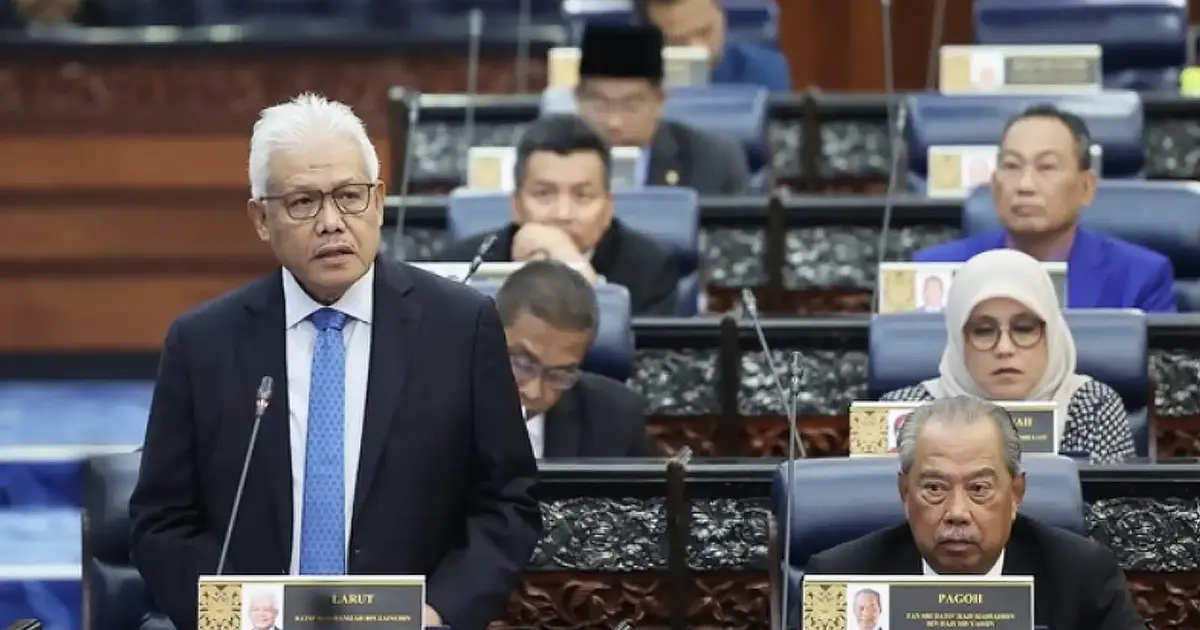
Hamzah Zainudin has reclaimed his seat as opposition leader on the front bench of Dewan Rakyat, marking a significant shift in parliament's seating arrangements that reflects changing political dynamics in Malaysia's legislative chamber. The repositioning removes Bersatu president Muhyiddin Yassin from the prominent front-row position he previously occupied directly adjacent to the opposition leader, pushing him eight places further back along the bench.
The seating rearrangement carries symbolic weight in Malaysian parliamentary tradition, where front-row positioning signals political influence and standing. The opposition leader's seat has long been one of the most prominent in the chamber, located where parliamentary proceedings can be closely observed and where key figures can engage directly with government ministers. Hamzah's return to this position underscores a recalibration of opposition influence and leadership within parliament.
Muhyiddin's demotion from immediate proximity to the opposition leader suggests a shift in the balance of power among opposition coalitions. As Bersatu president, Muhyiddin has wielded considerable political influence, yet this seating change indicates his repositioning within the broader opposition framework. The eight-seat displacement is neither insignificant nor catastrophic in parliamentary terms, but it clearly denotes a hierarchical adjustment that observers view as reflecting real shifts in influence.
For Malaysian readers familiar with parliamentary protocol, such seating modifications rarely occur without deliberate intent. The Dewan Rakyat's physical layout has consistently been used to convey political messages, with front-row placement signalling authority and strategic importance. Previous administrations have manipulated seating arrangements to either elevate or diminish particular figures, making this rearrangement part of a larger narrative about parliamentary power structures.
The timing of Hamzah's return to prominence comes amid ongoing negotiations within Malaysia's opposition blocs. Various opposition parties have engaged in discussions about coordination and leadership direction, with questions about who should hold the primary opposition voice in parliament remaining contentious. Hamzah's restoration to the opposition leader's seat suggests resolution—at least temporarily—of these internal discussions in his favour.
Bersatu's current position within Malaysia's political landscape remains complex. The party has occupied different roles across recent administrations, variously participating in government coalitions and opposition alignments depending on broader political circumstances. Muhyiddin's reduced seating position may reflect tension between Bersatu and other opposition groupings, or it could represent a strategic recalibration as the party manoeuvres ahead of future electoral contests.
Parliamentary seating arrangements in Malaysia typically follow protocols established by the Dewan Rakyat speaker's office, with consultations involving party leadership. The decision to move Muhyiddin and restore Hamzah would have required coordination between multiple political actors, suggesting agreement among opposition parties about representation priorities. Such consensus, even on seemingly procedural matters, indicates behind-the-scenes negotiations that signal deeper political alignments.
For Southeast Asian observers tracking Malaysian politics, these shifts reflect the region's fluid political environment where coalitions remain unstable and leadership hierarchies subject to rapid change. Malaysia's opposition has historically struggled to maintain unified messaging, with different parties and leaders competing for prominence. Hamzah's prominent seating may strengthen the opposition's ability to present a coordinated challenge to government policies, though only if parties can maintain solidarity.
The practical implications extend beyond symbolism. The opposition leader's front-row position facilitates more effective parliamentary engagement, allowing for direct questioning of government ministers and higher visibility during televised proceedings. Hamzah's location will increase his platform for articulating opposition viewpoints and responding to ministerial statements, potentially elevating public perception of his leadership role.
Muhyiddin's movement down the bench, conversely, reduces his immediate parliamentary profile without eliminating his influence entirely. From eight positions back, he can still participate in debates and votes, yet his reduced prominence may impact media coverage of his interventions. For a politician of Muhyiddin's stature, such physical displacement within the chamber carries psychological and strategic dimensions beyond mere seating logistics.
Looking forward, these arrangements remain subject to change as Malaysia's political situation evolves. Parliament's composition shifts with by-elections, defections, and coalition realignments occur regularly in Malaysian politics. Current seating reflects present power dynamics, but future government formations or opposition restructuring could prompt additional modifications. Political observers will monitor whether Hamzah's positioning strengthens opposition cohesion or whether tensions resurface among disparate opposition parties.
The broader significance lies in what this rearrangement reveals about opposition unity and direction. Successfully positioning Hamzah as the primary opposition voice requires buy-in from other opposition factions, particularly those uncomfortable with Muhyiddin's political trajectory. Whether this seating change translates into sustained collaborative opposition politics or merely represents a temporary adjustment remains to be seen as Malaysia's parliament convenes and legislative activity resumes.