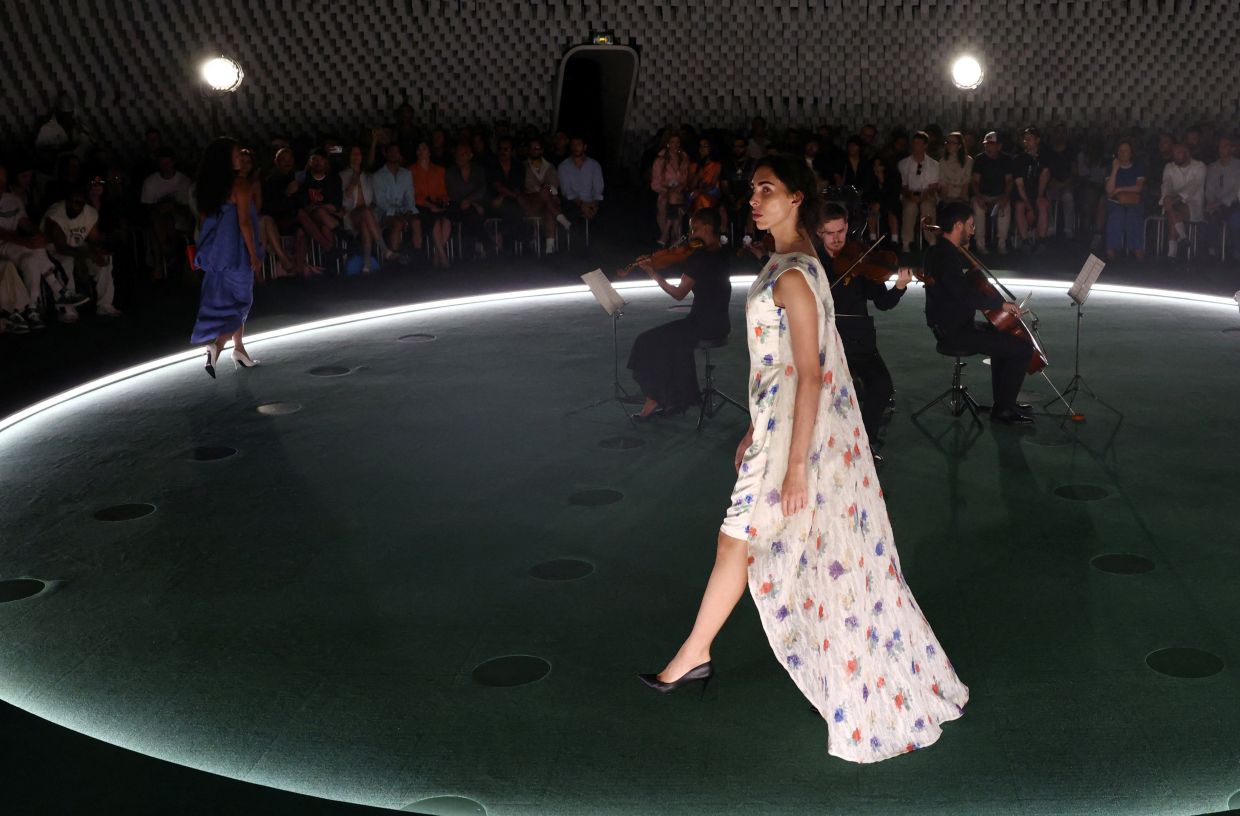
The fashion industry is witnessing a remarkable shift toward sleeveless garments, reflecting broader changes in how we dress for a warming world and evolving social attitudes. Global market research indicates the sleeveless clothing sector will expand substantially from US$24.36 billion in 2021 to over US$51.39 billion by 2033, underscoring the trend's commercial significance. This trajectory represents far more than a fleeting aesthetic preference—it signals fundamental changes in what people wear and why, with implications for manufacturers, retailers, and consumers across Southeast Asia and beyond.
The data supporting this expansion is striking. Alexandra Van Houtte, founder of the fashion search engine Tagwalk, noted a 133 percent surge in sleeveless designs featured in Spring 2026 collections compared to the previous year's spring offerings. Designer Willy Chavarria, who showcased extensive sleeveless pieces during Paris Fashion Week, confirmed that sleeveless designs have substantially outperformed their sleeved counterparts over recent seasons. The consistency of these observations across different segments of the fashion industry suggests this is no isolated phenomenon driven by a single label or market niche.
Climate change stands as perhaps the most compelling driver of this transformation. As global temperatures continue rising and summer heat intensifies across tropical and subtropical regions, including Malaysia and wider Southeast Asia, lighter clothing with minimal fabric coverage has become increasingly practical rather than purely stylistic. The expansion of sleeveless options addresses a genuine functional need, allowing people to remain comfortable during sweltering months while maintaining professional and social appropriateness. For readers in Malaysia, where air conditioning cannot always be relied upon and humidity remains oppressive during monsoon seasons, this shift offers tangible relief.
Beyond environmental factors, contemporary fitness culture has normalized the display of toned arms and shoulders. The proliferation of gym culture, wellness influencers, and body-focused social media has created a context where muscular definition—particularly in the upper arms and shoulders—represents achievement and dedication rather than transgression. Simultaneously, evolving gender norms have challenged long-standing prohibitions against women displaying their bodies in ways previously deemed immodest or unprofessional. These cultural currents converge to make sleeveless dressing increasingly acceptable across diverse settings, from boardrooms to casual gatherings.
Yet the decision to embrace sleevelessness carries psychological and historical weight, particularly for women navigating decades of messaging about which body parts warrant concealment. The upper arm has long occupied an unusual position in this landscape—simultaneously ordinary and fraught with anxiety. Unlike faces, which we continuously work to preserve through skincare and procedures, or legs, which have enjoyed periods of fashionable prominence, arms remain a zone of ambivalence. They reveal age through subtle anatomical shifts: the loosening of skin around the triceps, the accumulation of fat at the armpit, the visibility of ligaments and muscles in lean bodies, and the crepey texture that develops with time. These changes occur regardless of fitness level or wealth, making arms an honest mirror of aging that many prefer to conceal.
The historical resistance to women displaying their arms extends far deeper than simple aesthetics or anxiety about aging. Michelle Obama's preference for sleeveless dresses exemplifies how this choice becomes racialized and politicized. Her decision to wear a sleeveless sheath for her first official White House portrait sparked intense debate, with critics suggesting it was inappropriate while supporters framed it as empowering. The very fact that this sartorial choice warranted such scrutiny reveals how loaded this garment category remains. Only in 2017 did the US House of Representatives modify its dress code to permit congresswomen to wear sleeveless clothing; the Senate required an additional two years to adopt similar reforms. Such institutional resistance demonstrates that sleevelessness continues to carry connotations of impropriety for some.
For professionals in Malaysia and the wider region—particularly women navigating corporate environments where Western fashion codes remain influential—the emergence of sleeveless as a legitimate choice offers both opportunity and complexity. In sectors ranging from law to finance to media, the expansion of acceptable professional dress codes reflects global conversations about equality and modernity. Yet regional variations persist. What reads as empowered self-expression in New York might invite unwanted commentary in more conservative professional contexts. Understanding this landscape requires nuance rather than wholesale adoption or rejection of the trend.
For those uncertain about embracing sleevelessness, fashion designer Antonin Tron of Balmain advocates a philosophical reframing alongside practical strategies. His assertion that aging bodies possess inherent beauty directly challenges decades of messaging that female sexuality diminishes with age. This perspective proves particularly valuable in Asian contexts where respect for age coexists with beauty standards that often privilege youth, creating particular pressure on older women. Tron's suggestion to view sleevelessness as a form of strength rather than vulnerability offers psychological permission to reconsider ingrained hesitations.
Practical styling interventions can ease the transition into sleeveless dressing for skeptics. Beginning with a simple sleeveless top paired with an eye-catching necklace or statement bangles strategically redirects attention while allowing gradual comfort-building with exposure. Transitional styles—cold-shoulder cuts, open-armed designs, or cap sleeves—provide compromise options for those unwilling to commit fully to complete sleevelessness. Sheer or transparent layers worn over sleeveless garments create visual texture and coverage while maintaining the silhouette's modern sensibility. Critically, the armhole construction matters tremendously; a high cut under the arm that remains unsnug avoids both gaping sides and unflattering compression, allowing bodies of varying shapes and ages to wear sleeveless pieces confidently.
The question of whether to embrace sleevelessness ultimately becomes less about conforming to trends and more about reclaiming agency over one's body presentation. Arms that have conducted countless professional presentations, lifted children and responsibilities, performed physical labor, and expressed affection through embrace represent genuine strength and capability. The nervous system running through them, the scars marking accidents survived, the muscles built through work—these tell authentic stories worth revealing. In choosing sleevelessness, women need not perform youth or apologize for aging; instead, they can assert that bodies, in their full chronological reality, merit visibility and respect.

