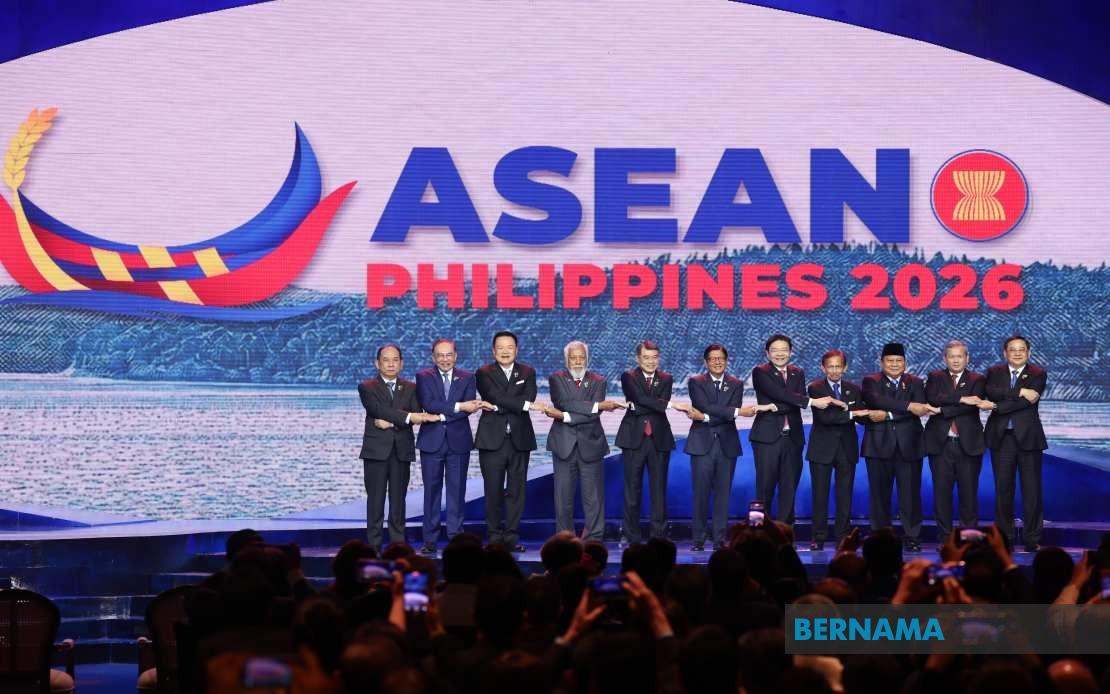
The Association of Southeast Asia Nations marked its 59th anniversary on August 8, entering a transformative phase where the bloc's ability to strengthen internal bonds will determine its relevance in an increasingly contested regional landscape. Founded in 1967 by Indonesia, Malaysia, the Philippines, Singapore, and Thailand, ASEAN has evolved into an eleven-member organisation representing 700 million people, yet faces pressures that test its foundational principles of unity and non-interference. The current geopolitical environment—characterised by great power competition, energy security vulnerabilities highlighted by the United States-Iran tensions, and disruptions to global supply chains—has shifted the organisation's primary challenge from simply proving its worth to maintaining cohesion and leveraging collective influence.
For nearly six decades, ASEAN has cultivated a reputation for diplomatic pragmatism and managed to navigate Cold War politics, regional conflicts, and economic turbulence. However, security analysts and regional experts now contend that external recognition of ASEAN's importance is insufficient without corresponding institutional strengthening from within. The organisation's current trajectory under ASEAN Community Vision 2045 demands more than symbolic gestures or diplomatic victories at regional forums. Instead, member states must deliver tangible benefits that justify the bloc's institutional architecture and demonstrate that collective action produces outcomes impossible for individual nations to achieve.
Phar Kim Beng, Director of the Institute of International and ASEAN Studies at the International Islamic University Malaysia and a former ASEAN Secretariat official, emphasises that the bloc's future depends not merely on whether external powers acknowledge ASEAN's centrality but on whether member states themselves champion this principle collectively. He argues that ASEAN must transition from aspirational rhetoric to concrete achievements, particularly in establishing a genuinely integrated single economic community. This transformation requires substantial work across multiple dimensions, including labour mobility arrangements that allow workers to move seamlessly across borders, digital infrastructure that connects the region's economies and societies, and strengthened government-to-government cooperation mechanisms that transcend bureaucratic silos and national rivalries.
The challenge of maintaining labour mobility proves particularly acute given that Southeast Asian workers form a crucial part of the region's informal economy. Harmonising labour standards, skills recognition frameworks, and social protections across eleven diverse legal systems remains extraordinarily complex, yet remains essential for the bloc to maximise its demographic dividend. Similarly, digital connectivity extends beyond simply laying fibre optic cables; it requires coordinated regulatory approaches, cybersecurity frameworks, and data governance standards that protect both commercial interests and citizen privacy. Without addressing these foundational issues, the promised single market remains theoretical rather than operational.
The geopolitical dimension of ASEAN's challenge has grown more acute as the United States-China competition intensifies across the Indo-Pacific. The fast-escalating South China Sea disputes, where multiple ASEAN members maintain territorial claims, force the bloc into difficult balancing acts. Smaller members cannot afford to alienate Beijing, which increasingly dominates their trade and investment, yet they also value strategic reassurance from Washington and its allies. This structural predicament creates pressure for ASEAN to maintain unity precisely when divergent national interests might pull member states in different directions. Without strong internal mechanisms for managing these tensions, the bloc risks fracturing into aligned camps that undermine its collective voice.
Dr Rahul Mishra from Jawaharlal Nehru University's Centre for Indo-Pacific Studies notes that while ASEAN has demonstrated considerable normative appeal in addressing both internal disputes and external challenges, the organisation has not yet matched its growing diplomatic influence with sufficiently robust practical cooperation frameworks. The bloc has recently expanded its external engagement to twelve dialogue partners following Turkey's elevation to full partner status, and the Treaty of Amity and Cooperation in Southeast Asia—marking fifty years this year—now counts sixty-two High Contracting Parties, expanded by four new signatories including Sweden, Poland, Romania, and Lithuania. Yet Mishra cautions that expanding ASEAN's external network means little without simultaneously strengthening its ability to implement commitments and deliver concrete security and economic benefits.
The Myanmar crisis exemplifies the organisation's limitations in translating diplomatic intent into decisive action. Despite considerable dialogue and engagement efforts, ASEAN has struggled to meaningfully influence Myanmar's political trajectory or humanitarian situation, exposing gaps between the bloc's normative framework and its operational capacity. Similarly, the growing threat of cyber scams emanating from Southeast Asia demands coordinated law enforcement responses and technology cooperation that transcends national sovereignty concerns. These pressing challenges require member states to subordinate certain national prerogatives to collective security interests—a calibration that proves politically sensitive in a region where non-interference remains a sacred principle.
The expansion of ASEAN's membership to include Timor-Leste, admitted during the 47th ASEAN Summit in October of the previous year, theoretically strengthens the bloc's representation and voice. However, each new member also adds complexity to consensus-building processes and negotiating positions. Timor-Leste's admission expanded ASEAN from ten to eleven members, yet the bloc continues operating on consensus rules that effectively grant any member veto power over collective decisions. This governance structure, designed to protect smaller nations' interests, increasingly hampers ASEAN's ability to respond rapidly to emerging crises or take decisive positions that reflect the bloc's collective interests.
The 2026 ASEAN chairmanship, which the Philippines will assume under the theme "Navigating Our Future Together," provides an opportunity to institutionalise reforms that strengthen internal coordination. The Philippines, as a key claimant in South China Sea disputes and a strategic partner to Washington, brings particular perspectives to ASEAN's balancing act. During its chairmanship, Manila could champion initiatives that enhance information-sharing among security services, harmonise maritime domain awareness capabilities, and strengthen mechanisms for rapid consultations during crises. Such practical achievements would demonstrate that ASEAN's institutional apparatus can deliver value beyond diplomatic forums and ceremonial engagement.
The bloc's capacity to address transnational challenges—including pandemics, natural disasters, irregular migration, and environmental degradation—ultimately determines whether member states perceive sufficient value in maintaining ASEAN institutions. Regional integration succeeds when citizens across Southeast Asia observe tangible improvements in their lives resulting from collective action. Lower trade barriers must translate into cheaper consumer goods and employment opportunities. Coordinated development projects must build infrastructure that enhances connectivity and commerce. Educational and cultural exchanges must cultivate genuine people-to-people understanding that transcends official rhetoric.
Asian regional architecture has become fragmented across multiple competing frameworks, from the Quadrilateral Security Dialogue involving India, Japan, the United States, and Australia, to bilateral defence partnerships and emerging alternatives such as the Regional Comprehensive Economic Partnership. ASEAN risks becoming peripheralised if it cannot demonstrate that its unique institutional arrangements offer advantages unavailable through alternative groupings. This imperative drives the urgency with which analysts urge the bloc to strengthen internal cooperation and deliver on ASEAN Community Vision 2045's ambitious promises.
Ultimately, ASEAN's test is not whether external powers recognise its centrality but whether member states themselves invest political capital and resources into making the organisation truly functional. The bloc's 59th anniversary represents not a celebration of past achievements but a checkpoint for assessing progress toward genuine regional integration. Without renewed commitment to institutional strengthening, labour mobility frameworks, digital infrastructure, and coordinated responses to transnational challenges, ASEAN risks becoming a ceremonial organisation that convenes regularly but influences little. The window to demonstrate that collective action produces meaningful benefits for the region's 700 million people remains open, but only temporarily.

