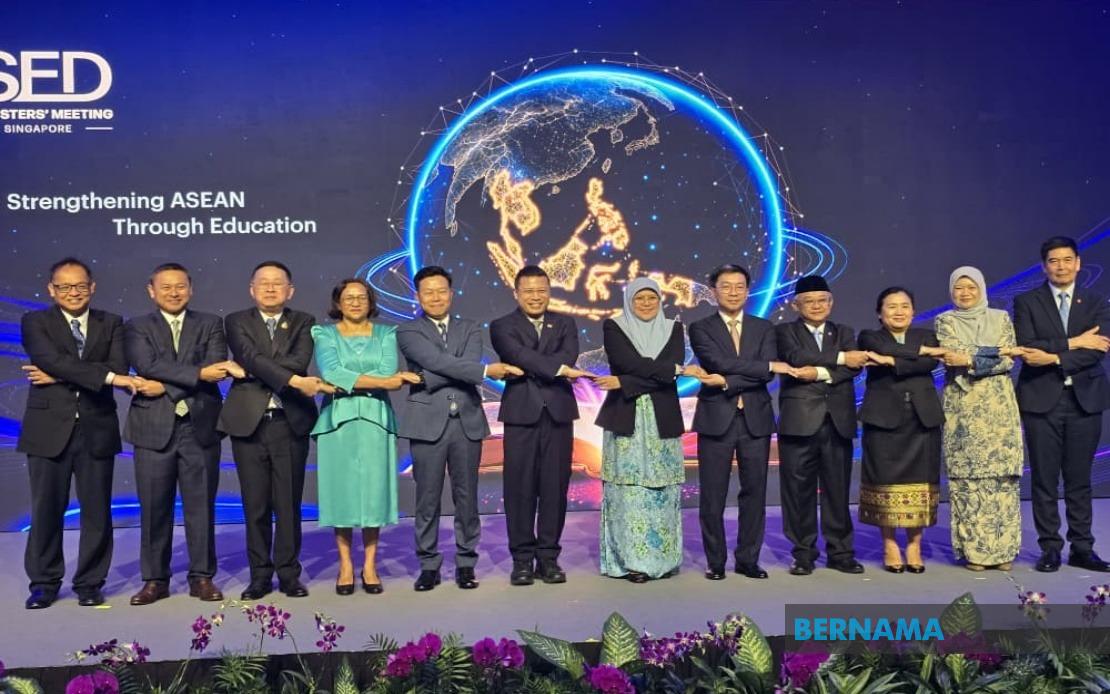
ASEAN education leaders have unveiled an ambitious five-year strategic framework set to guide the region's education transformation from 2026 through 2030, with Singapore hosting the landmark launch during its tenure as chair of the ASEAN Education Sector. The initiative emerged from the 14th ASEAN Education Ministers Meeting held in Singapore on Wednesday, where delegates from across the bloc, including Malaysian Education Minister Fadhlina Sidek, gathered to establish collective priorities for building educational systems that are inclusive, comprehensive and capable of driving meaningful societal change.
The newly adopted work plan represents a collaborative commitment from all ten ASEAN member states to construct education ecosystems that respond effectively to rapid technological advancement and evolving global demands. Rather than prescribing a one-size-fits-all approach, the framework acknowledges the diversity of national contexts while establishing shared aspirations that bind the region's educational efforts. The plan balances the immediate need for developing technically proficient workers equipped with cutting-edge skills against the longer-term imperative of nurturing thoughtful, adaptable individuals capable of navigating complex societal challenges.
Singapore's Education Minister Desmond Lee articulated three pillars that will anchor educational development across ASEAN over the coming decade: the integration of artificial intelligence within learning environments, the strengthening of Science, Technology, Engineering and Mathematics instruction, and the advancement of holistic student development that extends beyond conventional academic metrics. Lee framed these priorities not merely as technical upgrades to existing systems but as fundamental reorientations designed to ensure young people throughout the region possess the conceptual frameworks and practical abilities needed to thrive in an increasingly digitised world.
The emphasis on artificial intelligence reflects recognition that AI technologies are reshaping economies and societies across Southeast Asia with unprecedented speed. Rather than allowing individual nations to navigate this transformation in isolation, the ASEAN framework creates mechanisms for member states to share insights, pilot innovative approaches, and avoid duplicating costly mistakes. This collaborative posture proves particularly valuable for smaller or less-resourced economies that might otherwise struggle to develop robust AI literacy programmes independently.
Equitable access to quality education emerges as a central concern woven throughout the five-year plan, reflecting longstanding disparities within and between ASEAN nations. While some member states have made significant progress in universal primary education, secondary completion rates and access to advanced technical training remain uneven across the region. The framework commits ASEAN governments to deliberate efforts ensuring that rural students, girls, persons with disabilities, and economically disadvantaged youth are not left behind as education systems modernise.
Student wellbeing constitutes another strategic pillar, signalling a shift in how ASEAN conceptualises educational success beyond examination scores and workforce productivity metrics. The region has experienced rising rates of youth mental health challenges, academic stress, and social disconnection even as material educational access has expanded. By anchoring wellbeing as a core objective, the five-year plan acknowledges that sustainable educational development requires attention to students' psychological, emotional, and social flourishing alongside intellectual development.
Regional cooperation mechanisms embedded within the plan create infrastructure for ongoing knowledge exchange and best-practice sharing among ASEAN education systems. Singapore's Centre for Character and Citizenship Education will establish a regional research network dedicated to advancing common approaches to values education, providing member states with a platform to examine how different national curricula address ethical formation and civic development. This initiative recognises that while constitutional frameworks, historical experiences, and cultural contexts vary significantly across ASEAN, shared principles around ethical education and values development offer fertile ground for collaboration.
The appointment of Singapore as the lead architect during its 2026-2027 ASEAN chairmanship positions a resource-rich, technologically advanced economy in a coordinating role during a critical implementation phase. Singapore's established expertise in curriculum design, educational technology adoption, and international assessment frameworks will likely shape how ASEAN interprets and operationalises the five-year plan's broad objectives. However, the plan's success ultimately depends on individual member states' capacity and commitment to translate regional aspirations into concrete policy changes and resource allocations within national education budgets often constrained by competing priorities.
For Malaysia specifically, the framework creates both opportunities and expectations. As a regional middle power with substantial educational infrastructure and experience implementing reforms, Malaysia can contribute valuable lessons from its own curriculum modernisation efforts while learning from other ASEAN approaches to AI integration and values education. The country's position allows it to serve as both implementer and knowledge contributor within the broader regional initiative.
The launch of this five-year work plan signals that ASEAN education ministers recognise the existential stakes involved in preparing the region's youth for futures fundamentally different from their parents' experiences. Technological disruption, climate change, shifting geopolitical dynamics, and evolving labour market demands necessitate educational systems capable of fostering adaptability, critical thinking, and cross-cultural understanding alongside technical competencies. By establishing this regional framework, ASEAN commits to ensuring that education development strategies remain calibrated to these emerging realities rather than perpetuating models designed for bygone eras.
Implementation will present substantial challenges, from resource constraints to competing national priorities to the practical difficulty of coordinating policy across politically diverse systems with varying levels of institutional capacity. Yet the very act of establishing shared aspirations and collaborative mechanisms represents meaningful progress in recognising that education challenges in Southeast Asia increasingly transcend national boundaries and that collective solutions offer advantages individual nations cannot achieve alone. The five-year plan thus serves simultaneously as an ambitious vision and a practical roadmap, setting expectations while providing flexibility for contextual adaptation.

