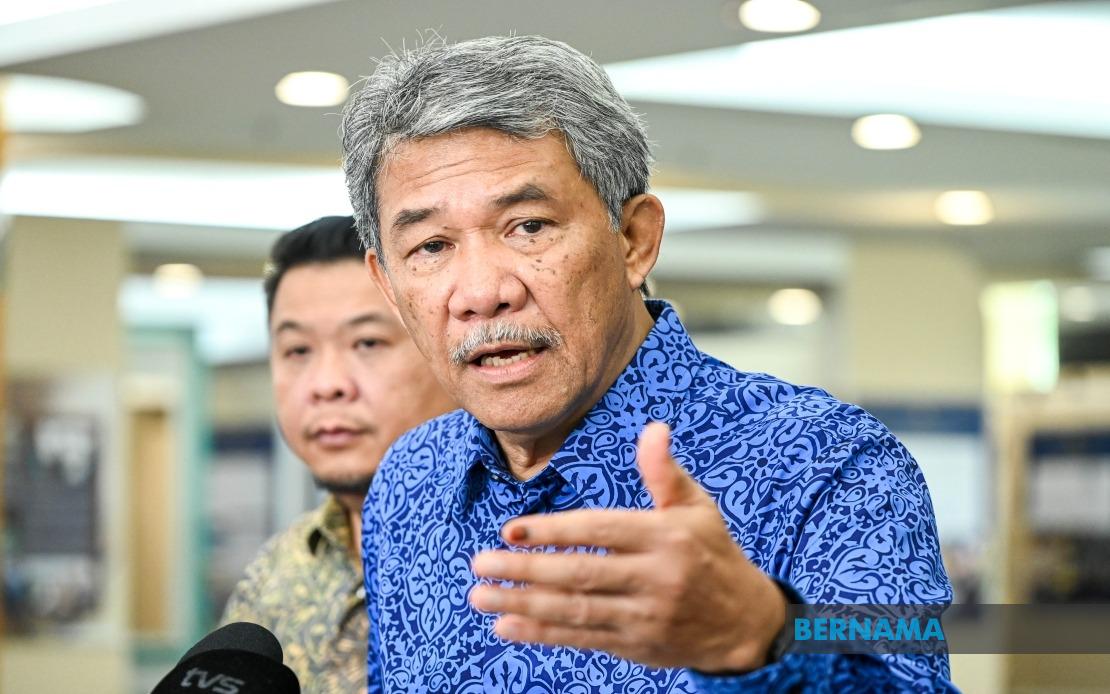
The ASEAN economic agenda has shifted decisively toward internal strengthening rather than external engagement alone, according to Foreign Minister Datuk Seri Mohamad Hasan, who highlighted a critical shortfall in the bloc's intra-regional trade performance during remarks marking the 59th ASEAN Day celebration in Putrajaya on Monday. With internal trade currently representing less than 25 per cent of member nations' total commerce, ASEAN faces a significant opportunity cost as it pursues its vision to capture the position of the world's fourth-largest economic bloc within the next six years.
The scale of untapped potential within ASEAN's ten member states presents both a challenge and an opportunity for policymakers across Southeast Asia. Mohamad underscored that the regional bloc recognises the necessity of substantially increasing cross-border commerce among its constituent countries to unlock the economic dynamism that underpins broader regional prosperity. The current figure—which remains surprisingly modest given decades of regional integration efforts—suggests that significant structural, regulatory, or logistical barriers continue to impede the flow of goods, services, and investment between neighbouring economies.
For Malaysia, this strategic pivot carries particular significance given the country's prominent role in regional economic architecture. During its ASEAN chairmanship in the previous year, Malaysia spearheaded the introduction of multiple initiatives and resolutions designed to establish durable foundations for advancing the region's economic cooperation framework. These foundational measures, crystallised in the Kuala Lumpur Declaration, represent the intellectual and political groundwork upon which subsequent chairs—including the Philippines in the current cycle—now build their policy agendas.
The Philippines' current stewardship of ASEAN has involved actively consolidating these earlier initiatives while adapting them to contemporary economic realities. By carrying forward proposals and resolutions from Malaysia's tenure, the Philippines demonstrates continuity in regional commitment to deeper economic integration. This relay-race approach to ASEAN leadership ensures that ambitious targets for trade expansion do not falter when chairmanship transitions occur, a recurring vulnerability in multilateral organisations dependent on yearly rotating leadership.
Mohamad articulated a vision in which ASEAN's member states leverage existing institutional mechanisms to catalyse trade growth. The free movement of goods among ASEAN nations, enshrined within the bloc's regulatory architecture, represents perhaps the most direct instrument available for reducing transactional friction and encouraging merchants to source inputs and sell finished products within the region rather than seeking extra-regional alternatives. Yet the modest proportion of intra-ASEAN trade suggests that this mechanism alone has proven insufficient to overcome other impediments to regional commerce.
The economic implications extend well beyond trade statistics to encompass broader questions of regional resilience and competitive positioning in an increasingly multipolar global economy. Should ASEAN successfully elevate intra-regional trade toward 35 or 40 per cent of total member commerce, the multiplier effects would prove substantial—generating employment opportunities across manufacturing and services sectors, reducing supply-chain vulnerabilities exposed during recent international crises, and concentrating more wealth creation within the region itself rather than dispersing it toward distant suppliers and markets.
Malaysia's designation as Permanent Shepherd or Permanent Auditor of the ASEAN Community 2045 vision reflects trust in the country's commitment to long-term regional economic development. This custodial role places Malaysia in a position to monitor progress toward enhanced intra-ASEAN trade and to advocate for policy adjustments when momentum stalls. The symbolism of this appointment—coupled with the substantive responsibility it entails—signals that Malaysia views the deepening of regional trade bonds as central rather than peripheral to its foreign policy objectives.
The quantitative target of becoming the world's fourth-largest economy by 2030 represents an ambitious but achievable aspiration provided member states execute necessary reforms in trade facilitation, regulatory harmonisation, and infrastructure development. The current trajectory, with intra-regional trade below one-quarter of total commerce, suggests that ASEAN economies remain heavily oriented toward external markets rather than viewing each other as primary trading partners. Reversing this orientation requires deliberate policy choices and investments in connectivity that transcend the free movement of goods to encompass digital infrastructure, customs modernisation, and business-to-business networks.
The broader geopolitical context renders this economic agenda increasingly urgent. As regional powers jockey for influence and as external actors intensify their engagement with Southeast Asia, ASEAN's ability to project unified economic strength depends fundamentally on the solidity of internal commercial relationships. Trade among member states generates political interdependence that strengthens the bloc's capacity to negotiate with larger powers while resisting external pressures intended to divide it. In this sense, the seemingly technical question of expanding intra-ASEAN trade carries profound strategic implications for regional autonomy and cohesion.
Moving forward, the challenge facing ASEAN leadership involves identifying and dismantling the specific obstacles preventing merchants, manufacturers, and service providers from engaging more extensively with counterparts in neighbouring countries. These barriers may include tariff structures that inadvertently favour external suppliers, regulatory complexity that makes cross-border transactions unnecessarily burdensome, insufficient transportation infrastructure connecting key economic centres, or simply entrenched commercial relationships and supply chains that require time and incentives to reorient. Only through systematic diagnosis and targeted intervention can ASEAN realistically aspire to transform intra-regional trade from its current subdued levels to figures more commensurate with a genuine economic community.

