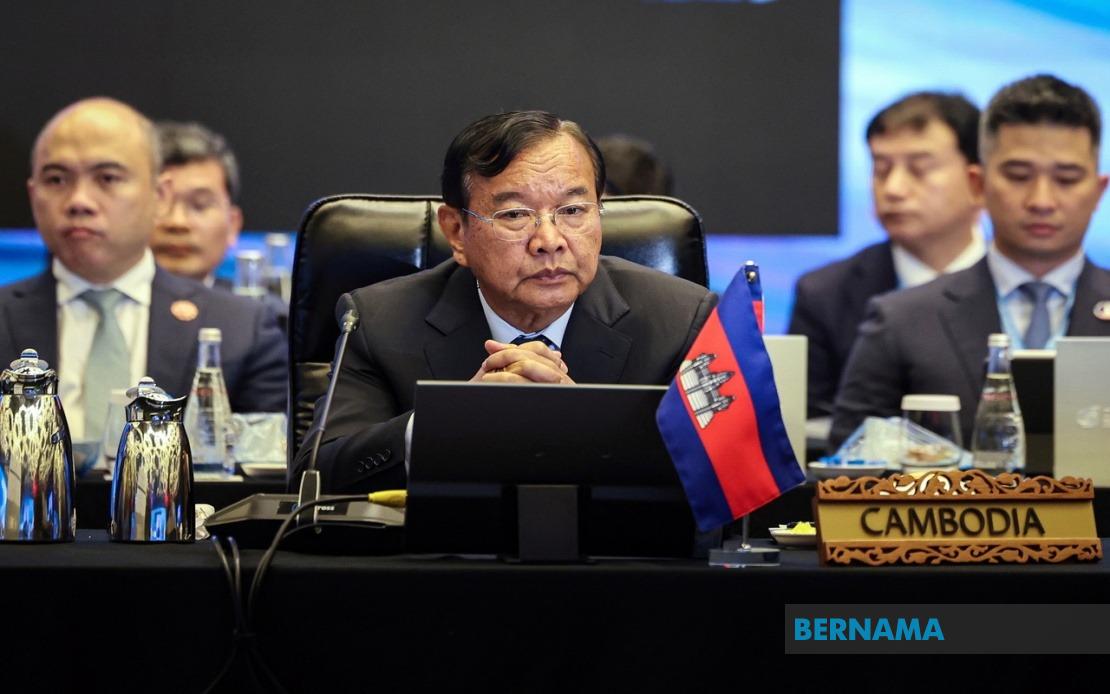
Cambodia's Foreign Minister and Deputy Prime Minister Prak Sokhonn has underscored the enduring importance of ASEAN as a stabilizing force in Southeast Asia, particularly as the region confronts an increasingly turbulent international landscape. Speaking in an official statement marking the bloc's 59th anniversary, Sokhonn highlighted how the ten-member organization has evolved from a grouping seeking to manage regional rivalries into a catalyst for dialogue and collaborative prosperity across one of the world's most strategically significant regions. His remarks come at a moment when geopolitical tensions, military conflicts, and challenges to the international rules-based order are reshaping strategic calculations across the Indo-Pacific.
Since its establishment on August 8, 1967, ASEAN has fundamentally transformed the nature of state relations in Southeast Asia. The bloc, which now includes Brunei, Cambodia, Indonesia, Laos, Malaysia, Myanmar, the Philippines, Singapore, Thailand, Vietnam, and Timor-Leste, emerged from a region fractured by ideological divisions and interstate suspicions during the Cold War. Over nearly six decades, it has built mechanisms and norms that have facilitated unprecedented levels of economic integration, security dialogue, and diplomatic cooperation. The ASEAN Charter and the Treaty of Amity and Cooperation serve as the institutional and legal scaffolding upon which these achievements rest, providing frameworks that respect national sovereignty while enabling collective action on shared challenges.
Yet Sokhonn's commentary suggests growing awareness within ASEAN capitals that traditional approaches to regional management may prove insufficient in an era marked by renewed great power competition and the resurgence of armed conflicts in multiple regions. The Foreign Minister pointedly rejected a passive posture, arguing that ASEAN cannot content itself with simply reacting to external pressures and shifting global dynamics. Instead, he called for the organization to assume a more proactive role in shaping the regional and international environment. This represents a significant statement of intent, signalling Cambodia's view that ASEAN's relevance depends on demonstrating capacity for strategic initiative rather than merely adapting to circumstances imposed from outside.
The global climate Sokhonn references encompasses several interconnected challenges with direct implications for Southeast Asia. Armed conflicts in Ukraine and the Middle East have demonstrated the fragility of international norms and raised concerns about how great power competition might spill over into the Indo-Pacific. Intensifying geopolitical tensions, particularly between major powers with significant interests in Southeast Asia, have prompted ASEAN members to navigate carefully between competing strategic partnerships and pressures. The strain on international law and multilateralism manifests in disputes over territorial claims, maritime rights, and the application of international legal principles, issues that touch directly on ASEAN members' vital interests.
Cambodia's own position within ASEAN reflects this balancing act. The country joined the bloc in 1999, two decades after ASEAN's founding, and has since positioned itself as a committed member while maintaining its own strategic relationships and navigating complex regional dynamics. Sokhonn's emphasis on Cambodia's pride in its contributions since accession underscores how even newer members have internalized ASEAN's core values and perceive value in the organization's framework. Cambodia's stake in ASEAN unity is substantial; the bloc provides Phnom Penh with diplomatic platforms and institutional mechanisms that amplify its voice on regional issues and provide protection against isolation.
The call for strengthening ASEAN's unity carries particular weight given recent strains within the organization. The Myanmar crisis following the 2021 military coup tested ASEAN's consensus-based decision-making processes and its ability to enforce its own norms regarding governance and human rights. Discussions surrounding the South China Sea, particularly competing territorial claims and efforts to negotiate a Code of Conduct, have illustrated how internal differences and external pressures can complicate collective positions. Sokhonn's reiteration of commitment to the ASEAN Charter and the TAC appears aimed at reaffirming the institutional foundations that enable consensus despite such challenges.
Resilient institutional frameworks become more valuable precisely when external pressures intensify. The ASEAN Regional Forum, the East Asia Summit, and the ASEAN Plus Three mechanism represent attempts to embed dialogue and cooperation within formal structures. These platforms have historically provided venues for managing tensions and building confidence among nations with divergent interests and alliance patterns. As Southeast Asian economies become more integrated into global supply chains and as military capabilities in the region expand, the capacity to manage competition through dialogue rather than confrontation grows more crucial.
Sokhonn's emphasis on ASEAN's centrality reflects the organization's understanding that its relevance depends on demonstrating utility to its members. Southeast Asian nations face pressures to align with major powers, yet many value ASEAN as a mechanism for maintaining autonomy and shaping outcomes that reflect regional rather than extraregional interests. The bloc's ability to develop common positions on trade, maritime security, and diplomatic responses to international crises directly determines whether members perceive membership as valuable or merely ceremonial.
For Malaysia and other ASEAN members, Sokhonn's message carries implications for how the region should position itself amid broader strategic competition. His call for ASEAN to help shape international events rather than merely react suggests a vision of the bloc as an autonomous strategic actor rather than a passive arena where great powers compete for influence. Realizing this vision requires sustained commitment to consensus-building, willingness to accommodate diverse member interests, and capacity to develop initiatives addressing shared concerns like pandemic preparedness, climate change, and maritime security.
The articulation of such a proactive role also reflects changing international expectations of ASEAN. Major powers increasingly look to the bloc to contribute to regional order and to validate or legitimize their strategic policies through ASEAN endorsement. Whether ASEAN can fulfill this role while maintaining its unity and autonomy will significantly influence Southeast Asia's development trajectory. Sokhonn's reaffirmation of Cambodia's commitment to strengthening ASEAN unity and global relevance represents a vote of confidence in the organization's capacity to navigate complex futures, though translating such rhetorical commitment into sustained institutional performance remains an ongoing challenge for all member states.

