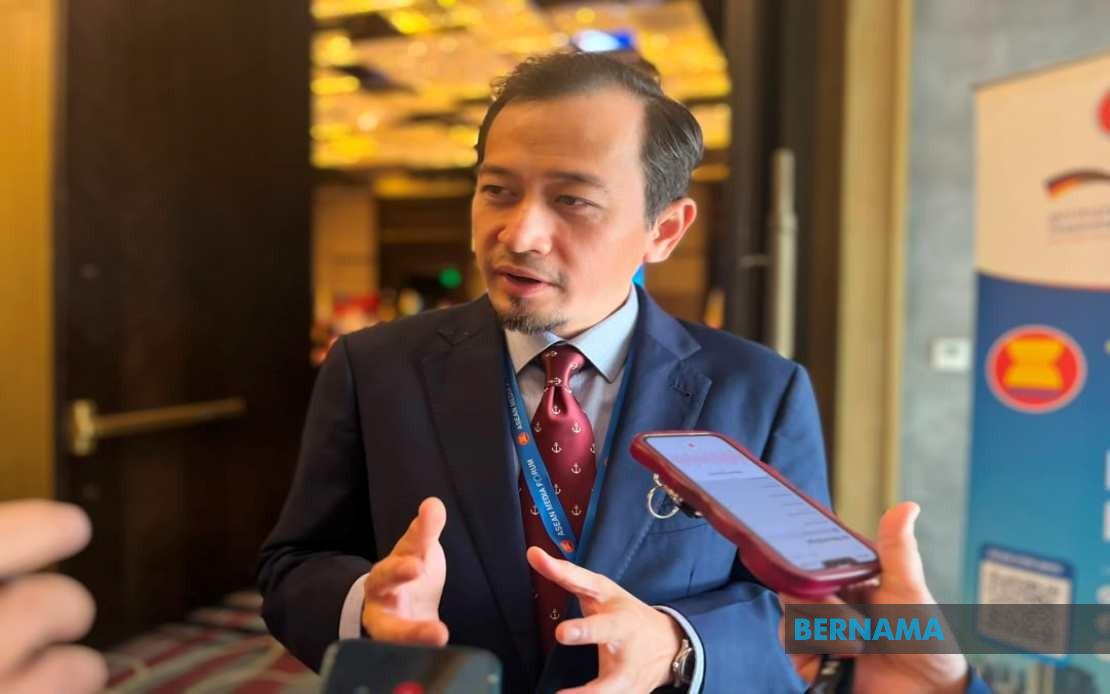
The Federation of ASEAN Shipowners' Associations is driving a strategic initiative to establish the region's inaugural Protection and Indemnity insurance club, seeking to alleviate mounting cost pressures that have squeezed margins across Southeast Asia's maritime sector. The proposal represents a significant shift toward intra-regional risk pooling, moving away from the current reliance on European and Western insurers that have increasingly raised premiums in response to geopolitical volatility and maritime security threats. Mohamed Safwan Othman, who chairs both FASA and the Malaysia Shipowners' Association, revealed that the structuring phase is underway but anticipates at least three years before the club becomes operational, underscoring the complexity of aligning interests across multiple ASEAN member states with varying maritime exposure and regulatory frameworks.
P&I insurance operates as a mandatory requirement for all ocean-going vessels, functioning as a critical risk-transfer mechanism that indemnifies shipowners against liabilities arising from crew injuries, loss of life, and cargo damage during transit. This differs from Hull and Machinery insurance, which compensates for physical deterioration and structural damage to vessels themselves. The distinction is crucial for understanding why ASEAN shipowners view a regional club as essential—P&I claims can be catastrophic and unpredictable, making collective risk-sharing particularly valuable for smaller and mid-sized operators who lack the financial capacity to absorb major claims independently. By pooling resources and claims experience within ASEAN, member shipowners could theoretically achieve lower premium rates while maintaining comprehensive coverage standards that comply with international maritime law and port state control requirements.
The impetus for this regional alternative has intensified substantially due to external shocks that have destabilized the global maritime insurance market. The escalating conflict in West Asia has triggered a cascade of disruptions: some insurers have withdrawn war-risk coverage entirely, while others maintain such policies only at premium rates that have spiraled beyond the reach of many regional operators. This bifurcated market response has created acute pressure on ASEAN shipowners who operate in corridors where geopolitical risk has become impossible to ignore, yet where the cost of protection has become economically untenable. Safwan emphasized that despite these headwinds, ASEAN operators continue servicing critical supply chains because energy security and food security remain paramount regional concerns—a responsibility that carries elevated personal and financial risk.
The human dimension of maritime disruption has become increasingly visible as the West Asia conflict persists. According to International Maritime Organisation data cited by Safwan, approximately two thousand Southeast Asian seafarers find themselves stranded aboard roughly five hundred vessels transiting or anchored in the Strait of Hormuz, with Filipino nationals comprising approximately half of this cohort. These figures likely underestimate the true magnitude since some vessel operators deliberately disable tracking systems while traversing high-risk waters, rendering them invisible to standard maritime databases. The emotional and economic toll on crew members and their families is substantial—prolonged deployment beyond contracted periods, delayed wages, psychological stress, and separation anxiety represent serious concerns that the maritime industry has inadequately addressed. Yet Safwan noted that repatriation efforts have been accelerating over recent months, suggesting that coordinated regional and international responses are beginning to yield results, even as the underlying security situation remains volatile.
ASEAN has developed institutional mechanisms to mitigate maritime risks through information-sharing and coordinated navigation guidance. The Regional Cooperation Agreement on Combating Piracy and Armed Robbery against Ships in Asia, commonly known as ReCAAP, operates an Information Fusion Centre that disseminates real-time navigational safety advisories and threat assessments to shipowners operating in contested waters. This framework has been supplemented by bilateral cooperation arrangements involving the United Kingdom and United States, enabling ASEAN to leverage intelligence and maritime domain awareness capabilities that exceed regional capacity. Such multilateral coordination provides essential situational awareness, yet it cannot entirely substitute for the economic protection that insurance offers—hence the persistent need for affordable P&I coverage that shipowners can reliably access.
Building consensus among ASEAN shipowners represents an equally formidable challenge as the technical and regulatory architecture itself. ASEAN member states possess vastly different fleet compositions, operational profiles, and insurance needs—a factor that complicates the design of a one-size-fits-all club structure. Some nations maintain substantial tanker fleets exposed to cargo liability risks, while others specialize in container operations or general cargo services. Additionally, varying levels of regulatory maturity and maritime expertise across the region necessitate comprehensive capacity-building alongside the club's establishment. Safwan's emphasis on securing agreement among regional stakeholders reflects an understanding that insurance clubs function effectively only when all participants view the risk-sharing mechanism as equitable and beneficial. The three-year timeline thus encompasses not merely structural design but extensive consultation and buy-in cultivation across an economically and politically diverse membership base.
The Federation of ASEAN Shipowners' Associations itself represents a consolidation of national shipowners' bodies across all ten ASEAN member states, functioning as a coordinating mechanism for advancing regional positions on maritime policy, shipping services improvement, and collective interest representation before international maritime bodies and forums. This institutional positioning makes FASA the logical convener for the P&I club initiative, yet also highlights the inherent tensions between national maritime interests and regional cooperation imperatives. Nations with smaller or declining maritime sectors may perceive limited benefits from such an arrangement, while those with substantial fleets see clear cost-benefit rationales. Navigating these divergent perspectives while maintaining ASEAN solidarity demands diplomatic acumen alongside commercial shrewd judgment.
The geopolitical backdrop against which this initiative unfolds extends beyond immediate West Asia tensions to encompass broader concerns about maritime security and supply chain resilience in Indo-Pacific waters. Rising great power competition, increasing piracy incidents in the Indian Ocean and Gulf of Guinea, and climate-related maritime hazards have collectively raised the underlying risk profile of international shipping. ASEAN, as a region through which approximately one-third of global maritime trade transits and where strategic chokepoints like the Strait of Malacca concentrate shipping volumes, faces particular exposure to these systemic risks. A regionally-owned and operated P&I club would enhance ASEAN's maritime resilience by reducing dependency on external financial intermediaries whose risk calculations may diverge from regional priorities.
The economic stakes are substantial for Malaysia and other ASEAN economies whose maritime sectors contribute meaningfully to employment, national revenue, and logistical capacity. Rising insurance costs effectively function as a tax on trade, raising the delivered cost of imported goods and reducing the competitiveness of regional exports in global markets. For Malaysia specifically, whose geographical position makes it central to regional shipping networks and which hosts major port facilities at Port Klang and Port Tanjung Pelepas, insurance cost reductions could yield tangible benefits across the broader economy. Similarly, countries like the Philippines, Indonesia, and Singapore, which supply substantial portions of global maritime labor and operate significant shipping registries, have direct financial interests in cost containment and risk reduction mechanisms.
The proposed P&I club would represent not merely a commercial venture but a strategic assertion of regional agency in managing maritime affairs. Rather than passively accepting premium determinations from distant insurers responding to global risk models, ASEAN shipowners would collectively assess and price risks using intimate knowledge of their operating environments, claims histories, and loss-prevention practices. This shift toward self-insurance through pooled risk mechanisms reflects broader developmental trends whereby Southeast Asian industries seek to reduce dependence on external services and develop indigenous financial infrastructure. The success of such an initiative would establish a template for other regional insurance initiatives and signal ASEAN's capacity for sophisticated economic coordination.

