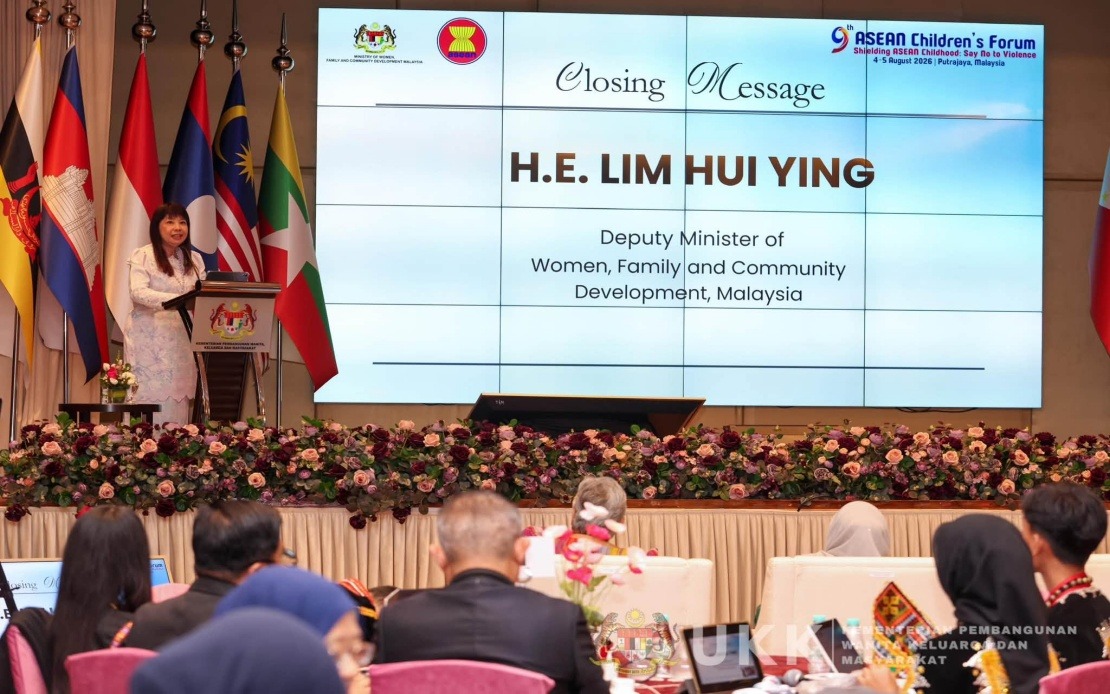
Regional policymakers must give serious consideration to recommendations emerging from the 9th ASEAN Children's Forum, which concluded in Putrajaya this week with a comprehensive agenda for safeguarding children across the 10-member bloc. Deputy Women, Family and Community Development Minister Lim Hui Ying emphasised that the proposals carry genuine weight because they stem directly from children's own experiences and perspectives rather than adult assumptions about what young people need. This distinction matters considerably in Southeast Asia, where children's voices in policy discussions remain marginalised despite their direct stake in the outcomes.
The forum brought together young representatives from all ASEAN nations to deliberate on the multifaceted problem of violence against children, spanning physical abuse, emotional harm, psychological damage and sexual exploitation. The breadth of this focus reflects how violence against children operates across multiple dimensions simultaneously, often compounding trauma when children experience overlapping forms of harm. For Malaysian stakeholders, this regional conversation arrives at a critical moment as incidents of child abuse and bullying continue to surface in local news, suggesting that existing protections remain insufficient despite recent legislative efforts.
Participants distilled their discussions into actionable recommendations organised around four critical environments where children spend significant time: their homes, educational institutions, digital spaces and broader communities. This framework proves analytically useful because it acknowledges that child safety cannot be achieved through single-sector interventions alone. Homes require family support and domestic violence prevention; schools need robust disciplinary codes and staff training; online platforms demand technical safeguards and digital literacy; communities depend on neighbourhood watch systems and reporting infrastructure. Malaysia's policymakers should note this integrated approach when evaluating existing child protection mechanisms, which sometimes operate in isolation from one another.
Strengthening legislative foundations represents the forum's primary recommendation, signalling that current laws across ASEAN fall short of comprehensive protection standards. Many Southeast Asian jurisdictions maintain legislation drafted decades ago, creating gaps when confronted with contemporary abuse patterns and emerging technologies. Enhanced legal frameworks should define child abuse clearly, establish meaningful penalties for perpetrators, and create obligations for institutions to report suspected cases. The variation in child protection laws across ASEAN member states also creates enforcement inconsistencies that can allow abusers to exploit jurisdictional differences, particularly in trafficking cases that cross borders.
Expanding child-friendly reporting channels addresses a critical bottleneck in current systems where children often lack safe, accessible mechanisms to disclose abuse without fearing retaliation, disbelief or involvement by authorities they distrust. Traditional reporting structures frequently require children to navigate complex bureaucratic procedures, speak to intimidating officials, or risk exposure in their communities. Child-friendly alternatives might include dedicated hotlines with trained counsellors, school-based reporting points with trusted adults, anonymous online submission systems, and partnerships with civil society organisations that children already access. These channels succeed only when accompanied by guarantees of confidentiality and assurances that reporting leads to protective intervention rather than punitive outcomes for the child.
Anti-bullying policies emerged as another priority area, reflecting how peer violence constitutes a pervasive yet often-normalised threat to child wellbeing across the region. Many schools treat bullying as minor discipline matters rather than serious safeguarding concerns, yet research demonstrates clear links between bullying experiences and mental health crises, academic failure and suicidal ideation. Effective policies must define bullying comprehensively to include cyberbullying, establish clear consequences for perpetrators while providing rehabilitation opportunities, train staff to identify and intervene in bullying situations, and create reporting systems where victims can come forward without fear. The policies must also address power imbalances that make certain children—those from minority groups, with disabilities, or from lower socioeconomic backgrounds—disproportionately vulnerable to bullying.
Psychosocial support services represent an often-overlooked component of child protection systems, yet they prove essential for children already harmed by violence. Trauma-informed counselling, mental health services and peer support groups help children process experiences, rebuild trust and develop resilience. Many ASEAN nations face acute shortages of child psychologists and counsellors, particularly in rural areas, creating situations where traumatised children receive no professional support. Digital delivery models and training programmes for community-based workers could partially address these gaps, though cannot substitute entirely for specialist expertise.
The forum's recognition of multiple stakeholders—parents, educators, corporations, media outlets, civil society groups and peer networks—reflects understanding that child protection succeeds only through coordinated effort across institutions. This represents a significant departure from approaches that place responsibility primarily on governments, acknowledging that private sector companies controlling digital platforms bear responsibility for child safety online, that media organisations shape cultural attitudes toward violence, and that parents require support and education rather than blame. Malaysian organisations working in child protection should leverage this regional consensus to build cross-sectoral partnerships that distribute responsibility appropriately.
Vulnerable populations require particular attention within broader child protection frameworks, a point the forum emphasised through recommendations for more inclusive services. Children in institutional care, unaccompanied migrants, those experiencing homelessness, indigenous populations, and children with disabilities face compounded risks because multiple vulnerabilities intersect. Standard protection mechanisms often prove inadequate for these populations, requiring specially adapted approaches that address their specific circumstances. For instance, unaccompanied migrant children require services responsive to language barriers and lack of family support, while children with disabilities need protection mechanisms acknowledging their communication differences and dependency relationships.
The forum's concluding pledge by participants to support one another and cultivate mutual respect represents an important psychological commitment but requires structural reinforcement through policy and resource allocation. When children express willingness to champion peer support and care within their communities, adults must respond by creating safe spaces where such commitments can flourish. This might involve establishing student-led bullying prevention programmes, peer counselling initiatives, youth advisory bodies with genuine decision-making power, and platforms where children can contribute to designing the policies affecting them.
For Malaysia specifically, these regional recommendations should prompt evaluation of how current child protection mechanisms align with emerging consensus about best practices. Recent legislative developments including amendments to the Child Act represent progress, yet implementation gaps and resource constraints limit effectiveness. Building on the momentum generated by the 9th ASEAN Children's Forum requires translating international recommendations into concrete action through training programmes for frontline workers, adequate funding for support services, technological investment in reporting systems, and genuine institutional commitment to treating child protection as a priority deserving resources commensurate with its importance.
The forum demonstrates that when given platforms to articulate their needs, children offer sophisticated analysis of the systems failing to protect them. Regional governments and ASEAN sectoral bodies must now demonstrate through concrete actions that they take these child-centred recommendations seriously rather than treating them as symbolic gestures toward youth engagement. This requires dedicated budget allocation, appointed responsibility within government ministries, regular progress monitoring, and accountability mechanisms when implementation stalls—commitments that extend far beyond the rhetorical support offered at closing ceremonies.

