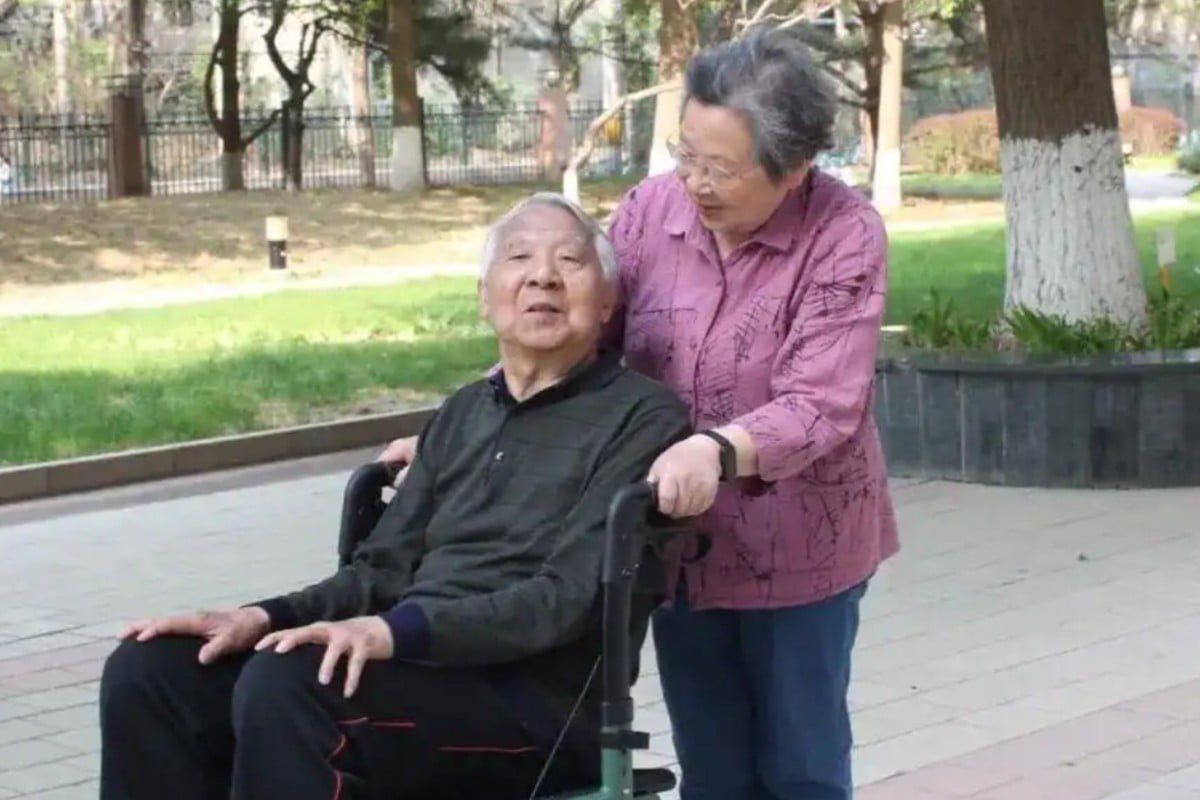
Wen Bo, a nonagenarian in Beijing, has captured the hearts of millions across China through her unwavering commitment to caring for her husband of more than six decades while he battles Alzheimer's disease. What sets her approach apart from conventional eldercare is her fierce determination to preserve not merely his physical health but his sense of self-worth, autonomy, and place within their family unit. Her story arrives at a pivotal moment, as China grapples with demographic shifts that are reshaping how the nation thinks about ageing and intergenerational responsibility.
The couple's bond stretches back to their school days, when they first connected as secondary school classmates. A lengthy courtship separated by distance preceded their marriage in 1960, after which they built a full life together. They raised two sons and maintained an enviably active lifestyle for decades, swimming regularly, walking for exercise, and undertaking trips throughout China and internationally. This foundation of shared experience and partnership forms the bedrock upon which Wen now builds her caregiving philosophy. When Wen's husband began displaying cognitive decline and incontinence in 2023, eventually receiving an Alzheimer's diagnosis, the trajectory of their twilight years shifted dramatically.
Rather than impose upon her adult sons, each occupied with their own families and professional demands, Wen transitioned into a full-time caregiving role herself. A domestic helper manages cooking and household maintenance, while their children visit when schedules permit. This arrangement reflects both practical necessity and Wen's deliberate choice to shoulder primary responsibility for her husband's care. She recognised that his need for continuity and emotional connection outweighed the convenience of institutionalisation or burden-sharing among family members.
Wen's approach to managing her husband's condition demonstrates remarkable intellectual engagement with the disease itself. Rather than passively accepting cognitive decline, she educated herself through books and online resources about Alzheimer's mechanisms and best practices for slowing deterioration. She structures their days around cognitive exercises—arithmetic problems, puzzles, and painting sessions—interspersed with gentle physical training. These interventions appear to have yielded measurable results; her husband's decline has progressed more slowly than typically expected. He retains enough mobility and independence to operate his electric wheelchair without assistance, and occasionally exhibits enough cognitive sharpness to remind Wen to rest.
Central to Wen's philosophy is the conviction that her husband must remember her name above all else. Each evening before sleep, she reinforces this connection, telling him to call her whenever he needs help. "He has to remember my name. I am his wife. I should be the last person he forgets," she explained in interviews. This simple but profound insistence on maintaining their fundamental relationship speaks to her understanding that identity and belonging matter as much as medication and nutrition for someone with neurodegenerative disease. She also encourages him to participate in simple household tasks at his own pace, a practice that preserves his sense of utility and purpose within the family.
Wen's caregiving philosophy extends beyond symptom management to a broader assertion about human dignity in illness. She firmly rejects the notion that Alzheimer's should define or diminish a person. "Self-respect, a sense of existence, and the feeling of being needed are essential for individuals with Alzheimer's disease," she stated in interviews. This perspective challenges conventional approaches to eldercare in many Asian societies, where cognitive decline often triggers social withdrawal and loss of agency. By contrast, Wen maintains her husband's engagement with daily life and decision-making, treating him as a full participant in their household despite his limitations.
Wen has chronicled her caregiving journey through posts on RedNote, a Chinese social media platform, garnering millions of followers who find solace and guidance in her reflections. A recent post from August 23 documented her husband completing an arithmetic test, finishing somewhat slowly but making only a single error—a small victory she recorded with evident pride. Her willingness to share intimate details of caregiving, including struggles and small triumphs, has resonated with younger Chinese grappling with questions about how to care for their own ageing parents. The comments beneath her posts reveal a generation seeking models for how to age with dignity and how to support parents and grandparents through that process.
Wen has also acknowledged the limits of her approach. She has noted that should her husband's condition deteriorate significantly, she would consider transitioning to hospice care. This honesty—refusing either to pretend that dedicated home care solves all problems or to abandon her principles about dignity—adds credibility to her advocacy. She is not suggesting that all adult children should become full-time carers, nor that institutional care is always avoidable. Rather, she is insisting that whatever care arrangements exist should prioritise the autonomy and self-respect of the person receiving care.
The resonance of Wen's story within China reflects profound anxieties about the nation's rapidly ageing population. By the end of last year, more than 320 million Chinese citizens had reached age 60 or older, representing over one-fifth of the total population. This demographic shift outpaces economic infrastructure development; nursing homes remain inadequate in supply, training standards for eldercare workers lag behind demand, and many families lack both resources and knowledge to navigate chronic illness in parents or grandparents. Wen's public documentation of her caregiving approach fills a vacuum, offering practical and philosophical guidance to millions facing similar challenges.
For Southeast Asia, where population ageing is accelerating across the region—though from different baselines than China—Wen's model offers valuable insights. Malaysia, Thailand, Vietnam, and other nations in the region face growing burdens of cognitive decline and chronic disease among elderly populations, often with even fewer institutional resources than China possesses. The emphasis on preserving dignity and autonomy rather than simply managing symptoms aligns with cultural values emphasising respect for elders while offering a realistic, compassionate framework for families. Her insistence that people with dementia remain capable of contributing to household life, maintaining relationships, and exercising choices challenges fatalistic assumptions that dementia inevitably means losing one's place in family structures.
One online commenter captured the transformative potential of Wen's story: "Grandma Wen's posts always bring me comfort. She shows me what an ideal later life could look like: being with the person you love while living independently." Another reflected: "I used to fear not knowing how to care for my ageing parents, but her experiences have provided me with valuable guidance and increased confidence for the future." These responses indicate that Wen has moved beyond inspiring sympathy; she has become a trusted mentor, helping younger generations envision ageing not as tragedy but as a phase of life requiring commitment, creativity, and sustained affection.
Wen's journey with her husband ultimately represents more than one couple's adaptation to disease. It embodies a quiet but powerful assertion that dignity, agency, and love remain possible even when memory fails. As Southeast Asian societies confront the reality of rapidly ageing populations with limited institutional capacity, the example of a 90-year-old woman in Beijing teaching herself about neurodegenerative disease to better serve her husband suggests that resources of compassion and ingenuity may matter more than institutional infrastructure alone. Her story invites reflection on what societies owe their elderly members and what elderly members deserve in return—not merely survival, but genuine participation in the lives they have spent decades building.

