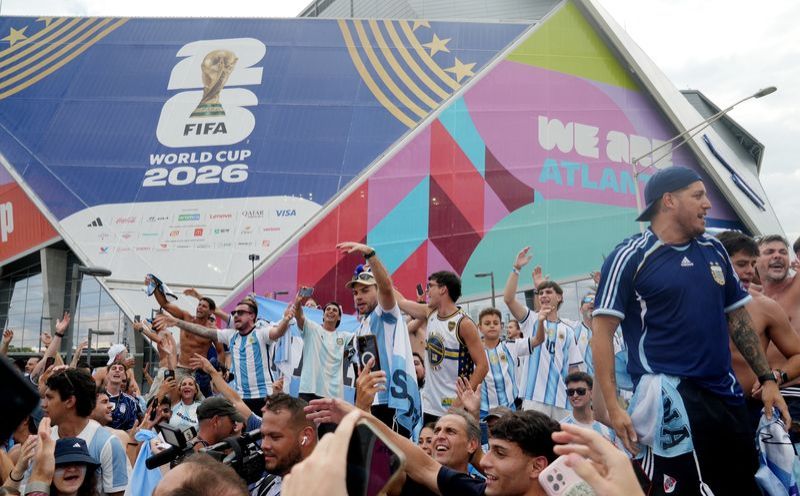
Atlanta's hosting of the 2024 FIFA Women's World Cup marked a significant milestone for a city traditionally known for hip-hop culture and American football. Over the course of the tournament, the Georgia metropolis welcomed fans from across the globe, transforming its streets and stadiums into a celebration of international soccer. From Cape Verde making their World Cup debut to England's dramatic victory over DR Congo, and Argentina's remarkable comeback wins that ultimately carried them to the final, the tournament delivered compelling narratives that will resonate with both longtime soccer enthusiasts and newly converted fans throughout the Southeast.
The Atlanta host committee's journey began with a seemingly routine email in July 2017, when president Dan Corso received an initial inquiry about hosting rights. What followed was a swift mobilization that took the city from interested candidate to selected venue. Corso reflected on the rapid decision-making process, noting that the committee acted decisively once the opportunity presented itself. This willingness to embrace the challenge proved instrumental in Atlanta securing its place as a co-host city, positioning the tournament as an opportunity to showcase what the region had achieved in soccer development over the preceding years.
Atlanta's successful bid was underpinned by genuine soccer infrastructure and investment that extended well beyond the tournament itself. The establishment of Major League Soccer franchise Atlanta United in 2017 provided a strong foundation for the city's soccer credentials. That same year, the team captured immediate success with an MLS Cup victory in 2018, validating the city's commitment to the sport at the professional level. Arthur Blank, the ownership figure behind both Atlanta United and the NFL's Falcons, demonstrated his confidence in soccer's future by contributing $50 million toward the U.S. Soccer National Training Center, located just outside the city limits. This investment signaled to global soccer bodies that Atlanta possessed both the facilities and financial backing necessary to host world-class competitions.
Atlanta United's consistent dominance of Major League Soccer attendance figures became a crucial asset during FIFA's evaluation process. Each season, the club drew crowds that outpaced rivals across the league, providing tangible evidence that the city possessed genuine fan interest in the sport. Corso emphasized how this sustained attendance performance resonated with FIFA officials conducting the selection process. The presence of U.S. Soccer's administrative headquarters in Atlanta further strengthened the bid by demonstrating the city's role at the center of American soccer governance and development. These factors combined to create a compelling case that transcended typical stadium capacity arguments.
The city's broader experience hosting major sporting events provided additional confidence in its ability to manage a tournament of this magnitude. Atlanta previously hosted the Summer Olympics in 1996, establishing a track record of successfully delivering world-class sporting infrastructure and fan experiences. The Super Bowl returns to the city in 2028, marking the fourth occasion Atlanta has staged the NFL's championship game. This recurring role as host to premium sporting events indicated that the infrastructure, security protocols, and hospitality systems necessary for large-scale tournaments were well-established. Notably, Atlanta had not hosted a World Cup match previously, making the 2024 tournament the first opportunity to participate directly in this most prestigious of soccer competitions in three decades.
The tournament's execution exceeded expectations in terms of fan engagement and community participation. More than 544,000 spectators attended eight matches staged in Atlanta, including three knockout-round fixtures that provided high-stakes drama. The semi-final between Argentina and England proved particularly thrilling, delivering the type of memorable encounter that transcends soccer enthusiasts and captures broader public imagination. Beyond the stadiums themselves, the Fan Fest experience attracted in excess of half a million visitors over nineteen days, creating widespread opportunities for fans without match tickets to participate in the tournament atmosphere. The commitment from the local community manifested through the recruitment of over 2,000 volunteers from Atlanta and Georgia, indicating strong grassroots support for the event.
Corsо articulated the broader significance of the tournament for Atlanta's international standing and self-perception. He emphasized that the World Cup provided an opportunity for visitors unfamiliar with the city to form new impressions while reinforcing the multifaceted identity that long-time residents recognize. The tournament allowed attendees to discover Atlanta's diversity across cultural, culinary, and entertainment dimensions. International visitors departing the city carried with them memories and narratives that would shape how the wider world perceived Atlanta beyond its historical associations with Civil Rights heritage or contemporary music production. This soft power dimension of hosting major events often receives insufficient attention but constitutes a significant long-term asset for any city's global reputation.
The World Cup's legacy extends beyond the immediate tournament experience into tangible community infrastructure and programming. The host committee collaborated with MARTA, the city's public transit authority, and the Soccer in the Streets program to create a new mini-pitch facility. This initiative ensures that children throughout Atlanta gain free access to soccer instruction and practice opportunities regardless of economic circumstances. Soccer in the Streets, which operates throughout the city, advocates for soccer as a vehicle for youth development and community cohesion. By establishing new facilities and expanding program capacity, the tournament created enduring assets that will benefit young athletes for years to come. This approach aligns with the prevailing best practice in Olympic and World Cup hosting, where long-term community benefits are prioritized alongside immediate tournament operations.
Atlanta's ambitions extend significantly beyond its role as a 2024 host. The city will welcome a new National Women's Soccer League franchise beginning in 2028, further cementing its position within professional soccer's ecosystem. More ambitiously, Atlanta is actively pursuing candidacy to host matches during the 2031 FIFA Women's World Cup. This forward-looking strategy reflects confidence that the city possesses the necessary facilities, fan base, and organizational capacity to again serve as a tournament venue. For Southeast Asian readers, Atlanta's trajectory demonstrates how cities can leverage initial hosting experiences to position themselves for repeat selection, creating sustained economic and cultural benefits. The model also illustrates how professional sports franchises serve as anchors for broader sporting ecosystem development, a lesson relevant to ambitious cities throughout the region seeking to enhance their global sporting profile.
The intersection of Atlanta's emergence as a soccer destination and its transformation during the tournament reveals how sporting events catalyze broader urban positioning. The tournament temporarily reoriented the city's cultural beat, replacing hip-hop's dominance with international soccer chants and celebrations. Yet rather than creating conflict, this coexistence demonstrated Atlanta's capacity to embrace multiple identities simultaneously. For the city's leadership and business community, the World Cup validated investments made over the preceding years while opening pathways toward future opportunities. The tournament's success provides a template for other American cities seeking to enhance their sporting credentials while simultaneously reinforcing Atlanta's position as a destination capable of hosting premier global events across multiple sports and categories.

