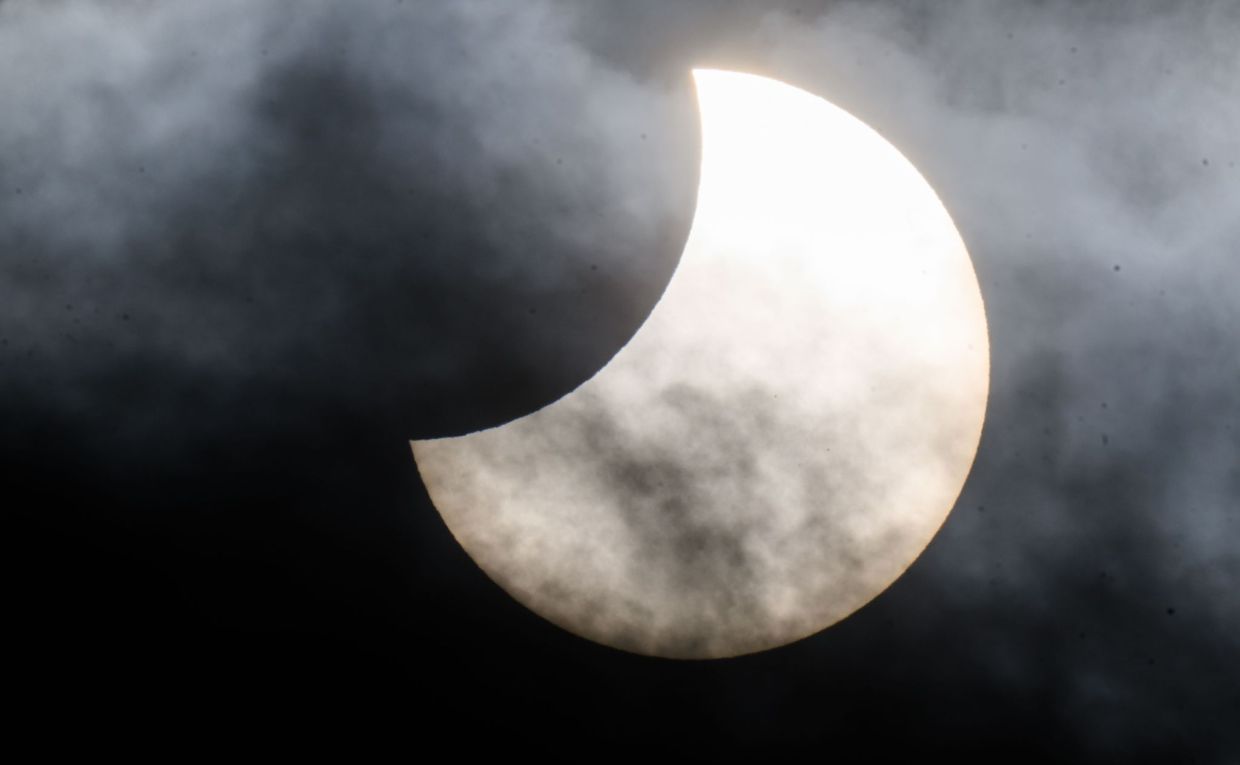
August promises an exceptional month for those fascinated by celestial phenomena, with two distinct eclipse events offering remarkable opportunities for photography enthusiasts across multiple continents. The alignment of these cosmic occurrences within a single month creates unusual potential for both amateur and professional sky watchers, making August 2026 particularly noteworthy for astronomers and photography aficionados worldwide.
The first and more dramatic event unfolds on August 12, when a total solar eclipse will sweep across portions of the high Arctic and northern Europe. The moon's shadow will completely obscure the sun across eastern Greenland, western Iceland, and significant sections of Spain, including the Balearic Islands and the western Mediterranean region. This totality represents the most spectacular form of solar eclipse, where day momentarily turns to night as the moon passes directly between Earth and the sun. The eclipse will be only partial for the vast majority of observers, yet still impressive across a sweeping geographic range.
The eclipse's visibility extends well beyond the narrow path of totality. Observers throughout Europe and extending into North Africa can expect to witness a partial eclipse, with the phenomenon reaching as far east as Ukraine and as far south as Morocco. In numerous countries including Ireland, the United Kingdom, France, Portugal, Italy, Switzerland and Algeria, approximately ninety percent of the sun's disk will vanish behind the lunar silhouette. The event commences around five o'clock in the evening GMT as seen from Scandinavia and Greenland, with the eclipse intensifying as it progresses southeastward across the continent. The moment of greatest eclipse occurs between six-fifteen and six-forty-five p.m. GMT, when the alignment reaches maximum.
August's celestial calendar continues with a second eclipse event visible across a different set of regions. A partial lunar eclipse will occur on August 28, presenting excellent viewing conditions for observers in Europe, Africa, and the Americas, with particularly favorable circumstances in Latin America and the western coasts of the United States and Canada. This eclipse will showcase the moon passing through Earth's shadow, creating a dramatic darkening effect across the lunar surface. At its maximum, ninety-four percent of the moon's visible diameter will lie within Earth's umbra—the darkest portion of our planet's shadow—producing what observers will experience as a near-total lunar eclipse for those viewing from the Western Hemisphere.
The technological landscape for astronomical photography has transformed dramatically in recent years, democratizing what was once the exclusive domain of professional astronomers with expensive specialized equipment. Contemporary smartphone cameras, enhanced with sophisticated internal image processing algorithms, have become surprisingly capable instruments for capturing night sky phenomena. This accessibility means that Malaysian observers and those elsewhere in Southeast Asia need not invest thousands of ringgit in professional equipment to document these remarkable events, though understanding proper technique remains essential.
Successful eclipse and night sky photography begins with location selection. Finding the darkest possible environment dramatically improves results, making rural areas far preferable to urban centers. Tools such as the Light Pollution Atlas provide invaluable assistance by displaying sky brightness levels across different regions using color coding, with green and blue indicating darker locations and red indicating areas with significant artificial lighting. Southeast Asian readers, particularly those in Malaysia, should recognize that coastal rural areas and locations away from the Klang Valley or other urban centers will yield superior results compared to city-based observation points.
Preparing your smartphone involves several practical adjustments. Reducing screen brightness and activating night mode or dark mode in display settings helps your eyes adapt more effectively to darkness, improving both visual observation and photography outcomes. Most modern smartphones now include dedicated night mode or astrophotography features specifically designed for capturing dimly-lit subjects. Google Pixel devices automatically detect suitable astronomical subjects and activate astro mode when conditions are appropriate, then automatically extend the exposure time to gather sufficient light—typically allowing four-minute exposures. Samsung Galaxy phone users can leverage the Expert RAW application for more advanced astrophotography control. For devices lacking specialized modes, setting the focus to wide or far distance provides acceptable results.
Stability represents perhaps the single most crucial element in night sky photography, more important than equipment brand or cost. Professional photographers universally employ tripods, but budget-conscious individuals can acquire small universal smartphone tripod mounts for as little as ten US dollars or ten euros—approximately forty-one and forty-seven Malaysian ringgit respectively. These modest investments prevent camera shake that would otherwise ruin long exposures. For those unable to obtain a tripod, smartphone image stabilization technology has improved substantially, though carefully positioning the device and using the self-timer function while placing the phone on a stable surface remains preferable to handheld photography.
Photographing the solar eclipse demands particular attention to safety considerations. Viewing the sun directly, even briefly, risks permanent eye damage, and standard sunglasses provide entirely inadequate protection. Certified eclipse glasses specifically designed for solar observation offer necessary filtering. Counterintuitively, a smartphone camera can serve as a viewing aid when pointed carefully at the sun—provided observers keep their eyes directed away from both the sun and the phone display. To capture the sun's outline, manually adjust brightness settings to the lowest possible values, typically accessible by tapping the sun icon within the camera interface.
For those concerned about exposing children to direct viewing, the projection method provides an excellent alternative that eliminates any risk. This technique involves projecting the sun's image onto a white surface using a small mirror or homemade pinhole camera, allowing observers to watch the eclipse without gazing directly at the sun. This approach particularly suits family viewings and educational settings across Malaysia and the broader region.
For Southeast Asian readers specifically, proximity to the equator means that typical eclipse visibility will differ from European conditions. While the August 12 solar eclipse will not be visible from Malaysia, the August 28 lunar eclipse will present excellent viewing conditions for Malaysian observers, with no special equipment or filtering required since lunar eclipses are inherently safe to observe. Regional astronomers and photography enthusiasts should plan accordingly, with August providing different but equally valuable opportunities for night sky work.

