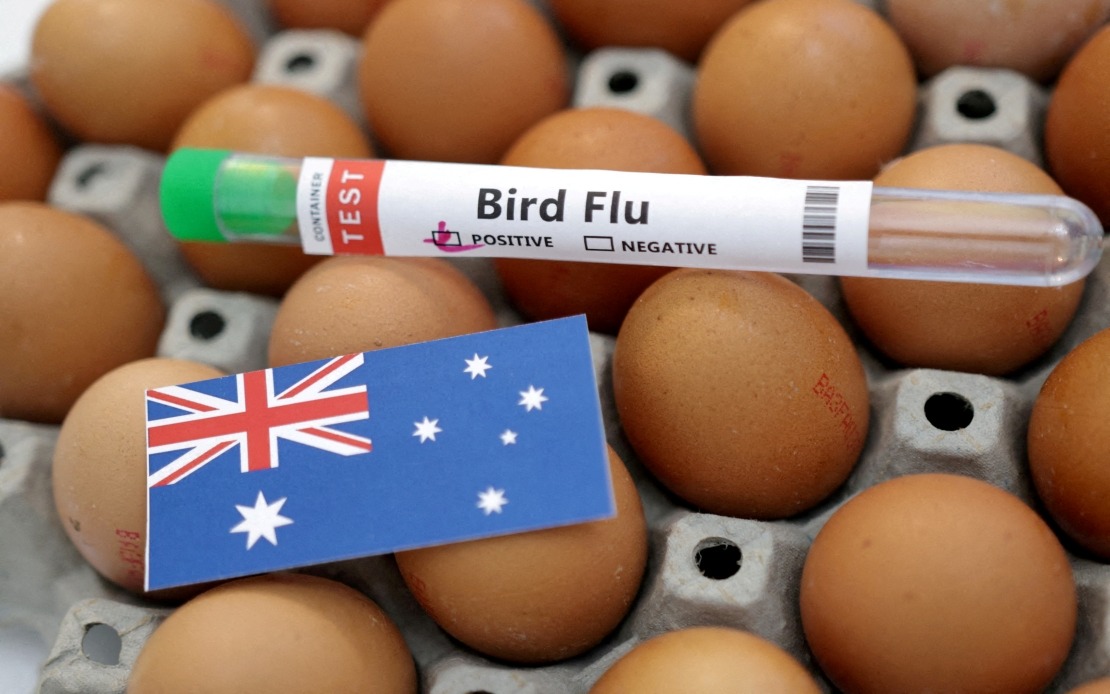
Australia's agriculture authorities announced a significant development in the country's battle against avian influenza on Friday, revealing that the highly pathogenic H5N1 strain has been detected in a non-migratory bird found dead on the South Australian coast. The discovery marks a watershed moment for the nation's disease surveillance efforts, as it represents the first confirmed instance of the virus establishing itself in locally resident wildlife rather than being brought in by migratory birds from distant regions.
Minister for Agriculture Julie Collins disclosed that the positive case involved a greater crested tern discovered near Robe, a small coastal town in South Australia. The bird's testing results confirmed the presence of H5N1, triggering immediate biosecurity responses in the locality. This finding carries particular significance because the greater crested tern is not a migratory species, fundamentally altering the epidemiological picture of how the virus may be circulating within Australia's ecosystem.
Prior to this detection, every confirmed H5N1 case on the Australian mainland had been linked to migratory birds arriving from sub-Antarctic regions, creating a clear epidemiological pattern that suggested external origin rather than local establishment. The discovery of infection in a resident species suggests either that the virus has now gained a foothold in Australia's wildlife population or that transmission pathways have evolved beyond the previously understood routes. For Southeast Asia and the Pacific region, this development underscores the unpredictable nature of avian influenza spread and the challenges facing countries in containing a pathogen that shows increasing adaptability.
Collins emphasised that her department's scientists are actively investigating the transmission route that led to the tern's infection. This investigative work carries critical importance, as identifying whether the bird contracted H5N1 through interaction with infected migratory species, contaminated environments, or other mechanisms will inform future prevention strategies. The minister's comments revealed the complex detective work required when wildlife surveillance yields unexpected results that complicate existing assumptions about disease patterns.
The detection in South Australia represents only the latest development in what has become an expanding cluster of H5N1 findings across the Australian mainland. Beyond the greater crested tern, authorities have now confirmed two additional cases within South Australia and a separate case in Western Australia. These successive discoveries have elevated the total number of confirmed H5N1 cases on the mainland to twelve, a dramatic increase from what was previously exclusively a disease of migratory birds.
The geographical spread across multiple states indicates that H5N1 is no longer confined to isolated incidents but has demonstrated a capacity to establish itself across considerable distances within Australia's territory. This distribution pattern raises questions about the adequacy of current monitoring infrastructure and whether existing surveillance protocols can keep pace with the virus's apparent movement and adaptation. For regional health authorities in Southeast Asia, the Australian experience provides a cautionary example of how rapidly avian influenza can transition from a managed problem to a more widespread concern.
It bears noting that Australia had long held a unique status among the world's continents, being the only landmass without a confirmed case of H5N1 until June of this year, when the first detection occurred in Western Australia. That breakthrough of Australia's previous exemption signalled the beginning of a new phase in the nation's relationship with this particular strain. The subsequent discoveries, culminating in the present case, suggest that the initial breach of Australia's disease-free status was not an isolated event but rather the opening chapter of a more substantial engagement with the pathogen.
Collins characterised the situation as a natural extension of the virus's global trajectory, framing the findings as evidence that Australia's biosecurity apparatus is functioning as intended by identifying threats at an early stage. She noted that enhanced surveillance measures have been activated in the area surrounding the Robe discovery, reflecting a rapid operational response to the confirmed case. This multi-layered approach combines immediate containment efforts with broader monitoring to detect any further spread to adjacent populations or geographic zones.
The implications of these findings resonate throughout the Indo-Pacific region, where similar surveillance challenges exist and where agricultural and wildlife interests remain deeply intertwined. Countries including Malaysia, with its substantial poultry industries and diverse migratory bird populations, must view Australia's experience as instructive. The shift from detecting H5N1 primarily in transient migratory birds to discovering it in resident species suggests that the virus may be developing new ecological niches or transmission patterns that previous experience had not fully anticipated.
Authorities across Southeast Asia may find themselves confronting the same investigative complexities that now confront Australian officials, particularly regarding the source and mechanism of local transmission. The documentation of H5N1 in Australian non-migratory wildlife potentially signals a broader regional shift in how this pathogen behaves and spreads, necessitating renewed attention to domestic biosecurity protocols and wildlife monitoring systems. For nations in the region with significant agricultural sectors dependent on poultry production, the Australian cases serve as a reminder that complacency regarding avian influenza represents a constant risk.
Moving forward, the Australian government's commitment to comprehensive investigation and enhanced surveillance offers a model for regional cooperation and information sharing. As the situation develops, the specific findings regarding transmission pathways will likely provide valuable intelligence for other countries grappling with H5N1 management. The virus's apparent ability to establish itself in locally resident bird populations, if confirmed through further investigation, could necessitate significant revisions to existing disease control strategies not only in Australia but throughout the Asia-Pacific region where similar ecological and geographical conditions exist.

