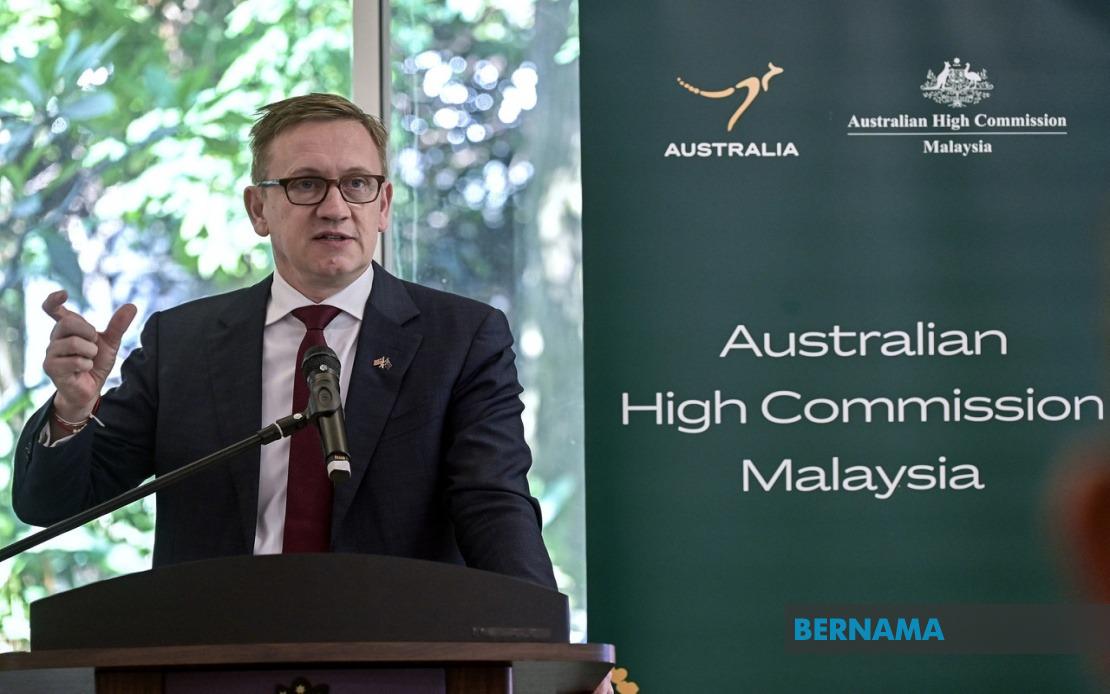
Australia has launched a significant educational initiative designed to broaden opportunities for Malaysian students seeking international study experiences without financial barriers constraining their aspirations. The Australia Awards-Malaysia Semester Programme, unveiled by the Australian High Commission in Kuala Lumpur on August 4, marks a strategic expansion of people-to-people engagement between the two nations through tertiary education pathways. The scheme specifically targets undergraduates and postgraduates studying at Australian university branch campuses operating within Malaysia, providing comprehensive financial support to enable semester-long or year-long periods of study at Australian institutions.
Australian Assistant Minister for International Education Julian Hill, who officially inaugurated the programme, characterised the initiative as reflecting his nation's unwavering commitment to deepening relationships with Malaysia by removing financial obstacles that might otherwise prevent talented young Malaysians from accessing world-class educational opportunities. The Australian High Commissioner to Malaysia, Danielle Heinecke, joined Hill alongside MARA Chairman Dr Asyraf Wajdi Dusuki, senior academic representatives from participating Australian universities, and both current students and alumni beneficiaries of prior exchange arrangements. This gathering underscored the cross-institutional and cross-governmental commitment supporting the programme's establishment and implementation.
The historical context underpinning this scholarship initiative proves substantial. More than half a million Malaysians have previously studied in Australia across various educational levels, creating an extensive alumni network spanning decades. While the majority of these students subsequently returned to Malaysia to build their careers, Hill argued that such educational exposure had fundamentally shaped their worldviews and established lasting personal connections transcending national borders. These individuals, he suggested, functioned as informal ambassadors and human bridges between the two countries, nurturing goodwill and mutual understanding that translated into tangible advantages across trade, investment, and diplomatic cooperation. The new programme aims to replicate and amplify this phenomenon by enabling fresh cohorts of students to develop similar bonds with Australia.
Hill emphasised that education constituted the foundational pillar undergirding the Australia-Malaysia partnership across successive generations. The interconnections forged through educational exchange had demonstrably contributed to strengthened commercial ties, expanded economic cooperation, and the maintenance of enduring bilateral relations even amid shifting regional and global circumstances. However, Hill pointedly stressed that Australia expected reciprocal engagement, expressing hope that Australian students would increasingly enrol at branch campuses operated by Australian universities within Malaysia. Existing initiatives including the New Colombo Plan and bilateral semester exchange programmes already facilitated such flows, yet Hill intimated that greater participation remained desirable to ensure the educational partnership remained genuinely bidirectional rather than predominantly one-directional.
The substantive scope of this scholarship extends beyond conventional academic instruction. Hill articulated a vision wherein Australian university facilities located in Malaysia functioned not merely as teaching institutions replicating curricula from their parent campuses, but rather as centres of applied research and knowledge generation. These institutions, he contended, possessed capacity to undertake collaborative research addressing shared challenges confronting both Australia and Malaysia, spanning domains such as medical science, clean energy innovation, mining technologies, and agricultural development. By enabling academics and postgraduate researchers from both nations to work collectively on such problems, the scholarship programme would contribute to practical solutions benefiting both economies while advancing scientific understanding.
The financial architecture supporting the scholarship programme demonstrates comprehensive coverage of mobility-related expenses. Beyond tuition fees, the scheme encompasses international airfare, accommodation, living allowances, visa processing costs, travel insurance, and miscellaneous expenses associated with international student status. This holistic approach to funding removal effectively eliminates the typical financial burden that deters many capable Malaysian students from pursuing international education, particularly those from middle-income households lacking substantial savings or family wealth. By absorbing these costs through government-funded scholarships, Australia removes a critical impediment to talent mobility and expands the socioeconomic diversity of Malaysian students accessing its universities.
The programme's pilot phase commenced in July of this year with an inaugural cohort of 16 Malaysian students already engaged in their studies across Australian institutions. These early participants departed Malaysia for the July intake, representing the programme's first operational cycle. The deliberate framing of this initial group as a pilot phase reflects cautious, evidence-based programme design rather than an overambitious launch. This approach permits administrators to gather data regarding programme implementation, student outcomes, institutional capacity, and resource requirements before making long-term commitments or undertaking significant expansion.
Currently, three Australian university branch campuses within Malaysia actively participate in the scholarship programme: Curtin University Malaysia, Monash University Malaysia, and the University of Wollongong Malaysia. However, all four branch campuses presently operating in Malaysia have received formal invitations to participate, including Swinburne University of Technology's Sarawak Campus. This staged inclusivity approach allows institutions time to develop partnerships with Australian parent campuses and establish administrative mechanisms for identifying and supporting eligible students, whilst signalling to all stakeholders that the programme potentially encompasses the entire landscape of Australian higher education provision within Malaysia.
The Australian government has committed funding covering an initial four-year period, aligned with the nation's budgetary cycle. This timeframe, whilst substantial enough to establish programme credibility and gather outcomes data, remains tentative by nature. Hill expressed hope that, conditional upon successful implementation and positive results, the initiative would eventually transition toward a permanent arrangement. Such language reflects the politically pragmatic reality that educational initiatives frequently compete for government funding against alternative spending priorities, and that continued financial backing depends partly upon demonstrable returns on investment in the form of strengthened bilateral relationships and positive outcomes for participating students.
The programme's establishment must be understood within Australia's broader strategic positioning toward Southeast Asia. The initiative forms part of a comprehensive approach toward strengthening economic engagement and nurturing people-to-people connections throughout the region, recognizing that educational networks generate enduring diplomatic and commercial advantages extending far beyond individual student experiences. Malaysia, as the region's second-largest economy and a nation with longstanding Australian engagement, represents a particularly significant target for such educational diplomacy. By reducing financial barriers preventing talented Malaysians from accessing Australian higher education, Canberra simultaneously invests in future cohorts of Malaysian professionals, policymakers, and business leaders who possess firsthand experience with Australian institutional culture, academic rigour, and professional standards.
For Malaysian students, the scholarship programme presents tangible advantages beyond purely academic credentials. Studying for one or two semesters at an Australian university enhances employability in increasingly competitive labour markets by demonstrating international competence, cross-cultural communication abilities, and adaptability valued by multinational employers. Malaysian employers similarly recognize that candidates with international educational experience often bring enhanced problem-solving approaches and global perspectives to their professional roles. Furthermore, the semester format represents a less disruptive alternative to pursuing entire degree programmes abroad, permitting students to maintain institutional continuity whilst acquiring international experience.
The programme carries particular significance for Malaysia's young population seeking avenues for skills development and credential enhancement. As Malaysia navigates economic transformation toward higher-value sectors, access to quality international education becomes increasingly consequential for workforce competitiveness. The scholarship removes a critical barrier preventing talented but economically disadvantaged students from accessing such opportunities, thereby potentially democratizing access to educational benefits historically concentrated among wealthier social strata. This inclusive approach simultaneously serves Australian interests by broadening the demographic base of Malaysian alumni likely to maintain professional and personal connections with Australia throughout their careers.

