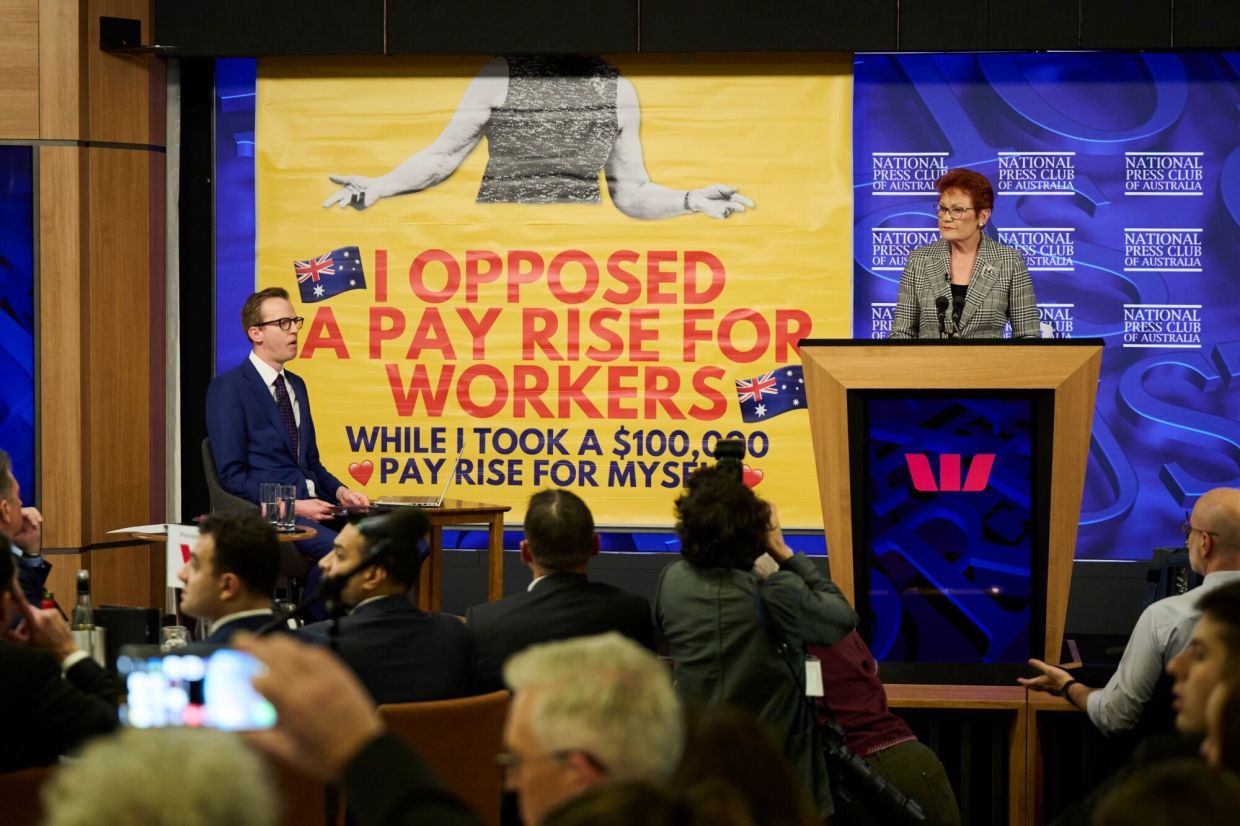
Pauline Hanson, leader of Australia's hard-right One Nation party, has declared that the nation must become fundamentally monocultural, marking a sharp ideological departure from decades of official multicultural policy. Speaking at the National Press Club in Canberra on Wednesday, Hanson positioned cultural assimilation as essential to national cohesion, arguing that while Australia must remain multiracial, its citizens should operate within a single dominant cultural framework. Her remarks represent a notable escalation in anti-multicultural rhetoric from a political figure whose party has been gaining traction amid voter discontent.
The One Nation leader made an explicit distinction between racial composition and cultural identity during her address, contending that accepting people of different backgrounds does not require maintaining distinct cultural communities. She insisted that "Australians must live under the one cultural umbrella," framing multiculturalism itself as fundamentally incompatible with national unity. This rhetorical move attempts to separate demographic diversity from cultural pluralism—a distinction designed to appease those concerned about immigration while appearing to acknowledge Australia's increasingly diverse population.
Hanson used the platform to connect immigration policy directly to Australia's acute housing affordability crisis, one of the most pressing domestic issues facing the nation. By positioning extremely high immigration levels as a root cause of housing shortages, she has tapped into widespread anxiety about property prices and rental availability. This framing simplifies complex economic challenges to a single-variable explanation, resonating with voters frustrated by limited housing supply and escalating costs that have priced millions of Australians out of homeownership.
The One Nation leader pledged to substantially reduce migration numbers and proposed restricting entry for people from regions she characterized as "immersed in extremism like radical Islam." Such language invokes security concerns while targeting specific religious communities and geographic areas. The proposal signals an intent to use immigration policy not merely as an economic tool but as a mechanism for cultural engineering and religious screening, raising questions about the legal and ethical frameworks such restrictions would require.
One Nation's electoral momentum has accelerated significantly over the past year, with the party capturing increased polling support following the collapse of the centre-right coalition government's electoral prospects in May of the previous year. This surge reflects broader voter dissatisfaction with traditional political establishments and suggests that Hanson's messaging is gaining purchase among segments of the Australian electorate who feel economically left behind. The timing of her National Press Club appearance—her first at the venue despite three decades in politics—underscores her party's elevated political status.
Australians have endured mounting economic pressures that have created fertile ground for populist messaging. Resurgent inflation, escalating interest rates, and fuel cost increases stemming from geopolitical tensions in the Iran region have compounded household financial stress. These conditions have shifted voter attention toward leaders and parties offering straightforward explanations for complex economic problems, even when those explanations lack empirical support. Hanson attributed these challenges primarily to immigration policy and the costs associated with green energy initiatives, providing voters with readily identifiable culprits.
Prime Minister Anthony Albanese's Labor government has attempted to address cost-of-living pressures through targeted interventions, including a temporary reduction in fuel excise duties and broader tax reform measures intended to improve housing affordability. However, these policy responses have proven insufficient to fully counteract the inflationary environment and housing market dysfunction. The government's inability to deliver immediate relief has allowed opposition voices, particularly from the political periphery, to gain credibility with voters seeking alternative approaches.
Albanese has sought to diagnose the rise of populist sentiment as symptomatic of an economy failing to serve ordinary citizens adequately. He has characterized One Nation's appeal in terms of "simplistic grievance-based politics," suggesting that voters turn to radical alternatives when mainstream parties fail to address their material concerns. This analytical framework acknowledges legitimate grievances while attempting to delegitimize populist responses as superficial. However, this framing may underestimate the genuine appeal of cultural nationalism and the real anxieties many Australians harbour regarding rapid demographic change.
For Southeast Asian observers, Hanson's ascendancy and rhetoric warrant careful attention, as Australia remains a major regional power with significant influence over regional institutions, trade arrangements, and security frameworks. The rise of anti-immigration and implicitly anti-Asian sentiment in Australian politics carries implications for how Australia engages with its diverse regional neighbours. Should One Nation gain further electoral ground, it could influence Australia's foreign policy orientation and regional relationships, potentially affecting trade, labour mobility, and diplomatic engagement across Southeast Asia.
The distinction Hanson draws between racial and cultural multiculturalism reflects a broader global pattern wherein traditional multicultural frameworks face political pressure from populist movements. Her framing allows supporters to endorse immigration restrictions while avoiding accusations of explicit racism, repositioning cultural assimilation demands as neutral or universalist principles. This rhetorical strategy has proven effective in other Western democracies confronting similar political dynamics, suggesting that the tension between liberal immigration policies and demands for cultural homogeneity will persist as a defining political fault line in Australia's coming electoral cycles.