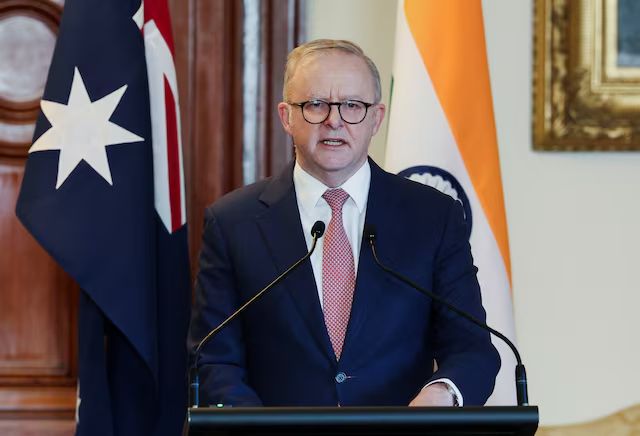
Australian Prime Minister Anthony Albanese has resolved to tackle the thorny issue of fresh American tariffs head-on with US President Donald Trump, signalling that Canberra views the levy as an unwarranted trade barrier. The statement comes in the wake of Washington's Friday announcement imposing new customs duties on goods originating from 60 countries, with Australia among those facing immediate economic pressure. The Australian government has already made clear its position that these tariffs lack justification and should be withdrawn immediately.
The tariff regime introduced by the Trump administration represents a significant escalation in global trade tensions and poses particular challenges for Australia's export-dependent economy. The new duties were justified by Washington as a response to what it characterises as inadequate efforts by affected nations to prevent the sale and distribution of goods manufactured through forced labour. This rationale comes as a temporary blanket 10 per cent global tariff that was previously in effect has now expired, leaving individual country tariffs to take effect.
Under the latest American measures, Australian exporters face a 12.5 per cent tariff rate, placing the nation in the most heavily penalised cohort alongside 37 other countries. A second group of 17 nations faces a 10 per cent rate, while five others are subject to a mixed tariff structure depending on product category. For Australia, which depends heavily on commodity exports to the United States and maintains deep integrated supply chains across sectors ranging from agriculture to minerals, the 12.5 per cent rate carries substantial implications for competitive pricing and market access.
When asked whether he intended to pursue dialogue with Trump on the matter, Albanese responded unambiguously, stating "absolutely". He proceeded to outline the government's strategy of engaging at multiple levels within the Australia-US relationship, noting that Australian officials have already initiated conversations on the subject. This multi-layered diplomatic approach suggests Canberra is treating the tariff issue with considerable urgency and is prepared to mobilise its full diplomatic apparatus to seek a resolution.
The Australian government's response emphasises the nation's robust regulatory framework governing modern slavery and labour standards in supply chains. Albanese highlighted that Australia maintains "very strong provisions" addressing these concerns and is in fact strengthening them further through ongoing review of supply chain practices. The government is particularly focused on enhancing the deterrent effect through "substantial fines and penalties" for non-compliance, suggesting that Australia's standards may already exceed those being applied by Washington in its tariff justification.
This tariff dispute sits within a broader context of Australian-American trade relations that have been characterised by Albanese's stated preference for "free and fair trade" frameworks. The Prime Minister had previously elevated tariff concerns during an initial call with Trump following the centre-left Labor government's landslide election victory last year, indicating that this issue has been on Australia's diplomatic priority list for some months. The renewed emphasis suggests that the tariffs remain unresolved despite earlier attempts at engagement.
For Southeast Asian observers and Malaysian policymakers in particular, Australia's experience with American tariffs carries instructive value. The region's own exporters face similar risks from shifting US trade policy, especially given the Trump administration's demonstrated willingness to unilaterally impose tariffs based on contested interpretations of labour standards. Malaysia's own manufacturing and export sectors, particularly in electronics, palm oil products, and semiconductors, could face comparable scrutiny and potential duties if Washington expands its tariff regime further.
The diplomatic challenge for Albanese involves convincing Trump administration officials that Australia's existing measures to combat forced labour are sufficient and that the tariff penalty is therefore unjustified. This task is complicated by the Trump administration's track record of using tariffs as a negotiating tool and political instrument rather than as responses to genuine policy failures. Australia must therefore frame its case not merely in terms of compliance but in terms of the broader strategic relationship between the two countries and the potential for economic damage affecting both nations.
The timing of Albanese's statement also reflects Australia's determination to resolve this matter while the issue remains relatively fresh and before the economic impact becomes entrenched in business planning and investment decisions. Early intervention may offer better prospects for negotiation than waiting for the tariffs to cause measurable damage to bilateral trade and investment flows. Australian exporters, particularly those in agriculture, minerals, and manufactured goods, have already begun adjusting to the new tariff environment, but sustained relief would prevent longer-term market share losses.
Beyond the immediate bilateral dimension, Australia's push against these tariffs reflects broader concerns within the Indo-Pacific region about the stability and predictability of global trade rules under the current American administration. As a close US ally and a significant trading nation, Australia's willingness to confront Washington on trade policy signals to other regional partners that even established allies will not simply accept unilateral tariff impositions without diplomatic resistance. This approach may encourage coordinated regional responses to trade policies that affect multiple Indo-Pacific economies simultaneously.

