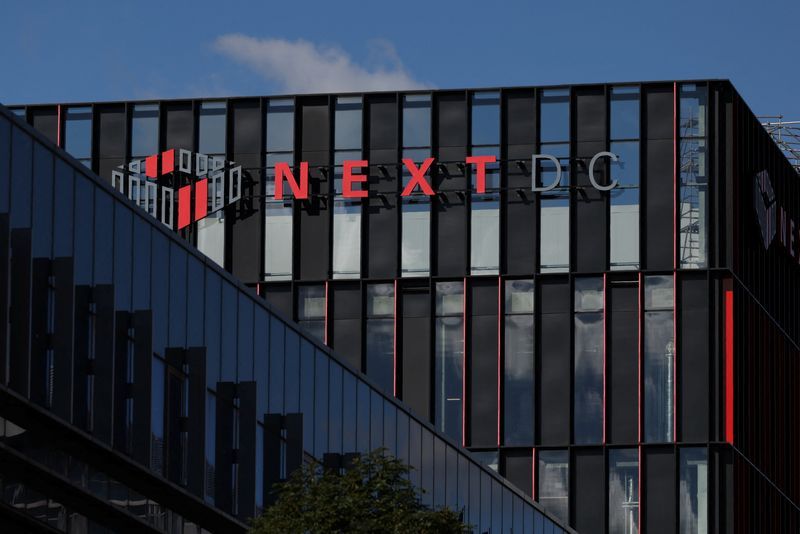
Australian data centre operator NextDC has delivered a profit surge that masks growing concerns about the environmental toll of the artificial intelligence boom sweeping through the region. The company swung from a A$60.5 million loss to a A$82.1 million profit in the year ending June, driven by 16% revenue growth and underlying earnings before interest, tax, depreciation and amortisation climbing 15% to A$248.8 million. Yet alongside these encouraging financial metrics lies a troubling trend that has caught the attention of policymakers: the company's consumption of both water and electricity for facility operations has deteriorated for the third consecutive year, even as the global rush to build AI infrastructure accelerates.
The deterioration in operational efficiency is stark. NextDC's water usage effectiveness ratio, which measures litres of water consumed per kilowatt-hour of computing capacity, climbed to 2.40 from 2.25 in the previous twelve months. Meanwhile, its power usage effectiveness ratio—tracking the overhead electricity required for cooling and ancillary systems—rose to 1.49 from 1.44. These metrics serve as critical barometers for how heavily data centres burden local power grids and water supplies, making them increasingly relevant to regulators and the public alike as the scale of facilities expands dramatically across the Asia-Pacific region.
NextDC attributed the worsening ratios to a combination of operational factors that, while explainable, highlight structural challenges facing the industry. Newly built data centre capacity requires cooling systems to operate at full capacity before servers are installed and generating heat, creating a temporary inefficiency period. The company also identified that comprehensive reconciliation of water data during the year uncovered previously undetected leaks and meter anomalies, suggesting that some portion of the increase reflects the discovery rather than pure growth in consumption. Additionally, reconciliation work between site-level measurements and utility company records revealed discrepancies that required investigation, pointing to data quality issues that may have masked the true picture of environmental impact in earlier periods.
For Malaysia and the broader Southeast Asian region, these dynamics carry particular significance. The data centre industry is expanding rapidly throughout the area, with major operators competing to secure land and secure reliable power supplies to serve the region's growing digital economy. Countries across Southeast Asia have been actively courting data centre investments as part of their digital transformation agendas, yet they simultaneously face constraints on water availability, grid capacity and electricity pricing. NextDC's experience suggests that rapid capacity deployment inevitably creates efficiency troughs during commissioning phases, a pattern that will repeat across multiple facilities as the industry scales.
The rising resource consumption figures have triggered scrutiny far beyond corporate boardrooms. Lawmakers and the voting public increasingly view data centre metrics as proxies for assessing whether the infrastructure required to power the AI revolution imposes acceptable costs on communities and ecosystems. Globally, governments, regulators and municipalities have begun implementing moratoriums on new data centre development, citing concerns about electricity expenses, water scarcity, land use competition and impacts on neighbouring populations. Ireland restricted new data centre applications; other jurisdictions have imposed outright bans or mandatory environmental standards.
Canberra's regulatory approach is particularly instructive for the region. Australian authorities are developing mandatory, nationally consistent standards governing data centres' energy consumption, water usage and site selection. More provocatively, the government has proposed requiring data centre operators to develop new renewable energy capacity rather than drawing power from existing grids. Such mandates could fundamentally reshape project economics and force a recalibration of expansion strategies throughout the Asia-Pacific, where many facilities currently depend on conventional grid power sources.
NextDC competes in a market alongside formidable rivals including AirTrunk, backed by global investment powerhouse Blackstone, and CDC Data Centres, owned by infrastructure specialist Infratil. The competitive pressure to expand capacity and capture market share in a booming sector creates incentives to commission facilities rapidly, potentially before efficiency optimisations can be fully implemented. This dynamic mirrors broader patterns in technology infrastructure rollout, where speed to market often takes precedence over operational optimisation.
The accounting treatment supporting NextDC's profit result also warrants attention. The swing to profitability was substantially aided by a change in accounting methodology that recognised a gain on property valuations rather than reflecting underlying operational cash generation. While legitimate, this accounting adjustment highlights that the company's core cash-generating capacity, better captured in the underlying EBITDA measure, grew at a more modest 15% pace. For investors and stakeholders assessing sustainability of growth and returns, this distinction matters considerably when evaluating long-term prospects.
The data centre sector's trajectory will likely become increasingly contentious throughout Southeast Asia as energy and water constraints bite harder across the region. Malaysia, Thailand, Singapore and Vietnam are all seeing investment interest, yet each faces distinct resource constraints and policy environments. NextDC's public disclosure of worsening environmental metrics, while potentially damaging to corporate reputation in the short term, may ultimately prove valuable by prompting industry-wide discussion about sustainability benchmarks and technological solutions. The company's share price rose 3.3% following results announcement, suggesting investors prioritised financial performance over environmental concerns.
Looking forward, the trajectory of these metrics will serve as a critical test of whether the data centre industry can genuinely decouple explosive growth from proportional increases in resource consumption. Technological improvements to cooling systems, waste heat recovery, renewable energy integration and water recycling technologies all offer pathways to efficiency gains. However, realising these improvements requires sustained capital investment and time for new facilities to reach operational maturity. For policymakers across Malaysia and the wider region, NextDC's figures underscore the urgency of establishing proactive regulatory frameworks before capacity decisions become locked in for decades to come.

