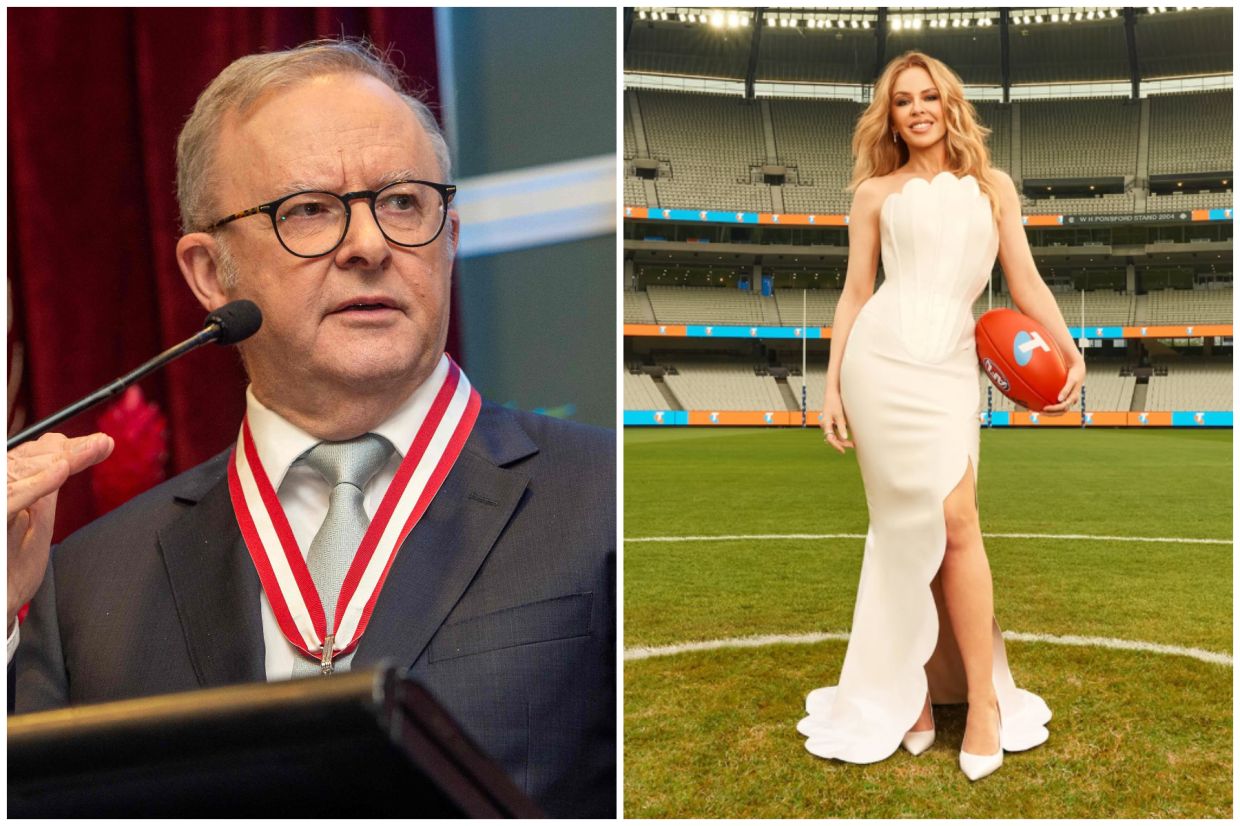
Australian Prime Minister Anthony Albanese has issued an unequivocal apology after attracting public censure for remarks he made regarding pop star Kylie Minogue during a recent appearance on a comedy podcast. The Prime Minister's comments, which touched on intimate preferences concerning the beloved entertainer, sparked immediate controversy and prompted criticism from fellow lawmakers, forcing the government to issue a formal statement distancing itself from the remarks.
During an interview conducted for a local comedy show last week, Albanese participated in a segment where podcast host Nikki Osborne posed a question asking him to nominate which Australian entertainer he would prefer to "shag, marry, date". Initially attempting to deflect the inquiry, the Prime Minister eventually offered a response that named Minogue, a figure deeply embedded in Australian popular culture and widely respected across the nation.
When pressed further by Osborne to clarify which category Minogue fell into, Albanese indicated he would select all three options, a response that drew immediate attention once details became public. The candid nature of the exchange, typical of comedy podcast banter, crossed a line that many observers felt inappropriate for someone holding the highest elected office in the country.
The criticism emerged swiftly from political circles and the broader public sphere. Members of parliament characterised the comments as an unwarranted lapse in judgment and respectful conduct. One lawmaker specifically described the remarks as "disrespectful", reflecting widespread concern that such language undermined the dignity expected of a prime ministerial position. The incident raised broader questions about appropriate boundaries for public figures and the standards of decorum expected in high office.
Backing down from the initial defense of his comments, Albanese's office released a statement containing an unreserved apology. The Prime Minister acknowledged the nature and impact of his words, moving quickly to contain what had become a significant political embarrassment. The statement represented a clear shift from initial hesitation, suggesting the weight of institutional pressure and public disapproval had prompted reconsideration of his initial stance.
Minogue, whose career spans decades and encompasses roles in both music and entertainment, has maintained a position of cultural significance in Australia since her early breakthrough on the soap opera "Neighbours". Her evolution from television star to international recording artist established her as the "Princess of Pop", a moniker reflecting her enduring appeal and influence within the entertainment world. Her professional achievements and public standing make comments about her person subject to heightened sensitivity.
The incident underscores ongoing tensions around masculinity, workplace conduct, and appropriate discourse in contemporary political leadership. While comedy podcasts typically operate in spaces where informal banter prevails, the participation of sitting prime ministers introduces different standards of accountability. The distinction between private citizen and public official becomes particularly pronounced when platforms carry significant reach and broadcast content widely across digital audiences.
For Malaysian and Southeast Asian observers, the episode offers insight into how Australian political culture navigates questions of propriety and accountability in the media age. Regional politicians face similar challenges in managing their public personas across diverse platforms and audiences. The rapid nature of the apology demonstrates institutional sensitivity to public opinion and media scrutiny, a pattern increasingly common across Westminster democracies including those in the Asia-Pacific region.
The controversy also reflects broader discourse around gender representation and respect in public life. Comments of a sexualised nature directed toward women, even in supposedly light-hearted contexts, remain subject to heightened scrutiny as societies grapple with evolving standards regarding appropriate professional conduct. For the Prime Minister, the incident highlighted the particular visibility and responsibility attached to high office, where words carry implications extending well beyond their original context.
Looking forward, the apology may succeed in containing the immediate damage, though the episode will likely feature in broader discussions about political leadership standards in Australia. The willingness to acknowledge error and apologise unreservedly suggests an attempt at damage control, though observers will watch to determine whether substantive changes in approach follow the formal statement. For entertainment figures like Minogue, such incidents reinforce ongoing challenges regarding unwanted commentary on their persons in public discourse.

